

 May 2022
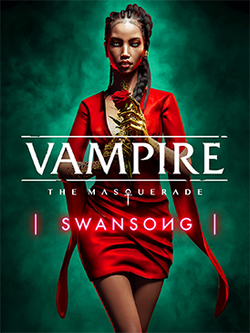

Vampire: The Masquerade - Swansong is the kind of RPG that wants to be a slow-burn detective novel dressed in gothic velvet - occasionally succeeding, occasionally tripping over its own cape. Developed by Big Bad Wolf (a Cyanide branch) on Unreal Engine 4 and published by Nacon, Swansong adapts White Wolf's tabletop rules into a single-player narrative experience focused on three vampire protagonists in a modern-day Boston. The game markets player choice and consequence above flashy combat, leaning into stealth, social manipulation, disciplines (the vampiric abilities), and puzzle-like exploration. If you've been waiting for a vampire game that's more about paperwork and whispers than jaw-dropping fangs, this is the one. If you expected polish reminiscent of big-budget action RPGs, you're likely to grumble into the night and mutter about animations. This review focuses on the technical and mechanical bones: how the engine holds together, how the systems interlock, what breaks and what sings, and whether the player's agency translates into meaningful gameplay on PS4.
Swansong's core mechanical hook is its triple-protagonist structure: you switch between Galeb (Ventrue), Emem (Toreador), and Leysha (Malkavian). Each character has access to different disciplines and skill trees, and you spend significant time calibrating their upgrades to your preferred approach. This design translates the tabletop's class-and-power variety into a video gameable format: disciplines modify dialogue options, stealth approaches, and environmental interactions rather than offering a button-mash combat upgrade. On paper, that focus on systemic RPG tools is smart - it encourages role-playing through mechanical affordances rather than cosmetic choices. From a technical standpoint the progression and choice systems are reasonably well-implemented. The upgrade paths are meaningful: investing in social abilities gives tangible alternative routes through encounters, and investing in investigative or stealth stats changes which nodes of the environment you can access. The game scaffolds these options with logic-puzzle style sequences where deduction and clue-gathering matter; when the design leans into that detective mode, the systems click together. Branching outcomes and multiple endings make the choices feel consequential on a systems level: who survives and which threads you follow produce different epilogues. Where implementation falters is in the moment-to-moment gameplay layering. Exploration is built on small, semi-open hub-like areas with object interaction, terminals to hack, and locks to pick. These interactions are tied to skill checks and discipline usage, which is good in design but uneven in delivery. Several critiques in the source material point to 'rough exploration puzzles' and 'janky issues' - on PS4 this manifests as awkward interaction prompts, opaque collision on searchable objects, and puzzle gating that feels binary: either you have the exact ability or you hit an invisible wall. The stealth and power economy also suffer from underutilization; the game warns you about using overt vampiric powers around humans but then often offers scant engaging alternatives, pushing the player into repetitive, cautious play. The conversation system is another technical friction point. Dialogue trees exist and feed into the RPG systems, but the mechanics around social checks and conversational fail states feel undercooked. Animations and facial cues - integral to social deception mechanics - are stilted. That undermines a design that depends heavily on reading social queues and making hard moral decisions. Critics noted that the writing and character work are hit-or-miss; from a systems perspective, when the narrative beats are flat, the technical scaffolding that should amplify them (dialogue timing, animation, audio cues) doesn't compensate. Swansong is deliberately low on action; it expects the player to solve problems via inference, skill checks, and choice. This makes it compelling for players who like deduction and branching systems, but it also magnifies any rough edges. Bugs, control awkwardness, and inconsistent puzzle design pull the experience down more than they would in an action-first title. The net effect: a technically interesting RPG that needs better polish in UI/UX coupling, collision and interaction reliability, and conversational feedback loops to fully realize its ambitions on PS4.
Built in Unreal Engine 4, Swansong's visuals aim for moody realism with a noir palette suitable for the World of Darkness. Lighting and environmental art often hit the right notes: Boston locations feel lived-in and atmospheric, and character costume design communicates clan identities effectively. The problem is less the art direction than the execution quality of animations and character fidelity. Multiple reviews mention 'poor facial animations' and 'stilted' performance - complaints that matter in a narrative-heavy game where micro-expressions are supposed to sell deception and drama. On PS4, character rigs and facial blendshapes are sometimes shallow; lip-sync and emotional timing don't always align with voice performances, which introduces a jarring dissonance during long conversations. Technical polish extends beyond rigs. The game was criticized for 'a host of bugs' and 'janky issues.' On mid-generation hardware like the PS4, those complaints translate into occasional clipping, inconsistent object interaction, and immersion-breaking hitching when streaming new area assets. The decision to deliver the title across both last- and current-gen consoles likely contributed to compromises: textures and LOD schemes are serviceable but not spectacular, and some systems feel tuned to a baseline that favors compatibility over pushing PS4 hardware. There's also a customer-facing technical snafu: PS4 owners discovered they could not upgrade to the PS5 version despite an advertised promise on physical boxes; Nacon later attributed that to a mistake in packaging. That kind of post-launch friction doesn't affect frame rates or draw calls, but it does erode trust in the platform rollout.
Swansong is an earnest, system-focused RPG that nails several core ideas: branching choices, discipline-driven problem solving, and a detective bent that fits vampiric politics. Technically, it's a mixed bag on PS4. The Unreal Engine 4 base gives it a competent visual foundation and flexibility for complex dialogue and stat systems, but the execution suffers from animation shortfalls, interaction jank, and uneven puzzle gating. If you value narrative agency and the pleasure of deduction over cinematic polish, Swansong offers rewarding moments where its systems sing together. If you expect a smoothly polished, emotionally crisp presentation where every eyebrow twitch matters, you'll be frustrated by facial animation, control roughness, and bugs that keep pulling you out of the mood. The game's reception rightly lands in 'mixed or average' territory: interesting systems and lore-rich design held back by execution. On PS4, it's worth playing for the investigative mechanics and lore if you can tolerate technical rough edges - otherwise wait for patches or a sale. Either way, bring patience, a taste for procedural ambiguity, and maybe a spare neck cloak for your vampire's dramatic monologues.
 Vampire: The Masquerade – Swansong on Xbox Series X/S
 Vampire: The Masquerade – Swansong on PS5
 Combat Elite: WWII Paratroopers on PS2
 The Banner Saga 2 on PS4
 Arcania: The Complete Tale on PS3
 Gnosia on Xbox Series X/S










 Another SquareThought Site