

 Apr 2026


Saros arrives like someone very serious about explosions, then sits down to explain the ethics of resurrection over a cup of nuclear coffee. Developed by Housemarque - the studio that took Returnal's stomach for punishment and decided the audience deserved seconds - Saros mixes third-person shooting, bullet-hell chaos, and roguelite progression into a single-player package that mostly knows what it's doing. You play Arjun Devraj, a Soltari Enforcer who wakes up on Carcosa with memory problems and a remarkably accommodating right arm that can turn into weapons when you feed it absorbed projectiles. The conceit is familiar: die, learn, come back stronger, collect holograms that say things you didn't know you needed to know about corporate hubris and cosmic gardening. The game was made using Unreal Engine 5, and credits a small army of talented people (including director Gregory Louden and artist Simone Silverstri) and the comforting fact that Sony bought Housemarque in 2021 and gave them the budget they politely asked for in euro signs and vague nods. Saros is not shy about wanting your thumbs to suffer. It also wants you to pay attention to a story about greed, a thing called the Yellow Shore, and a woman named Nitya who will probably outclass you emotionally and also has a device called the Preserver, which sounds like a very optimistic Kickstarter. Critical reaction has been favourable - Metacritic hangs an 87/100 above it, OpenCritic says 91% of critics recommend it - and you can tell because several outlets will use words that sound like praise and a few will use words that sound like polite warnings. If you like your sci-fi baked with eldritch glaze and a side of procedural teeth, Saros will handshake you with a glove full of shrapnel and call it companionable.
Saros wears its influences like a tasteful patch on a battle jacket. It plays third-person, it shoots like mad, and it borrows bullet-hell choreography so you can admire geometry while dying. At its centre is Arjun Devraj and the Soltari Shield, a defensive tool that doubles as a very considerate battery. Block a volley, suck the energy up, and watch Arjun's right arm politely rearrange itself into Carcosan Power Weapons. Each absorbed projectile is both a tiny revenge and a currency for spectacle. The loop is clean: explore ruins, find upgrades, die spectacularly, return to base, spend permanent upgrades, try not to become the planet's welcome mat. Roguelite systems are present but not punitive for people who like their short-term losses to feel like investments. Each run lets you gather resources and occasionally Soltari Holograms - audio-visual breadcrumbs that expand the backstory - while a persistent upgrade tree lets you tailor future attempts. Weapons and suit enhancements carry over, and the progression is the reassuring sort where effort translates into capability, rather than the sort where effort translates into three more minutes of being stabbed by a tougher gladiator crab. The planet Carcosa itself is not trying to be charming. Lucenite mining, alien ruins, and a climate that becomes actively unpleasant during eclipses all conspire to keep you moving. The eclipse mechanic is a highlight: it meaningfully changes the environment and spicifies enemies into more aggressive forms, so your calm corridor turns into a festival of swarming teeth once the lights dim. Enemy design leans toward the primal and baroque - the wildlife and Overlords of Carcosa feel like they read the same eldritch manual and then annotated it with claws. Combat demands constant motion and an intimate familiarity with strafing. If your thumbs have earned a pension, they will feel right at home here. Storycraft is surprisingly ambitious for a game that will occasionally insist you learn the rhythm of death. Arjun's search for his missing wife Nitya doubles as an investigation into how corporate mining, divine bargains, and time dilation combined to wreck everything. The narrative reveals itself through logs, visions, and the holograms you find. The Yellow Shore - a vaguely malevolent, very influential entity - bestows power at the cost of sanity, and the consequences are the kind that leave ruins and bad leadership decisions. The game does a fair job of balancing eldritch horror with personal responsibility. Arjun isn't just shooting things; he's sometimes forced to reconcile being an idiot husband with being an effective corpse-resurrecting enforcer. It's melodrama wrapped in machinery, and it mostly sticks the landing. Difficulty can be polarising. Some outlets scored Saros with a philanthropic 9/10 and others gave it a respectable 7/10, largely depending on how much they value narrative over twitch reflexes or vice versa. Expect to die a lot, but expect those deaths to feel informative rather than arbitrary. If bullet-hell as a genre sounds like a hobby you might enjoy, Saros is a good place to get a membership card stamped and possibly lose a few sensibilities in the process.
Unreal Engine 5 is visible everywhere like a polite, slightly smug guest at a dinner party. The environments manage to be both alien and industrial, a pleasing combo of ruined civilisation and corporate aesthetic that says 'we mined here because we could.' Lighting does heavy lifting: eclipses turn landscapes into stage sets for melee orchestras, and shadows are treated like minor characters given too much screen time. Artist Simone Silverstri's contributions are clear in the level design, where architecture and fauna are designed to create combat arenas that reward movement and also look nice while you get murdered. Character work and performance capture - Rahul Kohli provides the voice for Arjun - contribute to a surprisingly human centre in a game that otherwise spends a lot of time facilitating projectile punctuation marks. Sam Slater's music supports the mood without reminding you it exists; sound design is one of those things that quietly ensures you feel the weight of your actions. The PS5-only release and PlayStation 5 Pro enhancement tags indicate Housemarque aimed to squeeze out current-gen polish, though the documentation doesn't claim exotic frame-rate sorcery. In practice, the game looks modern, coherent, and lovingly detailed: particle effects during weapon discharges are busy in a way that feels deliberate, and enemies bloom with readable telegraphs that are fair to the attentive player. If the game has any visual peccadillo, it's that some of the spectacle can make it hard to parse what's coming at you in the thick of a bullet storm. That is a feature and a bug depending on whether you enjoy sensory overload as a design choice. For fans of a dense, kinetic visual language, Saros delivers. For those who prefer their combat with fewer fireworks and more gentle whispers, it will feel like someone lit a festival near your living room.
Saros is Housemarque's confident attempt to scale Returnal's lessons into a bigger, story-forward package while keeping the satisfying sting of bullet-hell combat. It pairs a stubbornly human story about guilt, power, and the consequences of making deals with things called the Yellow Shore, with a mechanical core that rewards repetition, skill, and the occasional stubbornness. The roguelite progression is generous enough that losses feel like steps instead of punishment, and the Soltari Shield mechanic gives the combat a distinct flavour: you are as much a battery as you are a gun. Critics agreed it's good; some loved it, a few thought it tried to do too much, and one or two wished it had fewer things exploding at once. If you like your shooters to be smart, a little cruel, and narratively ambitious, Saros is a strong recommendation. If you dislike being told to dodge beautifully drawn murder for an afternoon, you may find it exhausting. Score: 8.7/10 - a game that will make your thumbs hurt and your brain nod approvingly while wondering how much worse things could have been if the corporate mining operation had a better HR policy.
 Door Kickers: Action Squad on Switch
 Door Kickers: Action Squad on PS4
 Disney's Chicken Little: Ace in Action on DS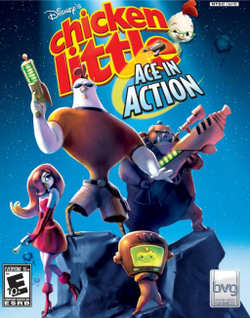
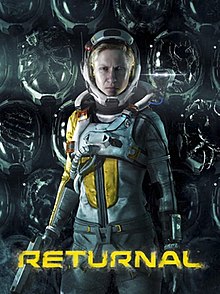 Dead Nation: Apocalypse Edition on PS4
 Resogun on PS3
 Alienation on PS4
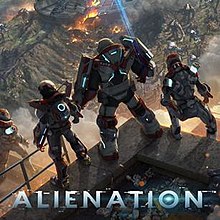 Dead Nation on PS3
 Matterfall on PS4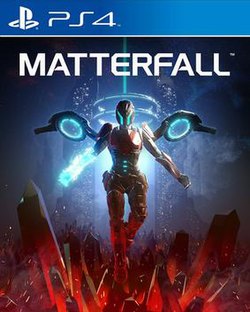










 Another SquareThought Site