

 Aug 2025


Mini Motor Racing X feels like someone packed a toy car racetrack, a physics engine, and a hyperactive sugar rush into a portable console and then told you to survive. It dresses itself in cheerful isometric dioramas, but underneath the cute cars and colorful tracks is a game that will demand timing, spatial thinking, and a rather Swiss-watch-level mastery of powerslides and nitrous. If you expect a laid-back cruise where you can mash buttons and skim by on luck, this is not that. If you enjoy arcade racers that teach you their rules through repeated, glorious failure, then you and this game are about to become frenemies. The version most of us first met was a mobile original; the X branding and later console versions expanded the content and modes. The core DNA remains: arcade-first handling, no real damage model, and collisions that can either ruin your lap or be pressed into service as aggressive positioning tools. This review focuses on what Mini Motor Racing X will actually test in you - not how nice it looks (though we will talk about that), but what skills you need, how it punishes mistakes, and where it asks you to get creative. Put another way: this isn't about downloading a look-at-me car skin; it's about learning to be a little mechanical ballet dancer in a plastic toy world.
Mini Motor Racing X strips a lot of realism away on purpose. You don't manage throttle and brakes in fine grain; the game funnels you toward two core mechanical pillars - powerslides and nitrous - and then builds challenge around them. That design choice makes the skills required wonderfully specific. You either learn to dance with the game's momentum or the race ends with you watching other tinier drivers disappear down the track like you're stuck in slow motion. Powersliding is the game's lingua franca. Tight turns and track cambers are the language, and powerslides are the verbs. Learn to initiate them early and release at the right moment and you shave precious tenths off your lap. Learn them poorly and you spin out like a cartoon donut. The isometric viewpoint complicates this: depth perception is deceptive and angles look different than they would from a bumper-cam. That forces players to develop a kind of spatial intuition - know where the track will bite two corners ahead, not just where it is now. Track memorization becomes a key skill. Good runs are often less about reflexes and more about preemptive positioning and planning an exit strategy for every corner. Nitrous is the second major skill vector. It's not simply a press-for-more-speed gimmick. Because acceleration control is abstracted, nitrous becomes the lever for strategic risk. Use it on a straight and you might clear the pack; use it while poorly aligned and you'll ram the guardrail and lose momentum like a slingshot aimed at a brick wall. The best players learn to combine nitrous with exit vectors from powerslides so the extra speed compounds rather than punishes. Managing nitrous timing-when to blow, when to hold, when to accept being patient-becomes a tactical mini-game layered over the core driving mechanics. The lack of vehicle damage has interesting consequences. On one hand, it encourages aggressive play: you can push and crash without fear of permanent mechanical consequences. On the other, collisions still matter because they displace you. Knocking someone aside is often less valuable than using their wake or their misstep to slingshot past. This leads to a subtler kind of combat: positional aggression. You learn to read other racers, predict their line, and either avoid them or use them as bumper-ramps. In multiplayer this becomes deliciously chaotic; in career modes, AI drivers can act unpredictably and require quick adaptation. Handling in Mini Motor Racing X rewards precision and patience. There are multiple control schemes available-touch origins on mobile, and in console versions you get controller mappings-so identifying which scheme lets you express small inputs is vital. On Switch, tight turns and small throttle nudges translate directly to consistent lap times; sloppy inputs magnify every poor decision. If you're the cause of Joy-Con-throwing theatrics in other games, tone it down here: the game punishes slop more than bravado. Upgrades and progression add another layer of challenge. Cash earned from races (and from collectible power-ups on tracks) is the currency of improvement. The choice of whether to buy a new car or to upgrade existing ones becomes an optimization problem. Do you spread upgrades thinly across a stable of cars for versatility, or do you min-max a single chassis for the tracks you hate the most? The best players treat upgrades like chess moves-anticipating which events they will face and preparing equipment accordingly, rather than just buying the flashiest paint job. Multiplayer used to be local-only on mobile via WiFi and Bluetooth, and later updates expanded online options. The multiplayer arena is where the game's challenge curve accelerates. Real players do unpredictable things, so skills like adaptive line choice, opportunistic nitrous use, and the ability to exploit collisions without becoming the victim come to the fore. If you can read a live human's intent and bait them into a mistake while maintaining your own trajectory, you're unlocking a higher skill tier. The game's physics engine - a modified Unity physics stack - is part blessing, part chaos conductor. Collisions have weight and consequence, but the terrain and collision quirks occasionally generate bizarre bounces. Those moments can feel unfair, but they also force you to become resilient: good runs mean you recover quickly from weird physics and reset your plan mid-lap. That resiliency is itself a skill; controlling your frustration and making micro-adjustments after ludicrous hits separates the dabblers from the consistent winners. Difficulty-wise, the game is mercilessly fair. It doesn't invent artificial difficulty spikes so much as layer small technical demands on top of each other. To master Mini Motor Racing X you'll need: a solid mental map of each circuit, a feel for momentum and slide recovery, surgical nitrous timing, patience in upgrade allocation, and the social prediction skill for multiplayer. If you enjoy practicing precise, repeatable inputs and squeezing tiny improvements out of imperceptible mistakes, this is the kind of racer that will keep you hooked. Finally, the game's career modes and leaderboards incentivize repetition and mastery. Per-track leaderboards invite obsessive optimization; Game Center-style achievements and the career cash sink mean you're always choosing between short-term wins and long-term progression. That tension is how the game turns simple races into training sessions for faster reflexes and sharper planning.
Mini Motor Racing X presents as HD toybox dioramas. The isometric viewpoint is deceptive - everything looks simpler than it is, but those simplified visuals are actually helpful when you are trying to parse a chaotic corner with three other cars and a puddle. Cars and tracks are full 3D models despite the isometric camera, which means lighting, shadows, and depth are used well to sell speed and position. The visual language is clear: jump ramps, curbs, and hazards are readable even when the action gets crowded. There are trade-offs. The isometric angle can occasionally obscure subtle elevation changes or hiding spots where the physics decides to get creative. That contributes to the occasional terrain and collision weirdness critics have noticed; sometimes what looks like a safe line leaves you inexplicably floating for a beat. For the most part, however, the graphics are functional and charming rather than photorealistic, and that suits the arcade design. They make it easy to read the track at a glance, which is necessary when the game rewards planning and preemptive movement. On Switch hardware you can expect crisp visuals and steady framerate in handheld and docked modes, which are essential for picking up the micro-cues that separate a good drift from a catastrophic spin. The aesthetic choices prioritize gameplay clarity over graphical showboating, and that design decision helps the challenge-focused player get down to business.
Mini Motor Racing X is not a racing game that flatters your ego; it trains it. Its challenges are precise rather than punishing in the cheap sense: the game rewards those who learn its language of slides, nitrous, and momentum, and punishes sloppy inputs or lazy planning. The lack of vehicle damage encourages aggressive creativity, while the physics and occasional terrain glitches demand recovery skills and mental resilience. Career progression and per-track leaderboards give structure to the pursuit of mastery, and multiplayer shifts the test from mechanical precision to prediction and opportunism. If you like arcade racers that feel like a technical discipline - where the fun is in shaving milliseconds off a lap by perfecting a slide or timing a boost - this title will be a gratifying, occasionally exasperating companion. If you prefer twitchy, button-mash-friendly racers or full-on simulation with realistic braking models, you might find the emphasis on slide craft and spatial planning less appealing. For the Switch player who wants a portable, bite-sized training ground for racing craft, Mini Motor Racing X is a delightfully demanding toy track that will keep you coming back for the next notch on the leaderboard. Score: 7.5/10 - charming, skillful, occasionally quirky, and ultimately satisfying if you're willing to learn its rules.
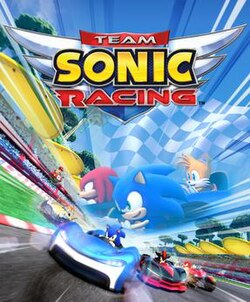
 Team Sonic Racing on Switch
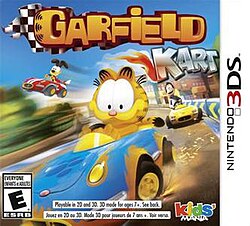
 Garfield Kart: Furious Racing on Switch
 Ben 10: Galactic Racing on PS3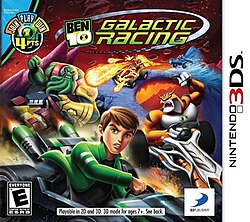











 Another SquareThought Site