

 Aug 2025
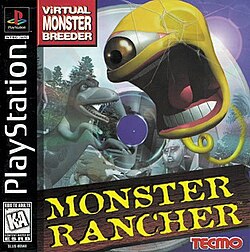

Monster Rancher on Switch is the slightly dusty-but-still-addictive classic that asks you to manage creatures, money, and your impulse to shove every old Christmas CD into a console. The Switch version packages the original 1997 life-sim/RPG loop into a modern portable format - and it preserves what made the game both charming and fiendishly demanding: tight systems, weird breeding rules, and a progression scheme that rewards planning more than frantic thumbs. If you came here expecting twitchy action, you will be disappointed in a tasteful, deliberate way. If you enjoy juggling short-term survival against long-term breeding plans, probability-based experiments, and making hard choices that bite you later, welcome home. This review leans hard into what the Switch version asks of you as a player: the cognitive skills, attention, and patience needed to turn chaotic CD-creation mechanics and temperamental monsters into a medal-winning roster. It will tell you how the Switch handles the iconic CD feature, what kinds of mental gymnastics the game forces you into, and why this is a challenge game masquerading as a monster raiser with a penchant for 90s kitsch.
Monster Rancher's gameplay is deceptively simple on the surface: create monsters, train them, enter tournaments, and repeat - but once you accept that the devil lives in the stats and the fine print, it becomes a deep exercise in trade-offs and optimization. The Switch release retains the original ruleset: monsters have six core stats - Power, Intelligence, Life, Skill, Speed, and Defense - and every choice you make nudges those numbers, sometimes positively and sometimes disastrously. The creation and breeding systems are the first major skill gate. The original grabbed monsters from CDs by reading metadata; the Switch (and Windows/mobile) ports emulate this by letting you look up CDs from a database. That change removes the tactile joy of inserting burned demo discs, but it preserves the core mechanic: experimentation and information-gathering. You need to learn which data entries produce rare types, which yield odd stats, and which combinations are garbage. That means the early game is equal parts curiosity and record-keeping. If you're not taking notes - either mentally or in a Google Doc - you'll forget that the goofy Christmas album yielded a Santa-type once it matters. Breeding adds layers of combinatorics. Combine two monsters to get a new main type and a random sub-type; choices are constrained by the parent pool and randomness. This pushes you into probabilistic thinking: is it worth spending months raising a pair to try for a specific offspring, or do you roll with a close-enough result and move on? Long-haul trainers will find themselves calculating odds in their heads, juggling which stat contributions matter most for a goal, or preparing backup plans when breeding craps out. Training and resource management are where Monster Rancher becomes a true challenge. Training modes range from household chores (low risk, small gains) to expert coaching (larger gains and a chance to learn new techniques). Each training decision is an exercise in risk-reward analysis. Experts give technique access but cost money and sometimes a training failure; chores are cheap but slow. Food and vitamins let you push specific stats, but vitamins come with nasty strings attached: they can dramatically shorten your monster's lifespan and usually decrease another stat. The game forces you to ask, repeatedly: do I boost this stat now to win the next tournament, or do I protect the monster's longevity for future breeding? Financial skills matter because the game can end if you run out of currency. Winning tournaments is the primary way to earn money, but entering tournaments without careful preparation is a fast track to bankruptcy. Recruit the wrong monster to a bracket it can't handle, and you'll hemorrhage funds. Balancing living costs, training expenses, and tournament entry fees makes Monster Rancher part personal finance sim, part rogue-ish gamble. Combat itself is an oddball test of planning over execution. Battles are not player-mash affairs; you don't control every strike. Instead, you command range and tactics: tell your monster to stay close or keep its distance and select available moves based on that range. Moves depend on learned techniques and range, so picking the right set of techniques during training is a strategic layer that echoes rock-paper-scissors mixed with chess restraint. Your success depends on anticipating opponent tendencies, building monsters whose stat profiles support your preferred tactics, and occasionally outguessing RNG. Thus, pattern recognition, predictive reasoning, and patience are more useful than reaction time. A subtle but brutal aspect of the challenge is pop-level optimization vs. experimentation. The game rewards players who think in systems: which type combos produce a particular stat spread? Which CDs or breeding routes give you rare types? Which training schedule primes a monster for a specific tournament bracket? This requires meta-level thinking and iteration - test a hypothesis, record the result, tweak variables, repeat. It's basically scientific method in a monster ranch - and you'll get a lot better at it if you enjoy spreadsheets or whiteboard scribbling. Multiplayer exists but the single-player campaign is the meat. The single-player tournaments serve as checkpoints and hard tests of whether your planning pays off. The more invested you are in understanding monster archetypes and how the six stats interact, the better you'll perform. You'll learn to read matchups: high Power monsters sunder opponents if they can't break through Defense, while Intelligence-heavy monsters succeed by leveraging energy attacks and resisting energy-based counters. Speed and Skill control whether you land hits or dodge them; Life determines survival long-term. Each fight is a microcosm of the broader planning puzzle. The Switch's emulation of the CD feature slightly alters the exploratory challenge. Instead of rummaging through boxes of CDs, you're presented with a database to look up discs - which is less romantic but actually more manageable for hardcore theorycrafters. It reduces randomness in acquisition, but keeps the experimentation loop intact: you test, you note, you exploit. The game's randomness in breeding and technique learning still preserves uncertainty and forces adaptive thinking. Finally, Monster Rancher is not afraid to punish impatience. Vitamins that boost immediate performance can make a monster die young and ruin a breeding plan; overtraining can cause injuries or reduce long-term value. These punishments teach planning discipline and weighing short-term wins versus long-term programs. If you like games that spoon-feed you a power curve, this won't do that. If you like systems that let you plan and then reap the rewards of smart decisions weeks later, you'll be grinning maniacally while your rivals buy training sessions with their last coins.
Graphically, Monster Rancher wears its 1997 roots with endearing pride. The Switch port keeps the simple models, chunky sprites, and charmingly awkward animations that turn every tournament into a slightly goofy puppet show. Don't come here for photorealism; come here for readability. The visuals are functional: clear stats screens, readable monster silhouettes, and battle staging that prioritizes clarity over eye candy. This is a system-first game - the graphics exist to communicate information quickly so you can get back to planning your next breeding experiment. The only real interface gripe is that some of the menu navigation feels dated when you're used to modern conveniences. The Switch translation is competent, however, and the CD-database replacement is a clean UI compromise. If you're the sort of player who appreciates crisp numerical feedback instead of cinematic flair, the art direction will feel perfectly adequate. If you require shiny shaders to feel satisfied, you might stare longingly at other Switch titles while your monster eats its lunch.
Monster Rancher on Switch is a challenge-focused classic that rewards thinking, patience, and an unhealthy fascination with breeding math. The Switch port preserves the game's core loops while modernizing the awkward CD ritual into a searchable database - a pragmatic change that doesn't remove the strategic depth. The game asks you to be a planner, a note-taker, a risk assessor, and an experimenter. Its battles favor prediction and preparation over reflexes, its training system forces you to weigh immediate gains against future potential, and its breeding mechanics turn the roster into an evolving puzzle. For players who enjoy optimization, probabilistic tinkering, and long-term projects disguised as monster hobbies, Monster Rancher is a joy. For players who want instant gratification and twitch action, it will probably feel like being asked to run a marathon on a treadmill that occasionally surprises you with a physics exam. This port brings the old-school systems to a modern platform without diluting the challenge, and that's precisely why its 8.5 score rings true: it remains original, engrossing, and brilliantly unforgiving in all the right ways. If you like to win by thinking harder (and writing down which CD made a Santa), this is one of the Switch's quiet triumphs.
 Monster Rancher on PlayStation
 Monster Rancher 2 on Switch
 DX Jinsei Game V on PlayStation
 Fantasy Life i: The Girl Who Steals Time – Nintendo Switch 2 Edition on Switch 2
 Fantasy Life i: The Girl Who Steals Time on PS4
 Jinsei Game DS on DS










 Another SquareThought Site