

 Aug 2025
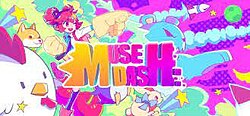

Muse Dash on Nintendo Switch is the rhythm game equivalent of a sugary energy drink: short, colorful, immediately energizing, and slightly impossible to resist once you've had that first hit. Built by Chinese indie studio PeroPeroGames and released on Switch on June 20, 2019, Muse Dash condenses rhythm-action into a tight, two-button package wrapped in a neon anime aesthetic and an earworm playlist. If you like your music games served loud, fast, and with a heavy side of cartoon mayhem, Muse Dash makes a strong case for being your new portable guilty pleasure. The game's premise is disarmingly simple: enemies and obstacles come from the right, your chosen Muse (a run-ready anime protagonist) runs left to right, and you either smack things or dodge them on the beat. Simplicity, though, is the delicious trick - Muse Dash hides surprisingly nuanced challenge behind that 'just two buttons' slogan. Critics were broadly positive: Metacritic lists the Switch version at 73/100, while outlets like Shacknews and Nintendo World Report leaned closer to the higher end with 8/10 and 8.5/10 respectively. TapTap even gave Muse Dash the 2018 "Gamer's Choice" award at their Game Awards, which is basically a polite way of saying players voted with their thumbs and the thumbs demanded more riffs and panda-costumed chaos.
Muse Dash's gameplay is refreshingly minimalist. You don't need the dexterity of a concert pianist, the peripheral collection of a collector, or the controller layout of a NASA simulator. The core loop uses two inputs - left and right - mapped to two buttons (or screen taps on mobile), which correspond to lanes or actions on-screen. Enemies, notes, and hazards slide in from the right and line up with your lanes: hit left to hit left, hit right to hit right, and occasionally jump or dodge when the game throws a pit or a gigantic face at you. Everything is tightly synchronized to a soundtrack packed with upbeat electronic, J-pop, chiptune, and other bopping genres that make your subconscious want to nod along even as your fingers are failing you. Difficulty is handled with common sense and generosity. Most songs have multiple difficulty settings, so whether you're brand-new and only just discovering that rhythm games are not a form of cruelty, or you're a veteran who wants your palms punished by speed and precision, Muse Dash tries to accommodate. The progression loop pairs new tracks and cosmetics with performance, and characters - called Muses - come with different stats and passive skills depending on costume, which adds a light meta-game impetus to experiment. Elfins (think: tiny support buddies) slot onto your Muse to give small bonuses or abilities, so you can tinker to find a pair that suits your style: defensive, aggressive, or downright reckless. The Switch version benefits from the system's portability. Muse Dash is a pick-up-and-play affair perfect for short sessions between classes, during a commute, or while pretending to be productive in the library. There's a pleasant immediacy to loading a song and feeling the rhythm snap into place. Controls translate cleanly to Joy-Cons; because the game isn't trying to be fancy with 12-button combos, it feels approachable whether you're at the TV or in handheld mode. The single-player mode is the focus; there's no elaborate multiplayer tangle to wrestle, which is a relief if you just want to groove without being reminded of your friends' superior reflexes. What gives Muse Dash its personality beyond the music is presentation and attitude. The levels scroll like a manic side-scroller, with enemies manifesting as everything from anthropomorphic objects to genuinely bizarre bosses. The whole game leans into anime tropes with an affectionate wink: cute characters, exaggerated reactions, and costumes that range from cool to 'did they just outfit a cat as a toaster?' There is strategic depth beneath the cute exterior - health values, passive skills, and item management mean you can't entirely brute-force your way through higher difficulties - but the learning curve remains friendly. On the content side, Muse Dash offers a wide variety of tracks, and critics note that this keeps the experience fresh. The game's library mixes original compositions with licensed-style tracks that span tempos and moods, so you'll be stomping along to bubblegum pop one minute and shredding frantic electro the next. If there's a complaint to be made, it's that repeat sessions on a single song can grow repetitive if you're grinding for perfect ranks and S-ratings: the loop is addictive, but it can feel like replaying the same cartoonish boss gauntlet. Still, the game's pacing and bite-sized stages make it one of the best rhythm games to carry in your pocket or dock on the TV when you have a spare 10-15 minutes and want instant, uncomplicated fun.
Muse Dash looks like an anime music video that swallowed an LED strip and a candy store. The game uses 2D side-scrolling visuals with a crisp, colorful anime style that is both charming and functional. Backgrounds are lively without being cluttered, and enemies are designed with enough personality that you remember them between runs (and sometimes curse them by name). Animations are snappy, hits feel impactful, and the visual feedback for timing and combos is satisfying - when your button press lines up with the music, Muse Dash rewards you with bright flares and a little boost of smug satisfaction. Running on Unity, the Switch port preserves the presentation well: there are no flashy next-gen shaders because Muse Dash doesn't need them. The aesthetic is cohesive and consistent, which helps the gameplay shine. From a performance standpoint, the game is solid; it plays smoothly in handheld and docked modes, and the UI remains readable even when the screen turns into a kaleidoscope of enemies and particle effects during frantic sections. Costume designs deserve a shout-out: they're silly, stylish, and occasionally blessedly ridiculous, which feeds into the game's overall charm. Visual accessibility is also decent - the two-lane system keeps things uncluttered, which is a mercy during intense songs when your eyeballs are trying to do algebra and cardio at the same time.
Muse Dash on Switch is an indie rhythm game with the confidence to be both tiny and bold. It's approachable - the two-button core is a brilliant design choice that makes the game instantly playable - but it still delivers challenge and variety for players who want it. The soundtrack is the real star, driving levels and giving every session a sense of momentum, while the visuals and character design keep things delightfully goofy and wholly watchable. If you're looking for a rhythm game to introduce someone to the genre, one that's easy to pick up and hard to put down for the first few hours, Muse Dash is a strong pick. Hardcore rhythm purists might miss deeper mechanics found in other franchises, but Muse Dash isn't trying to compete on complexity; it wants to be fun, bright, and utterly addictive. For its approachable gameplay, lean-but-satisfying progression, and excellent soundtrack, I give the Switch version a solid 8/10. Bring it on the bus, the plane, or your couch - just be prepared: the game will make your thumbs feel like rockstars and your brain like it drank three cans of neon soda.
 Guns of Icarus Alliance on PS4
 Harvest Moon: Mad Dash on Switch
 Coloball 2002 on PS2
 Press Your Luck on PS3
 Game Dev Story on PS4
 Mom Hid My Game! on Switch










 Another SquareThought Site