

 Aug 2025
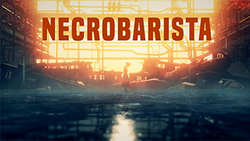

Necrobarista arrives like a midnight train pulling into a rain-slicked alley: polite, oddly caffeinated and populated by people carrying more emotional baggage than a frequent-flyer with commitment issues. Developed by Melbourne's Route 59, Necrobarista sets its stage in the Terminal, a back-alley coffeehouse where the recently-departed are allowed 24 final hours among the living. If you like your stories steeped in melancholy, served with a shot of absurdity and a soundtrack that knows exactly when to swell, this is one of those rare indie titles that makes you lower the lights and actually listen. A relic from the era before everything had to be a blockbuster, Necrobarista approaches storytelling the old-fashioned way: with a script that wants to be read and camera work that wants to be admired. It is, technically, a visual novel - but it refuses to behave like the genre's usual static slideshow. Instead it opts for cinematic 3D scenes, anime-influenced designs and an unapologetically theatrical sensibility. On the Switch this package has been renamed Necrobarista: Final Pour after Route 59 folded two standalone chapters into the base game, and that tidy final pour gives the whole thing a sweeter, more complete taste.
For anyone expecting twitch-reflex heroics, Necrobarista is not the brew you're looking for. The gameplay is primarily a narrative experience: you read, you watch, and you make a handful of structural choices that influence how some additional content unlocks. Route 59 peppers the straight-line storytelling with moments of environmental interaction and light investigation - linger on a prop, rotate the camera, examine the tiny details of a scene - but the core of the experience is a well-written, character-driven tale. A mechanic that garnered attention (and a fair bit of grumbling) is the game's 'keyword' or fragment system. As you progress, you collect fragments that allow you to unlock side-stories and deeper character beats. On paper it sounds like a tidy reward loop: find clues, gather fragments, enjoy bonus scenes. In practice the system can feel mysterious to the point of frustrating. Critics have noted that earning the necessary fragment points often boils down to guesswork; there isn't a clear sense of progression or satisfaction when a side story becomes available. The Switch port inherits this system intact, and while it doesn't ruin the experience, it does occasionally interrupt the narrative flow with an awkward scavenger-hunt rhythm. Interaction with the Terminal's clientele is where Necrobarista shines. Characters are vividly written - gangsters, baristas, necromancers and hipsters all get their turn under the neon glow - and the dialogue is alternately wry, earnest and uncomfortable in deliberately good ways. The two additional chapters added for the Final Pour edition expand on minor characters in satisfying ways, rounding out the cast and rewarding players who stuck with Route 59 from launch. Because the game is single-player and linear, your choices rarely create branching labyrinths of alternate endings; instead they deepen your empathy and occasionally unlock those side vignettes. If you measure games by the amount of 'play' they offer, Necrobarista will come up light. If you measure by how completely it immerses you in a tone and a space, it is disproportionately generous. The Switch is a perfect venue for the game's late-night, handheld confessional vibe: play it on a bus, on a bed, or in a dim corner and let the camera angles and music do the heavy lifting.
Looking back from the vantage of the 1990s, this game would have been an unwelcome act of witchcraft: a visual novel that refuses to accept the two-dimensional station. Route 59 went full cinematic, building the story with 3D sequences rather than the static sprites and text boxes the genre learned to be comfortable with. The result is striking. Camera work is a repeated flourish - interesting angles, considered framing and a keen eye for atmosphere that makes even a conversation at a table feel choreographed. The palette favors sunset oranges and deep corals, giving scenes the kind of warm melancholy you see in modern indie films. Critics compared it to Firewatch's sun-bathed melancholy and even to an Atlus game shot on espresso; those comparisons aren't hyperbole. The character designs wear their anime influences openly, but the real star is the cinematography: lighting, depth and motion combine to make the Terminal feel lived-in and cinematic. On Switch the visuals are faithful to the original, and the Unity engine handles the transitions and camera moves without drama. The art received industry recognition - the game picked up awards for art and excellence in presentation - and you can feel why in every slow pan and character close-up. Complementing the visuals is Kevin Penkin's score, which underscores scenes with a competence bordering on wizardry. The music never fights the story; it elevates it, swelling when required and pulling back when a line of dialogue needs to land.
Necrobarista is an elegant, carefully composed small game. It knows what it is and, more importantly, it knows how to do it well. The writing is the beating heart; the 3D cinematics and soundtrack are the pulse that keeps the heart from being a mere lump of text. Critics and audiences agreed on this point - the game received generally favorable reviews (Metacritic hovering in the low 80s for PC), glowing write-ups from outlets like Destructoid and Game Informer, and praise for tackling death and grief without cheap sentimentality. The cup is not without its bitter grounds. The keyword/fragment system - intended to tease out side content - is clumsy and can turn exploration into an aimless chore. Players who want more interactivity or branching consequences will find themselves wanting. That said, when judged as a piece of interactive literature and audiovisual design, Necrobarista pours generously. On the Switch, Final Pour is the definitive edition: it contains the extra chapters and preserves the game's visual and musical flourishes in a portable package. If you enjoy character-focused stories, atmospheric presentation and have a soft spot for late-night conversations with the newly deceased, this is a title that will reward patience and attention. For a developer as small as Route 59, Necrobarista is a polished manifesto: indie games can still surprise, console-bound or handheld, and sometimes the best adventures are the ones that simply ask you to listen. Score: 8 out of 10 - strongly recommended for mood-driven players; bring a warm blanket and perhaps a real cup of coffee.
 Oshiete! Popotan on PS2
 Rewrite on PS4
 Pachislot To Heart 2 on PS3










 Another SquareThought Site