

 Oct 2019


Neo Cab greets you like a friend who knows too much and judges your playlist: it is intimate, chatty, and a little unnerving. You play Lina, a rideshare driver who moves into the neon metropolis of Los Ojos to live with an old friend, Savy, only to have Savy text for a pickup and then vanish into the city. The game's core conceit is that you’re not just ferrying extras from A to B; you’re collecting stories, picking at social scabs, and trying to keep your own head above water. The FeelGrid, a smartwatch that broadcasts Lina's emotional state as colors, is the tool and the leash. On Switch, Neo Cab condenses its strengths and limits into a portable, conversation-first package that is less about reflexes and more about reading a room, balancing resources, and surviving conversations without burning all of your emotional chips.
If you want action, this isn't your corner of the city. If you want challenge, Neo Cab quietly hands you a complicated social puzzle and says good luck. The game is a visual novel with survival-lite mechanics: every choice in conversation nudges Lina's mood, which is displayed on the FeelGrid, and that mood directly opens or shuts conversational doors. The skill ceiling doesn't come from combat or platforming; it comes from being dextrous with empathy and self-control. You will need to learn when to soothe, when to prod, and when to shut up and collect the fare. Think of each passenger like a mini psychological negotiation. Choices are rarely binary; they are graded attempts to steer a human being who may be intoxicated, bigoted, sad, or oddly optimistic. Your replies change Lina's Affect on the FeelGrid, and that affects which dialogue options are even available next. This creates a layered challenge: you have to predict how a given line will change Lina's mood, and then predict how that new mood will limit or expand future options. It is like playing chess with feelings where the pieces complain a lot and occasionally cry. Neo Cab dresses up its conversational challenge with survival bookkeeping. Fuel and money are not window dressing. Failing to earn cash or mismanaging trips can strand Lina or force poorer decisions later. You can decline pickups, but doing so costs income; you can push conversations too far and end up emotionally exhausted, which shuts down certain lines of inquiry and sometimes the ability to pick up another passenger. That leads to interesting tradeoffs. Do you take the safe, tedious ride to refill gas and pay rent, or do you try to coax out a lead on Savy from a sketchy, high-risk passenger whose confession would change everything? These sorts of risk-versus-reward judgments make even short day-to-day rides feel like micro-strategic decisions. The game rewards two particular talents. The first is reading subtext. Many passengers say one thing and mean another, and the FeelGrid adds a second layer of information about how Lina herself is processing the interaction. If you can parse tone, spot the implied, and time your emotional nudges, you can unlock more revealing threads. The second talent is emotional management. You often need to steer Lina into an emotional state that unlocks the right options for the next passenger. That can mean deliberately tamping down anger, feigning optimism, or allowing sadness enough space to empathize genuinely. So yes, you get graded on how good you are at manipulating an avatar's feelings for expedience. Welcome to modern employment. There is also a meta-challenge in pacing and curiosity. Neo Cab has a relatively short playthrough and a story that some reviewers found underwhelming at the end. That makes your choices feel weightier, because you cannot indefinitely grind passengers for cash or gossip. Rock, Paper, Shotgun wished for a free-play mode for exactly this reason. As a player, you must balance the urge to explore every conversational branch against the finite arc of the main mystery. That tension is part of the game's design: the best runs are the ones where you triage which conversations are worth emotional capital and which are just filler. Finally, expect ethical thinking exercises. Many passengers bring polarizing opinions about automation, corporate control, and public safety. Lina's prior firing from Capra, the corporation pushing driverless cars, is the political drumbeat beneath the taxi's radio. Negotiating these topics requires moral clarity and tactical delivery. Sometimes the 'right' answer will cost you in cash or social capital; sometimes the pragmatic move feels morally dubious. Neo Cab challenges your patience, your willingness to lie by omission, and the extent to which you will weaponize compassion to get a lead on Savy.
Neo Cab does not try to blind you with technical fireworks, and that is fine because its primary muscle is narrative. The presentation is recognizably visual novel: 2D character art, city backdrops, and a clean UI that makes choices legible and the FeelGrid prominent. The visuals are competent and serve the dialogue rather than upstage it. On Switch the game runs smoothly and the interface feels crisp whether docked or handheld. If you came expecting cinematic vistas and frantic driving sequences, you will be disappointed; if you came for expressive faces, well-placed color, and an interface that keeps your focus on talking instead of steering, Neo Cab delivers. It earned attention for narrative design rather than rendering prowess, including an IndieCade award for Best Narrative Design in 2019, which is telling: the game looks the way a story-first title should look.
Neo Cab is a nimble, thoughtful experiment in conversational survival. Its difficulty is not found in reaction times but in emotional arithmetic: manage Lina's mood, juggle fuel and funds, and pick the right moments to press or back off. Players who enjoy social deduction, ethical tradeoffs, and the mental gymnastics of managing stateful dialogue systems will find it deeply satisfying. The game's weaknesses are its brevity and an ending that some critics found unsatisfying, which reduces replay incentives once you've tested the major conversation trees. Still, the passengers are memorable, the dialogue often sharp, and the stakes feel real because your decisions have cascading, mechanical consequences. If you're a player who likes to win arguments with kindness, exploit empathy for the greater good, or simply see how many ways a night shift can go off the rails, Neo Cab on Switch is worth the fare. Score: 7.5 out of 10.
 TerraTech on Switch
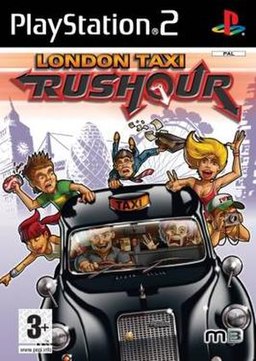
 London Taxi: Rush Hour on PS2
 Tokimeki Memorial Drama Series Vol. 3 Tabidachi no Uta on PlayStation
 Oshiete! Popotan on PS2
 Rewrite on PS4
 Pachislot To Heart 2 on PS3










 Another SquareThought Site