

 Mar 2019
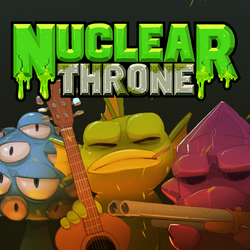

Nuclear Throne on Switch is the kind of game that slaps you across the face with explosions, hands you a revolver, and then politely explains that character development will occur between death screens. On the surface it's a tight top-down bullet-hell roguelike: you run, you shoot, you pick up weird weapons, and you die a lot. If you peer a little closer - or if you tilt your head and squint like you're trying to see a plot in a tar-and-feathers-themed snow globe - you begin to see something richer. The roster of 12 playable mutants, each with a unique ability, is less a cast of disposable avatars and more a rotating ensemble of tragicomic protagonists. Vlambeer's deliberately minimal plot leaves much to interpretation, which in this case is a feature, not a bug: every run reads like a short story in which mutations are both the character beats and the plot twists.
Nuclear Throne's mechanical scaffolding is where the character arcs are written in bullet casings and radioactive glow. You pick from one of the 12 characters - ten unlockable through play, two secret - and immediately inherit a premise: someone weird with a special talent trying to get to a throne made of nukes. The game hands you a revolver and an existential roadmap. Each character has a signature ability that sets the tone for their narrative arc. Some are tanks who shrug off bullets like emotional offense; some are glass-cannon speed demons who sprint through consequence and cry later. Those mechanics double as personality shorthand. Character progression in the game is handled through 'rads' - experience pellets that drip out of enemies. Rads unlock mutation choices: four randomly selected perks each time you level. This randomness is crucial to the storytelling. Where a single-player narrative might hand a hero a specific growth moment, Nuclear Throne makes you improvise a character arc during combat. Did your shotgun-toting lizard get the 'shotgun skills + HP' upgrade? Congratulations, your arc is 'From reckless reptile to barely competent dragon.' Did the game gift your heavy-hitting brute a stealth mutation instead? That's an existential detour where the big guy learns subtlety between explosions. The choice system forces players to construct arcs from absurd building blocks - which is delightful because it turns each win into the kind of character development that would make a therapist both proud and terrified. At level 10 a character-specific "ultra-mutation" appears: a capstone, a plot climax. If normal mutations are the character's quirks and coping mechanisms, the ultra-mutation is their irreversible transformation. It's the "college graduation and immediate identity crisis" of the run: you become new, more dangerous, and slightly less human. Because runs are self-contained (the game resets on death and most upgrades don't carry over), each run reads like a short story or alternate-universe episode. Vlambeer's own theory - that every run is a different universe where different characters are alive and trying - is narratively brilliant. It permits endless reinterpretation: every time you loop, your protagonist is reborn into a similar but distinctly different narrative. Unlockable characters and secret ones serve as cameo appearances or surprise sequels. Finding a secret character mid-run is like discovering your favorite indie band has a hidden B-side; it reframes everything you've been doing and gives you a fresh lens to wreck things with. Secondary sprites and skins - which the player can earn through secret tasks - act like costumes in a long-running TV show: the character is fundamentally the same, but now they wear a fedora and steal the scene. Weapons and ammo types (there are five: bullet, energy, shell, bolt, explosive) form the vocabulary with which these arcs are spoken. Equipping two weapons becomes a tonal choice: shovel + assault rifle reads like 'practical but violent'; flamethrower + crossbow screams 'arsonist with a hobby.' The red and yellow chest system means power spikes are narrative beats - a golden gun on loop two is the return-of-the-hero moment, except the hero is more likely to immediately die in a pit. Crowns, retained up to and after defeating the final boss, are the game's rare forms of continuity, tiny narrative threads that survive the reset and hint that some decisions carry weight beyond a single run. The game's loop structure - pushing to level 7-3 to face the Nuclear Throne, and then optionally looping with increased difficulty - is existential in a way few shooters bother to be. Each loop escalates the stakes and forces characters into a sequel where they are slightly more jaded and heavily armed. For story-minded players, a single success followed by a loop suggests a tragic arc: achieving the goal only to find the goal is a rung on an endless ladder. That ambiguity is nuclear-grade thematic material. Local co-op, daily and weekly challenges, and score competitions add social punctuation to these arcs. Watching a friend with a secret character get obliterated and then suddenly clutch an improbable run is narrative comedy gold. The developers' decision to keep the plot minimal amplifies the player's role as storyteller: you provide the motives, the voice, the post-credits scene where someone inevitably mutates into something worse.
Visually, Nuclear Throne dresses its stories in crude, expressive pixel art courtesy of Paul Veer with promotional flair from Justin Chan. The graphics don't aim for subtlety; they aim for shorthand. A mutant with one glowing eye and a missing arm tells you their backstory without a single load-screen tip. The permanent 4:3 aspect ratio is a deliberate directorial choice intended to balance onscreen threats, but it also gives the game a slightly claustrophobic stage for character moments. Environments are procedural, made by 'walkers' that populate rooms and place objects; this randomness supports narrative improvisation - you never know whether the level will hand your fledgling hero a gentle alley or a freeway of instant death. Jukio Kallio's soundtrack and the swishy, decisive sound effects round out character beats: a well-timed riff when you nab an ultra-mutation feels like a title-card reveal.
If you play Nuclear Throne only to chase scores, you'll have a great time: it's tight, fast, and rewarding. If you play it to watch characters be made and remade by luck and lead, it's quietly profound. Vlambeer gives you archetypes and then hands the plot to chance, and what's revealed is a catalogue of short, violent, often hilarious arcs - frustrated heroes, accidental villains, tragic comedians, and secret cameos. The Switch port keeps all of this intact, and the resulting package is a roguelike that functions as both a hardcore shooter and a sandbox for emergent character drama. For anyone who likes their storytelling with a side of adrenaline and a sprinkle of radioactive existentialism, Nuclear Throne is worth the trip to the throne - even if you only make it to the first act a dozen times before giving up and ordering pizza.
 Nuclear Strike on PlayStation
 Chinmoku no Kantai on PlayStation
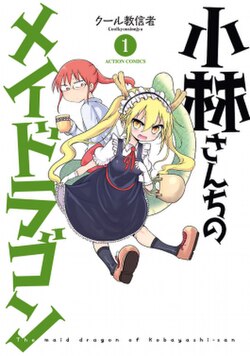
 Miss Kobayashi's Dragon Maid: Sakuretsu! Chorogon Breath on Switch
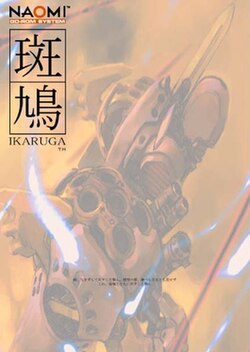
 Ikaruga on Switch
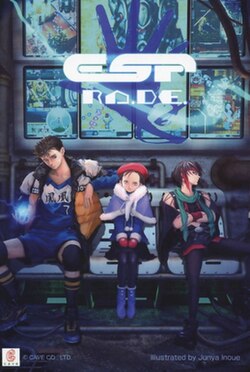
 ESP Ra.De. Psi on PS4
 Constantine on PS2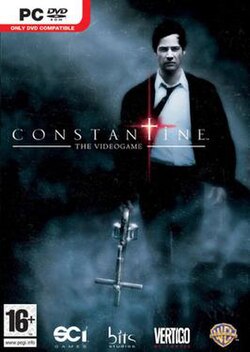










 Another SquareThought Site