

 Feb 2019
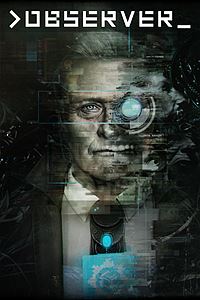

I remember when a magazine review meant a cigarette-smudged photo of a CRT, a stern editor's box, and a verdict you could tattoo on your console. In that spirit I approach Bloober Team's Observer, a cyberpunk detective tale that dresses like Blade Runner and thinks it's auditioning for a late-night cinema slot. The game first stalked PCs and consoles in August 2017 and later found its way to the Nintendo Switch in February 2019. On Switch it arrives as the original Observer package rather than the later System Redux enhancements, but the essences that won praise in reviews remain: a claustrophobic mad-science setting, the disquieting novelty of mind-hacking, and a lead performance by Rutger Hauer that wears its cinematic lineage on its sleeve. If you crave atmosphere over reflexes, this is a title that will sit heavy on your ribs and rattle your spine like a well-timed thunderclap behind a mountain of neon.
Observer is a walking, talking, occasionally panicked puzzle of a game. You play Daniel Lazarski, an Observer - a police detective licensed to hack the implants of citizens with a device called the Dream Eater. The perspective is strictly first-person, and the mechanics are deliberately modest: investigate, interrogate through dialogue trees, and step gingerly when the cat-and-mouse stealth sequences rear their head. Daniel's toolkit is an augmented augury of Electromagnetic Vision for scanning electronics and Bio Vision for biological traces, and the game encourages you to hover the camera over even the most banal prop until the narrative juices start to drip. The meat of Observer's novelty lies in the mind-hacking sequences. These are not jump-to-answers mini-games but full-blown, acid-warped vignettes where level geometry rearranges, compression-artifact effects squirm across the screen, and reality peels like cheap wallpaper. They're the game's proudest trick; reviewers likened them to 'intense, terrifying' set pieces, and they are precisely that when they work. Collectibles are scattered like breadcrumbs for completists: Nanophage cards, patient records, roses, and even a tiny in-game mini-game accessed via terminals called With Fire and Sword: Spiders. The exploration can feel meticulous to the point of tedium, which is a deliberate design choice: Bloober Team trades brisk action for patient, investigative dread. Stealth sequences and some cat-and-mouse moments divide opinion. The game shoehorns tension by forcing you into hide-and-seek segments that strain the otherwise contemplative pacing; several critics called these sections frustrating and overused. On Switch the overall structure is intact, but the lean, slow-burn rhythm can magnify any handling niggles. Dialogue trees give NPCs weight and brush strokes of humanity; the writing goes out of its way to make even fleeting characters feel genuine, which helps when the plot's darker revelations land. The game's endings hinge on grim choices made in a virtual world called Sanctuary, and the moral uncertainty these choices present fits perfectly with the game's paranoid tone.
This is the part where a 1990s critic would hold up a glossy screenshot and declare 'this is what next-gen looks like' - then immediately get mercilessly nostalgic. Observer's visual DNA is unabashed cyberpunk: rain-slick tenements, propaganda posters, tattoo parlours lit like altars, and the sort of grime that looks like it has its own social security number. Bloober Team used Unreal Engine 4 and a team of around thirty to craft environments that critics praised as 'hyper-detailed' and 'masterful.' On Switch, resolution and performance are understandably the omitted corners of the trade-off, but the core art direction survives intact. The tiny, lovingly modeled details - ComPass implants, flickering holograms, half-burnt posters in Polish - make the world feel lived-in. The mind-hacking sequences are where the visuals leap from 'well-crafted' to 'visceral.' Fragmented geometry, compression-esque artefacts, and surreal morphology all conspire to create moments of genuine shock. Sound design and Arkadiusz Reikowski's score lean heavily into analogue synths, choral elements, and diegetic psytrance to reinforce the unease. Binaural recording techniques and ambient cues make exploration tense in a way that a flat palette could never achieve. Critics flagged Rutger Hauer's line delivery as occasionally flat, which is an odd footnote when the rest of the audio-music and subtle environmental noises-works so hard to escort you into the game's skin. The Switch port preserves most of these assets, and while you might miss a higher-res flourish or two from the Redux edition, the aesthetic statements remain clear and uncompromising.
Observer on Switch is not a game for people itching for arcade thrills or twitch reflexes. It is, however, an exemplar of what indie horror can be when it refuses to pander. Bloober Team assembled a dense, claustrophobic world and populated it with moral rot and digital phantoms. The Dream Eater sequences are the star attraction - inventive, often terrifying, and worthy of the praise they've collected - while the stealth stretches and occasional pacing lapses prevent the title from becoming an unblemished classic. On Switch the experience is commendably complete: harsher hardware makes the edges a little softer, but the atmosphere, writing, and sound design carry the weight. If you still buy magazines for long-form features and linger over reviews like they are small novels, this is the sort of game you'd underline and keep on a shelf. For everyone else: if you want a compact, memorable plunge into a cybernetic nightmare that rewards patience, Observer will not disappoint.
 Observer: System Redux on Xbox Series X/S
 Fault Milestone One on Switch
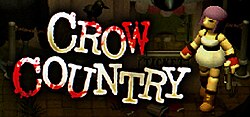
 Crow Country on PS4
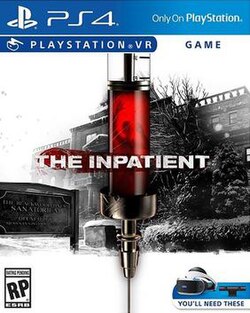
 The Inpatient on PS4
 Obscure: The Aftermath on PS2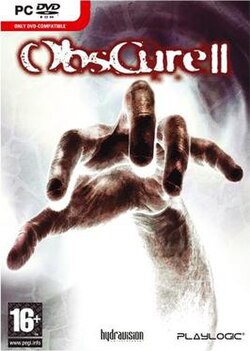
 Deathmatch Village on PS3
 Cronos: The New Dawn on Xbox Series X/S
 The Medium on PS5










 Another SquareThought Site