

 Jun 2022
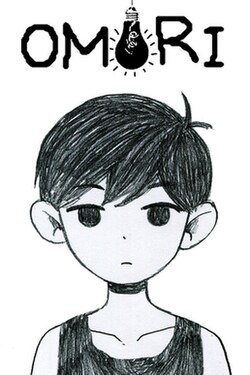

OMORI is a weird, wonderful, and occasionally soul-crushing JRPG that sneaks into your brain like an overly sentimental houseguest and rearranges the furniture. On Switch it brings the game's paper-crayon Headspace and unsettling Black Space home to your couch, pairing childlike visuals with some impressively nasty emotional whammy-bosses. If you're buying OMORI for the challenge, don't expect Street Fighter reflex tests; expect instead to wrestle with mechanics that ask you to think like an anxious, melodramatic theater troupe - where every emotion is both weapon and liability.
The combat in OMORI wears its psychology on its sleeve. Instead of the usual buffet of elemental resistances, enemies and party members sport emotions - Neutral, Happy, Sad, and Angry - that form a rock-paper-scissors web: Happy beats Angry, Angry beats Sad, and Sad beats Happy. That sounds simple until you meet enemies that go from Neutral to 'Super Sad' faster than you can say "buffed defense," and you realize you've been feeding their advantage for three rounds. Learning to manipulate emotions is the first real skill gate. You need pattern recognition to read enemy tendencies, and the patience to bait them into changing states at the right moment. One of OMORI's stealthiest pieces of difficulty is that emotions change mid-battle through attacks, items, and skills - meaning a move that worked last turn can backfire spectacularly when the target flips to a different mood. Remedying a bad emotional matchup often costs Juice, the shared resource used for follow-up skills, so resource management becomes chess-like: expend now to avoid a catastrophe or conserve for a late burst. Juice is the game's second major strategic axis. It accumulates when your party takes damage and is consumed by follow-up attacks that let party members chain moves for big payoff. This design encourages a kind of calculated suffering; getting hit now can be an investment if you can turn the follow-up into a clutch counter. That requires timing, risk assessment, and sometimes a willingness to let one character get toasted (literally - characters turn into toast when KO'd) so the rest can snowball a comeback. The game rewards players who can balance short-term damage against long-term potential. Boss fights are where OMORI's dichotomy shows up loudest. Some reviewers and players found many encounters underwhelming and repetitive if they discovered a reliable spam strategy. Others, notably those who explore optional dungeons and calendars of side activities, encountered bosses that are legitimately demanding. These harder fights force you to master the emotion triangle, exploit status windows, juggle Juice, and optimize gear. Party composition matters: every character brings unique skills for overworld puzzles and combat synergy. Kel, Aubrey, Hero, and Omori (or Sunny in the real world) should feel like pieces of a puzzle rather than interchangeable damage dealers. Overworld exploration and puzzles play into the challenge too, but in a gentler way. Puzzle solutions aren't muscle-meltingly hard, they reward curiosity and reading the environment. Side quests often grant skills and items that make combat more interesting; neglecting them can make the game feel tougher since you won't have access to tools that twist battles in your favor. Navigating Headspace is mentally disorienting by design, and the game expects you to keep notes mentally or literally - there are hidden tracks, secret rewards, and mechanics that only reveal their depth after you've poked every corner. On the Switch, additional content not found in the original PC release pads the experience, which can add both narrative and mechanical depth. Choices matter dramatically in this game: several endings hinge on whether you confront characters or hide, whether you tend certain garden plots, and how you interact with Basil's photo album. That means the game's challenge is twofold - mechanical and moral. You are tested on your decision-making under emotional pressure, and sometimes the 'right' choice means opting for confrontation and accepting a harder, but more honest, path. Skills the game emphasizes: pattern recognition (reading enemy AI and emotion cycles), resource management (Heart, Juice, and limited items), party synergy (using each character's niche effectively), patience (bosses and pacing can be slow but deliberate), and situational adaptability (switching tactics when emotions flip). There's also an underrated meta-skill: emotional tolerance. OMORI is stressful on purpose - it wants you to feel bad sometimes - and handling that without rage-quitting is part of the experience. If you enjoy methodical, thought-heavy fights where a single misread of an emotion leads to a theatrical disaster, OMORI will scratch that itch. If you want twitchy, instant-satisfaction combat, this isn't your adrenaline drip.
Graphically OMORI is the sort of indie aesthetic that will seduce you into thinking you can handle whatever's coming because the art looks so sweet - until the art stops being sweet and remembers it moonlights as a horror movie. Headspace is a childlike, crayon-colored playground where monsters look like you drew them after a sugar crash. Then Black Space and certain real-world sequences swap palettes and styles like someone hit a 'make this haunted' button. Critics praised the monster designs and anime-style cut-ins during attacks; they're surprisingly well-animated and lend impact to the mechanical moments. On Switch the visuals hold up quite nicely, although the platform's performance quirks are minor trade-offs for portability. The juxtaposition of charming pixel-style overworlds and manic, unsettling cutscenes enhances the game's challenge: you're more likely to underestimate a fight introduced by a pastel clown than one announced by a demonic chorus. That misjudgment is part of OMORI's craft - it lulls you with approachable art then surprises you with mechanical and thematic teeth. The soundtrack deserves a shout-out too; it cues emotional beats and boss tension deftly, helping you prepare mentally for the fights ahead.
OMORI on Switch is a rewarding challenge for players who like their RPGs cerebral, emotionally knifelike, and occasionally theatrical. The combat asks you to think in moods instead of numbers, to manage shared resources, and to plan for contingencies when enemies flip their emotional state. Bosses range from manageable to seriously tough depending on how much of the game's optional content you embrace, and the multiple endings mean your choices carry both plot weight and gameplay consequences. It's not an action-heavy test of reflexes; it's a test of patience, pattern recognition, and emotional decision-making - and that's exactly the point. If you want an RPG that forces you to adapt your strategies, micromanage resources, and mentally roleplay like a tiny, anxious general directing a band of theatrical children, OMORI is a must-play. Be warned: it grapples explicitly with depression, self-harm, and suicide. Those mature themes are handled with care but are intense and may be triggering; approach with self-awareness. Scoring it an 8.5/10 feels right - it's inventive, artistically fearless, and mechanically thoughtful, even if some battles can be cheesed and pacing sometimes stalls. Ultimately OMORI rewards players who bring thoughtfulness to the controller, and on Switch it's a portable clinic in how to turn feelings into strategy without losing your lunch (though it might make you cry into your Joy-Con).
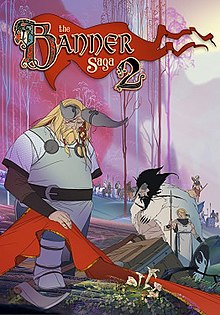
 The Banner Saga 2 on PS4
 Arcania: The Complete Tale on PS3
 Gnosia on Xbox Series X/S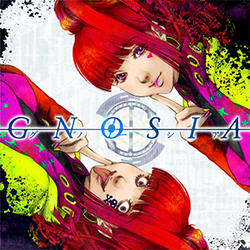










 Another SquareThought Site