

 Aug 2025
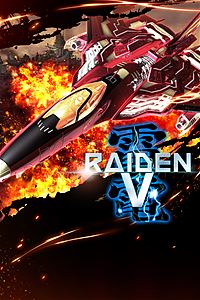

Reviewing Raiden V: Director's Cut for the Nintendo Switch feels a bit like digging an old arcade receipt out of the pocket of a leather jacket: familiar, somewhat greasy at the edges, and stubbornly proud of its lineage. This is not a reinvention of the wheel; it is a very loud, very precise polishing of a wheel that has been rolling since the coin-op heyday. Created by MOSS and shepherded onto Nintendo hardware by Kaminari Games, the Director's Cut carries the franchise standards forward-three selectable fighters, predictable waves of mechanical nastiness, and boss encounters that will make you consider the merits of both patience and panic. Those looking for narrative novelty will be surprised: Raiden V is the first in the series to indulge in a fairly detailed, voiced story, complete with named officers, scheming organizations and crystalline aliens bent on reformatting the planet. The Director's Cut packs in the arcade-grade scoring mechanics veterans love-Flash Point chains, sub-weapon boosts-and grafts on an online "Cheer" system that attempts to give the solitary shooter a social heartbeat. If you remember the 1990s magazines that dissected games with the earnestness of a surgeon and the sarcasm of a bartender, this review will sound familiar. The game knows what it is, and most of the time, it does that thing very well.
Gameplay is where Raiden V wears its pedigree with pride. The structure is a classic rail-based vertical shooter: you fly, things explode, and the screen eventually attempts to convince you that you were always supposed to be a better pilot. There are three aircraft on offer-Azuma (Japan), Spirit of Dragon (United States) and Moulin Rouge (France)-and they are more than cosmetic choices. Each craft offers a different balance of power, defense and mobility, plus a fixed sub-weapon that changes how you approach enemy formations. Unlike some previous entries, all ships share the same pre-installed bombs, so the selection matters more to your playstyle than to your safety net. The Director's Cut brings two substantial gameplay wrinkles to the field. First is the shield/energy bar, which lets the player absorb several hits before being obliterated. This is not a free-pass nerf to difficulty; it changes risk calculus. Because you only have one ship, destruction still costs your score and forces a continue screen, so reckless play is punished in the modern way-your leaderboard standing suffers. Second is the Flash Point gauge, a scoring engine that rewards speed and precision. Kill multiple enemies rapidly, and the gauge climbs through five levels; let your concentration lapse and the multiplier collapses. If you like the leaderboard chase from the 90s-stacking combos until your palms sweat-this is the feature that scratches that itch. The Director's Cut also grafts on the Cheer System, an online trick that turns strangers on the internet into a resource. You can "cheer" other players for achievements, and accruing cheers fills a Cheer Call gauge. Use a Cheer Call in a pinch and the game clears bullets on-screen while dramatically boosting your sub-weapons for a short, glorious interval. It reads like a late-era attempt at social integration: you are still playing alone, but the game rewards you for inhabiting a shared ecosystem. The practical effect is satisfying-Cheer Calls are panic buttons and score multipliers wrapped into one-but the game never insists that you rely on other players. It is a clever compromise between classic solo arcade muscle and modern online trimmings. The stages themselves stitch together a surprising roster of real-world locations: New York, the Middle East, France, England, Belgium and Sweden. The enemies range from standard drone-paperweights to crystalline machines that mimic an invading intelligence. Boss fights are the expected wall-of-HP affairs, but they tend to be theatrical and memorable; the moment when a contaminated battleship turns its systems against you is the sort of set piece Raiden has always executed well. The story is more elaborate than earlier entries. You play under the command of Richard "Max" Maxwell with communications officer Eshiria Portman, and the plot takes you from Earth to a crystal world with motives that read like environmental catastrophe meets planetary reset. There are branching scene beats and multiple endings depending on how you perform during stages; the game will reward both your fingers and your curiosity if you follow different routes. For purists who want pure mechanical suffering, the extra narrative is optional, but it adds character to an otherwise relentless barrage of bullets.
Graphically, Raiden V is a polish-over-powerhouse situation. The visual language is modernized sprite-and-effect fare: glossy explosions, shimmering crystal textures and cleanly rendered ships that read well on the Switch's portable screen. The backgrounds are globe-trotting postcards punctured by alien contamination, and the designers took pains to make each stage feel distinct. The Large Hadron Collider level looks like something an early 2000s sci-fi poster would blush at: lots of metal, glowing conduits and a concentration of visual noise that makes the foreground combat feel suitably dramatic. On the console of the 1990s we would have debated scanlines and emphasis on CRT warmth; today the conversation is about clarity and readability. Raiden V manages both: it is flashy without becoming incomprehensible. The director's cut leans into modern particle effects for bullets and explosions, offering spectacular moments where the screen becomes a tapestry of light. Performance on Switch is not explicitly documented in this brief, but the art direction reads as if it was intended to survive different display sizes and remain legible in both handheld and docked modes. The user interface keeps score and Flash Point indicators accessible without hogging screen real estate, which is essential in a game where the difference between victory and premature vaporization is a single missed indicator.
If you came to Raiden V: Director's Cut expecting reinvention, you will be politely disappointed. If you came looking for a modern, well-constructed iteration of a venerable shoot 'em up series, you will be rewarded. The Director's Cut marries the old-school chase for high scores-Flash Point chains and sub-weapon mastery-with modest modern niceties like an energy bar, online cheering and a more developed plot. The music and voice work lend an oddball seriousness to proceedings, and the multiple endings give the game a replayability leash that the pure arcade tincture sometimes lacks. Reception has been generally favorable across platforms (Metacritic scores hovering in the mid-70s and a 7.5/10 nod from Destructoid), and that feels about right: Raiden V is not flawless, but it is competent, focused and frequently thrilling. For Switch owners who want a shooter that respects its roots while not being afraid to add a few 21st-century tools, this Director's Cut is a worthwhile loadout. Stick with it long enough to learn the Flash Point tango, and the game will turn its bullet ballet into a very satisfying victory march.
 Raiden V: Director’s Cut on Switch
 The Raiden Project on PlayStation
 Yurukill: The Calumniation Games on PS5
 Centipede: Recharged on Switch
 Miss Kobayashi's Dragon Maid: Sakuretsu! Chorogon Breath on Switch
 Time Crisis on PlayStation










 Another SquareThought Site