

 Aug 2025
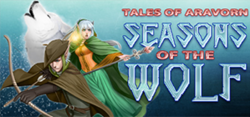

If you like your RPGs with long conversations, slightly melodramatic stares and the occasional tactical tussle that reminds you of chess if chess had healing potions and angst, then you and 'Tales of Aravorn: Seasons of the Wolf' will get on fine. Made by Winter Wolves and built in Ren'Py, this is a hybrid visual novel meets turn-based party game that arrived on most platforms back in 2014 and politely showed up on Switch in 2022. The story follows a pair of elven protagonists as they move through metaphorical and literal seasons, travelling from an ice-shrouded town to dusty deserts and stormy ports, making friends, making enemies and making rom-com-adjacent mistakes depending on the choices you make. There is romance, same-sex options, multiple endings and a small army of artists and composers quietly doing their best to keep the whole thing emotionally pleasing. It is the sort of game that wants to hold your hand while also talking about tragic pasts. The hand-holding is optional. The tragic pasts are not.
The core loop of the game reads like something you could pitch to a calm-minded tabletop referee: read a scene, make a choice, possibly trigger a battle, then either high-five your surviving party or reload a save if the universe decided it was having a bad day. The visual novel side is dominant. Most of the experience is walking through dialogue, building relationships and steering the plot. At the beginning you pick your protagonist's gender - both male and female elven leads are available - and then you accrue an ensemble cast of companions who come with their own personalities, romance routes and opinions about your life choices. When words turn into weapons, the system shifts into a tactical-but-not-too-terrifying mode. Up to six characters can face off against six enemies, split into front and back rows. The front row is your meat-and-potatoes crowd: warriors, tanks and anyone who likes taking hits and pretending they enjoy it. The back row holds mages and archers who are fragile and dramatic. Melee characters can't touch the back row unless the front is empty, in which case the back row gets forced forward in a way that feels very Shakespearean and mildly unfair. Characters take turns determined by speed stats and action cooldowns; faster characters act more frequently, which produces the satisfying feel of a nimble rogue annoying a hulking brute with consistent pokes. On a character's turn you can choose to attack with a weapon, use an ability, toss an item or swap positions. The swapping mechanic gives a pleasant little layer of chessiness: front-liners can switch spots with back-liners, and some warrior abilities let you force enemies to swap. That creates tactical windows where you can bait out a protectively positioned enemy, then smash the fragile wizard behind them. Movement into unoccupied spaces is allowed, which makes battlefield layout matter, if only a little. Battles do not permit fleeing, so you either accept the fight or reload-this might sound medieval, but it's also refreshingly decisive. Victory is rewarded in a gentle, developer-approved way: health and MP are fully refilled after most battles, which keeps the pacing brisk and avoids the grind-spiral where you spend the entire evening running back to town to buy bandages. Some story beats will deny you that auto-restoration, introducing a rare sting of tension that reminds you this is still an RPG and not just a conversation simulator that occasionally slaps enemies. As your roster grows beyond the battle limit, you get to pick who sits at the table before combat, letting you craft teams for different challenges. It rewards familiarity with your cast. If you like a character, you will use them until they get bored and demand a new hat. Relationship mechanics are where the game shows its modern sensibilities: same-sex romance options are supported and the narrative branches depending on your choices and who you romanced. Choices change outcomes and unlock different endings, so replay value exists if you're the sort of person who enjoys seeing every possible awkward conversation. The DLC 'Bad Blood', released in 2015, tacks on post-game story and extra scenes tied to your romances, which is a useful safety net if you finished the main plot and were left with one too many unresolved feelings. If you prefer a tighter, more mechanically deep combat system, this isn't the place to find it. The battles are competent, functional and occasionally clever, but the focus remains on story and character. You will not find extensive customization or obscure min-maxing choices, just a pleasant tactical layer that complements the dialogue. The balance tends toward being forgiving: battles rarely feel punishing and the game's primary difficulty is emotional, not mechanical. According to contemporary impressions, expect roughly 15-20 hours to complete a standard run, which feels about right given the deliberate pacing.
Graphically, the game looks like a visual novel raised on pixel soup and artbook aspirations. Character portraits are the main stars: multiple artists contributed to the cast, and their styles coalesce into a coherent aesthetic that emphasises expressive faces and fantasy sartorial choices. Because the engine is Ren'Py, the presentation is static-image heavy with occasional animated or voiced moments. The battle sprites and backgrounds are functional rather than ostentatious: they convey what they need to without trying to convince you they're a big-budget console production. That is not an insult-it is merely an accurate description. On Switch the port is acceptable. The UI scales, text is readable and the controls map to the Joy-Cons in a manner that is fine for leisurely play sessions or dramatic handheld read-throughs on a train. The trade-off of a visual novel on a portable machine is that you will stare at the same portrait while contemplating whether to confess your affection to someone with a tragic backstory, and that is not a bad use of a commute. The soundtrack deserves a special mention: Matthew Myers and Kevin Greenlee both contributed music, and there is a theme song by Boossara that gives the game occasional cinematic lift. Ambient tracks often do the subtle work of making locations feel distinct-icy towns sound cold, deserts sound dry and stormy ports sound like they regretted choosing that career path. Because different artists handled different parts of the game, character art can fluctuate in detail and line weight. That variation might be jarring if you are a pixel-perfectionist, but it also gives the cast a wider personality palette. In a visual-novel-first title that aims to sell characters, variety is a design feature, not a bug.
Seasons of the Wolf is a competent, unflashy follow-up to its predecessor. It does what it sets out to do: it tells an earnest fantasy story across four seasons, gives players meaningful romance choices, and peppered into the narrative are battles that are tactical enough to be interesting without making you consult a spreadsheet. The writing leans on familiar tropes-tragic pasts, moral choices, and the odd brooding stare-so if you were hoping for a subversive rewrite of fantasy norms you might be disappointed. If you were hoping for a cosy, character-driven story with occasional strategy bites and the ability to romance your party, this is likely to hit the mark. Reception was mixed-to-positive; critics noted that while the game may not outshine 'Loren The Amazon Princess' in terms of narrative scope, it nevertheless delivers a solid 15-20 hour experience for fans of visual novels and accessible RPGs. The 2015 'Bad Blood' DLC extends the story nicely for players who want closure or extra romance scenes. On Switch, the game behaves itself: readable text, workable controls and music that keeps you in the mood without pleading for your attention. Score: 6.0/10. This is a polite recommendation. Buy it if you like character-driven fantasy with light tactical combat, multiple romance options including same-sex pairings and a soundtrack that knows how to set a mood. Leave it alone if you demand cutting-edge visuals, deeply complex combat systems or a plot that will reinvent morality as we know it. For everyone else, it is weekend-friendly, mildly romantic and emotionally punctual.
 Cris Tales on PS4
 Tales of Arise on PS5
 Tomoyo After: It's a Wonderful Life on PS3
 Pachislot To Heart 2 on PS3
 Taiko no Tatsujin: Dokodon! Mystery Adventure on Switch










 Another SquareThought Site