

 Oct 2024
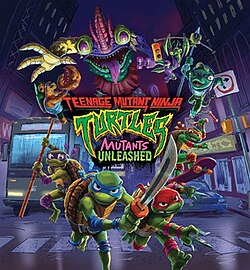

Mutants Unleashed slots itself into the Mutant Mayhem universe like a pepperoni slice on a still-warm pizza: familiar, comforting, and a little greasy. The game picks up shortly after the movie, with the Turtles experiencing the awkward miracle of being both accepted as heroes and still trying to pass chemistry and dodge cafeteria trays. On Switch, this is a third-person, 3D beat 'em up with platforming touches and an emphasis on playing as Leonardo, Raphael, Donatello, or Michelangelo. The marketing promised mayhem, and the writing actually delivers something resembling narrative ambition. The execution, especially on Switch hardware, is a mixed bag. Still, if you care more about who the Turtles are becoming than which combo string nets the most damage, there is surprising emotional meat beneath the shell-shocking thump of button mashes.
Mutants Unleashed dresses itself as a typical beat 'em up but keeps trying to be a little more. Each Turtle is carved with a distinct playstyle: Leonardo is the disciplined leader who functions as a balanced fighter, Raphael is the close-quarters bruiser, Donatello fills the ranged/tech role, and Michelangelo is the nimble, chaotic combo artist. The developers clearly wanted the characters to feel different, and in brief bursts they do. Unfortunately, the combat rarely rewards the long game. The combos feel shallow, enemy variety is limited, and fights eventually degrade into the same rhythm of dodge, press attack, special, rinse, repeat. When the game leans into RPG-lite systems and minor progression, those systems feel tacked on rather than integrated. You upgrade a Turtle and expect that to change your relationship with the combat loop, but the changes are seldom dramatic enough to keep late-game fights feeling fresh. The campaign is single-player or two-player local co-op only, which fits the high school sleepover vibe. Playing with a friend adds the chaos the Turtles deserve, and it is where the design occasionally sings. Team-up attacks and local cooperation showcase the franchise's core strength: four distinct personalities combining into a chaotic functional whole. But the level design undermines the goodwill. Many stages reuse geometry, and loading screens crop up annoyingly often. On the Switch, these waits are relatively long and frequent, breaking pacing and draining the urgency the plot tries to build. What redeems the whole package is the way the story and character beats are woven into gameplay moments. The narrative starts with the Turtles enjoying a sliver of normalcy after defeating Superfly and being accepted into society, only to face the Mewbie immigration crisis. The Mewbies are both a plot device and a thematic mirror. They allow the game to explore prejudice, belonging, and the difficulties of integration - heavy subjects that the game throws into a teenager-friendly, PG-13 blender. Cammy Leon, the mutant chameleon antagonist, is the clearest example of the writers taking a complex route. Rather than being a mustache-twirling villain, Cammy is driven by a warped sense of protecting her fellow mutants through fear. Her arc reads as tragic: she becomes increasingly extreme because she wants mutants to be taken seriously in a world that continues to see them as dangerous. The reveal that TCRI supplied the Mewbies and used the pheromone to control them twists the antagonist chain into something more systemic than personal, and that helps the game push beyond one-dimensional beats. The Turtles themselves get surprisingly nuanced screen time. Leonardo struggles with the weight of leadership versus the promise of normal teenage life, which translates into gameplay moments where his steadiness is both a help and a limitation. Raphael gets some bite, literally and narratively, as the game leans into his impulsive tendencies and the guilt that follows. Donatello's arc is the most interesting mechanically, because his friendship with Sai Modi anchors the science-based subplot and raises questions about experimentation and responsibility. Donatello and Sai attempt to isolate the pheromone, and when Sai's lab explodes it becomes a turning point: the scientific solution literally backfires, creating Wingnut's volatile contamination and escalating the stakes. This is where the game treats cause and consequence with a surprising level of care for a licensed beat 'em up. Michelangelo's arc is the emotional punch. The game uses his infection as a weapon to make players confront the pain of harming a friend. Defeating him isn't fun; it's messy and morally uncomfortable, and that discomfort is a nice tonal choice that echoes the film's willingness to balance humor with stakes. Splinter's kidnapping and the forced alliance of the mutated Mighty Mutanimals offer more compassionate beats: rescue sequences that feel like the Turtles doing what they do best, which is protecting family even when family acts out of fear. Supporting characters like Bebop and Rocksteady are smaller notes but hit the right beats: nostalgic, a touch of comic relief, and a reminder that villains in this world can be goofy while still dangerous. Leatherhead's subplot about prepping a doomsday shelter gives her an understandable, almost paranoid arc - she becomes the embodiment of trauma responding to perceived threats. Wingnut's instability after contamination becomes a catalyst for the team to look inward, and the game uses those chaotic boss fights to frame the moral dilemma of curing versus controlling. The Fresh Meat DLC expands the emotional scope by exploring reconciliation. The junkyard missions reveal that some Mewbies are hiding from both prejudice and the panic around them, and Scumbug's reconciliation with Splinter is a neat, quiet beat that the base campaign didn't have room for. It is refreshingly subtle: sometimes the best storytelling in licensed games is a small scene where two characters fix a broken thread. Where narrative ambition meets a glass ceiling is in the translation of these arcs to mechanical variety. The writing and voice acting are consistently praised in reviews, and rightly so: the Turtles feel like the movie's versions of themselves, not cheap imitations. The game nails mood and character tone more often than not. The problem is that the gameplay scaffolding encouraging the player to engage with those arcs - exploration, enemy diversity, camera clarity - is weaker than it needs to be. The camera is frequently stubborn in combat, leading to cheap hits and frustrating position checks. Reused maps and loading frequency undermine the sense that you are moving through a living, breathing New York. For players who come for story and character, the game rewards patience and attention. For those who want deep, satisfying mechanical growth, it will feel like a missed slice of potential.
Visually, Mutants Unleashed borrows the movie's vibrant, graffitied personality and tries hard to translate that cel-shaded, hand-sketched aesthetic into 3D. The character models are expressive, the cutscenes capture the voice cast's energy, and the city feels lived in when the camera is cooperative. On Switch, however, the ambition bumps against the platform's limitations. Reviewers reported frame rate drops, occasional crashes, and a lack of visual polish compared to the film. The environments do a good job of matching the Mutant Mayhem palette and atmosphere, but there is a distinct drop-off in variety: several levels feel like texture-swapped cousins rather than new neighborhoods. Loading times are notably long on Switch, and that affects how often you see the game's best art assets; the worst of the graphical problems are not a lack of style but performance issues that keep the style from shining consistently. Still, the voice acting and well-directed cutscenes often pull you back into the narrative even when the framerate stumbles. If you can forgive the technical hiccups, the game's artistic identity is charming and loyal to the source material.
Mutants Unleashed is a character-first licensed game that mostly gets the Turtles right. Its strength is writing that respects the franchise and uses the medium to give emotional weight to characters that could easily have been caricatures. Donatello's hubris and guilt, Michelangelo's forced ferality, Cammy's tragic zealotry, and Leonardo's leadership doubts are handled with a surprising amount of care for a mainstream, family-friendly beat 'em up. Voice acting and story moments are the pulse of the experience. The beat 'em up bones are competent but shallow, and on Switch the technical problems - long loading screens, frame rate issues, reused levels, and occasional crashes - keep it from reaching its full potential. If you are a Mutant Mayhem fan who wants more time with these versions of the Turtles, especially to watch their arcs stretch and crack in interesting ways, Mutants Unleashed is worth a look on Switch, preferably with a friend on local co-op. If you are chasing crisp, combo-rich brawling or performance perfection on the handheld, you will be frustrated. So buy it if you crave story beats and voice-acted heart; skip it if you need a polished fighting engine. Either way, the Turtles will still get their pizza, and the game gives you enough crew moments to care about whether they ever do.
 Naruto Shippuden: Ultimate Ninja Storm 2 on PS4
 Ninja Gaiden 4 on Xbox Series X/S
 Time Gal and Ninja Hayate on PlayStation
 Beat City on DS
 Crisis Beat on PlayStation
 Capcom Beat 'Em Up Bundle on PS4










 Another SquareThought Site