


 Jul 1996
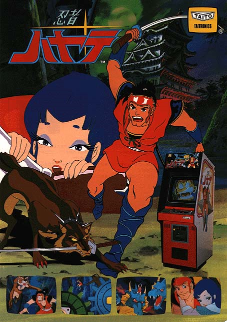

If you enjoy watching hand-drawn anime fight scenes unfold while your thumbs flail in desperate prayer, this PlayStation double-pack is a nostalgic candy store with a spiteful shopkeeper. Time Gal and Ninja Hayate are cinematic relics from the laserdisc era where the game's challenge comes not from juggling combos or exploring vast maps, but from hitting the exact right input at the exact right frame while the universe judges your reflexes and, occasionally, your dignity. The ports collected on PlayStation resurrect two interactive-movie oddities: Time Gal's sci-fi damsel-in-distress melodrama and Ninja Hayate's feudal-Japan ninja romp. On paper they're neat: full-motion anime sequences by Toei, flashy cinematic direction, and minimal controls. In practice they are glorified precision tests that ask you to become part samurai, part metronome, and part anthropomorphic save-state.
The core loop of Ninja Hayate (the item in this double bill that most clearly embodies the laserdisc tradition) is gloriously simple to describe and infuriatingly difficult to master. You control Hayate with a joystick for movement and one button for weapons across 15 distinct stages. Input windows are tiny; the game flashes the buttons that need to be pressed directly on screen, and a warning buzzer chimes the moment you should act. Miss that frame and you're treated to an expertly animated death sequence while your remaining lives tick down like a sad little abacus. The structure screams elegance: one button, one joystick, one chance per cue. It also screams cruel design philosophy. If you're looking for mechanical depth in the modern sense, don't expect it. What you do get is a concentrated test of several very old-school arcade skills: razor-sharp timing, pattern recognition, rapid decision-making, and cold, patient memorization. Timing is the literal beat you live and die by. Inputs are often required within a single animation window, and that window can be unforgiving. Your cushion? Visual and audio telegraphs. The warning buzzer-an artifact borrowed from contemporaries like Dragon's Lair-serves as the sonic metronome that tells you when to stop gawking and start stabbing. The on-screen flashes, meanwhile, function as visual breadcrumbs but are sometimes misleading: the game occasionally shows multiple possible button flashes, indicating different branches. That's where decision-making comes into play. Branches mean you're not merely reacting; you're choosing. Those flashed alternatives are not decorative. Picking the wrong branch can be a soft-fail (extra damage or a detour) or a hard-fail (immediate, glorious death). Players with decent situational awareness who can parse the cinematic context quickly-spot a falling log, notice the path of an incoming arrow, or catch a ninja's hand twitch-can tilt the odds in their favor. This makes Ninja Hayate part rhythm test, part choose-your-own-pain. You might assume the presence of multiple branches and flashy on-screen guidance eliminates the need for memorization. Don't be fooled. Critics of the era and the ports (including reviewers on the Sega CD release) noted that these games still lean heavily on memorization. The paths and traps are often fixed in many sequences, so the fastest route to success is brute-force repetition until the motions become muscle memory. However, the designers inject a small, devilish wrinkle: some traps are randomly generated. That unpredictability means you cannot perfectly rote your way through every run; adaptability becomes a required skill. When the unexpected arrives-an arrow trap that didn't fire the last time, a gargoyle that swoops a beat earlier-you either read it and respond in a second or you watch Hayate become a dramatic paperweight. Difficulty selection in Ninja Hayate matters. There are three difficulty levels, and the harder modes tighten windows, add flimsier telegraphs, and generally reward those who can learn patterns and perform under pressure. The Sega CD release even had a quaint promotional incentive: beat the game on hard and mail proof to get a 'Master of the Ninja Arts' diploma. That's peak pre-internet engagement-your reward for endurance was a piece of paper and the faint glow of personal pride. Playing this on PlayStation (as part of the double bill produced by Ecseco) also means accepting the port's limitations. The original arcade used full laserdisc animation and had almost no in-game music outside of an opening and closing theme. The Sega CD later got newly composed music, which lent more atmosphere but also highlighted compression artifacts when the FMV was scaled down to CD-ROM budgets. On PlayStation, visuals and audio carry the weight of convincing you that your failure was meaningful instead of merely cheap, and while they mostly succeed in delivering spectacle, the game's difficulty remains the central pillar. Skills that will keep you alive more than luck: impeccable reaction timing, the ability to parse visual cues under pressure, quick branching decisions, stamina for repetition, and a Zen-like acceptance of animated death. If you cultivate those skills, you'll find the reward is not a deep combat system but the slow, satisfying mastery of a sequence, and the rare joy of finishing a stage without watching Hayate collapse into a theatrical death pose.
The selling point that gets reviewers' nostalgic neurons firing is the animation. Ninja Hayate's visuals were drawn by Toei Animation for the arcade original, which gives the sequences a genuine anime sheen: expressive character animation, dramatic poses, and well-composed death tableaux. That pedigree elevates every fatal mistake into a small, beautifully animated tragedy. The PlayStation release repackages these sequences, and the experience is a reminder that FMV-era games were often dining on the appetizer of animation while serving the entrée of timing challenge. Port fidelity is a mixed bag. Contemporary reviews of the Sega CD version complained about 'grainy and soupy looking' graphics-an artifact of compression and the CD-era struggle to shove full-motion footage through limited media. The PlayStation tends to handle FMV better than the Sega CD in general, but the core problem remains: you're watching pre-rendered, pre-filmed sequences that were never intended to be interactive beyond the cue overlays. Expect occasional blurring, color banding, and a visual language that prioritizes drama over gameplay readability. The screen-flashed button prompts are generally clear, which is crucial given the split-second timing required. Sound design follows suit: the buzzer and a sparse score are your partners in punctuality. For viewers more than players, the animation is the thing; for players, the graphics must serve gameplay clarity, and they mostly do, even with the inevitable CD-era compromises.
Interactive Movie Action - Time Gal and Ninja Hayate on PlayStation is a time capsule that will please those who long for dramatic anime FMV and don't mind paying rent to Lady Frustration. Its challenge is pure and old-fashioned: timing, memorization, split-second decisions when faced with branching prompts, and the occasional improvisational dodge of randomly-generated traps. If you enjoy learning sequences until they become second nature, if you like being punished in beautifully animated ways, and if you consider 'beat the game, mail for a diploma' a valid pastime, this package has personality. If you want a modern sense of agency or a forgiving learning curve, look elsewhere. Critics who played the Sega CD iterations were right to point out that the gameplay often feels more like pattern memorization than emergent skill, and the ports' visuals can look rough when compared to the original laserdisc glory. Still, there is undeniable satisfaction in shaving seconds off a sequence, choosing the right branch, and watching the game finally let you live for longer than a few frames. This is a challenge for masochists with a taste for anime and a fondness for precision; score-wise, it sits around a middling 6/10 for being charming, historically interesting, and brutally demanding, but not especially deep or forgiving. In short: treat it as a short, sharp test of reflexes wrapped in gorgeous old-school animation. Bring patience, an appetite for repetition, and a willingness to watch your pixelated ninja plunge into doom more times than you'd like to admit.
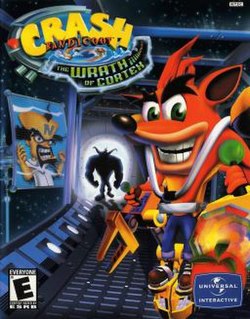
 Crash Bandicoot: The Wrath of Cortex on PS2
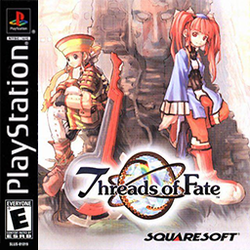
 Threads of Fate on PlayStation
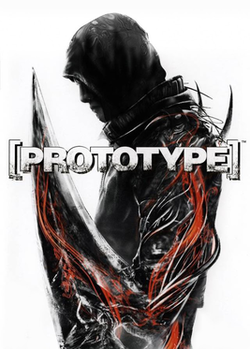
 Prototype on PS4
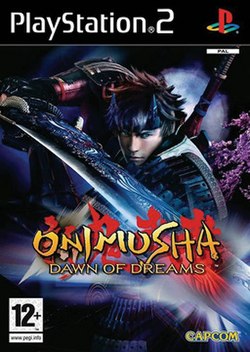
 Onimusha: Dawn of Dreams on PS2
 Action Man: Operation Extreme on PlayStation
 Combat Elite: WWII Paratroopers on PS2
 Door Kickers: Action Squad on Switch










 Another SquareThought Site