

 Apr 2023
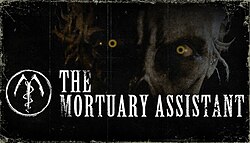

The Mortuary Assistant is not the sort of game you bring to a party unless your friends enjoy embalming metaphors and quiet, creeping dread. On Switch, the game translates its 1998 Connecticut small-town mortuary setting into a handheld experience that trades blockbuster spectacle for intimate unease. You play Rebecca Owens, a new hire with a history that smells faintly of tragedy and cheap vodka - the game slowly peels back her layers the way she peels back linen, revealing guilt, addiction, and the slow, ugly business of learning to live with trauma. Opposite her stands Raymond Delver, mentor, mortician, and owner-operator of secrets whose paternal pauses are as heavy as the cadavers in his care.
Gameplay in The Mortuary Assistant is a tight choreography between the mundane and the monstrous. The core loop asks you to perform embalming tasks with a degree of realistic procedure: incision, drain, cavity fluid, suturing, makeup, and laying out the corpse for burial. These tasks are satisfyingly tactile on Switch, with a button-driven rhythm that makes the mundane work feel important instead of busywork. But this is a horror game first and a mortician sim second. On top of the checklist sits a demonic possession meter tracked by a series of Post-It notes. Every mistake, every missed ritual, is another squiggle on the calendar toward Rebecca's spiritual inbox filling up with threats. The tension comes from having to juggle two responsibilities: perform the job correctly, and root out which body is hosting a demon, which demon it is, and which ritual binds it. The puzzles are less about lateral thinking and more about deduction and timing. You need to recognize patterns in vignettes, identify telltale signs of possession, match symbols, and execute the right exorcism before the possession jumps from corpse to assistant. Procedural generation spices up replay value: the game remembers which vignettes you�ve seen and rotates them, so each night can reveal a different personal torment or a new clue. That keeps replay loops compelling because you are not just repeating tasks, you are hunting narrative threads like a caffeine-starved forensic librarian. If we take a scalpel to the story arcs, Rebecca's is the core engine. She arrives on night one as a trainee shoved into a haunted workplace, gets locked in, and discovers a demon is trying to make her a permanent tenant. Her arc moves from flustered novice to survivor and, crucially, to someone forced to confront the past the demon uses as a weapon. The game uses hallucinatory memories to interrogate her guilt: her mother's overdose, her own near-fatal addiction, and her father's death while trying to save her. These memories are not just set dressing; they are ammunition the demon uses to unmoor Rebecca's resolve. The design smartly ties gameplay failure to narrative pressure: as the demon makes her doubt herself, you play worse, and as you play worse, the demon gets stronger. When Rebecca finally accepts that her father�s death was not her fault, the victory is not a jump scare but a small emotional release that also makes the ritual path clearer. Raymond Delver's arc reads like a Gothic footnote: mentor, secret-keeper, and sacrificial tinkerer. He begins as the kindly old hand guiding you through embalmings and then shifts into a man living under the same curse he warns you about. Raymond's pragmatism - collecting a living woman's blood in the basement for Reagent, chain-binding a possessed woman named Valery - asks uncomfortable questions about ends and means. Is Raymond a guardian or a warden? The game lets him wear both hats and refuses to let you forget that his moral calculus involves real people in chains. His revealed inscription, the sigil on his chest, complicates his mentor trope. At one turn he is teacher, at another perpetrator, and finally a broken soldier fighting a long, secret war. Valery, the woman kept in the basement, is the game's quiet moral scar. She starts as a plot mechanic - source of Reagent, a thing to burn - and becomes, in later nights, a tragic node in the web of Raymond�s obsession. Her possession and captivity force you to ask whether keeping her chained to keep demons at bay is defense or complicity. Valery is the game's mirror for Rebecca: both have been used, both have had agency stripped away. The narrative plays this tension out and gives some satisfying moments of sympathy, especially when the ritual fails and things go sideways. The antagonist masquerading as an antagonist is the demon itself. It�s not a hulking movie monster so much as a manipulative therapist from hell. Its primary tool is psychological pressure: hallucinations, memory insertion, sensory tampering. By personalizing attacks, the demon turns the mortuary into a theater of intimacy where most of the horror is close, personal, and a little mean-spirited. The multiple endings allow the demon to be a device that punishes, teaches, or leaves loose ends, depending on how well you read the signs and how much of Rebecca's guilt you help her jettison. The July 2023 new ending adds breadth to the tapestry, rewarding players who returned to see the story from alternate angles. On Switch specifically, interface and control choices matter. The PC version earned praise for mouse precision and tactile embalming; on consoles reviewers noted clunkier gamepad controls. The Switch adaptation captures the atmospheric elements and the horrific mood but can feel a bit less snug in the hands. Button mapping on the Joy-Con works, but precise inventory fiddles and some of the more fiddly steps in embalming sometimes fight the controller, resulting in fumbling that feels like both mechanical frustration and deliberate disorientation. Some players will read that as intentional design; others will blame the port. Narratively, the most interesting thing the game does is make the player complicit. You're not just an observer of Rebecca's guilt - you're the person doing the actions that either enable or fight it. That makes the arcs feel like they're happening to you as much as to the characters, which is rare for a horror walking-sim hybrid.
Built on Unity and dressed in a late-90s palette, The Mortuary Assistant looks exactly how you'd expect: a little gritty, deliberately grimy, and occasionally disturbingly detailed. Lighting and audio do the heavy lifting for scares; the visuals serve atmosphere rather than high fidelity spectacle. On Switch the textures are a step down from the PC maximums but that reduction actually helps the mood: imperfections and grain make the mortuary feel lived-in, as if mildew and ethics are competing to take over the wallpaper. Character models are serviceable; facial close-ups are more about expression than photorealism, which suits the game because the real horror is in the eyes and voice acting rather than polygon count. Sound design deserves special mention. Creaks, distant weeping, and the squelch of medical tools are mixed with a soundtrack that knows when to shut up and when to lean in. The result is an audio tension that often outperforms the visual shock. When the game does deliver jump scares, it does so through a practiced quiet that makes the sudden noise feel earned. The Switch's speakers and headphones both carry the atmosphere well, though you will want headphones for the full effect.
If you want a horror game that feels intimate and morally messy rather than blockbuster and simplistic, The Mortuary Assistant is worth your time on Switch. It is short, sometimes clunky on consoles, and occasionally marred by technical quirks, but it compensates with a thoughtful blend of procedural storytelling, tactile embalming simulation, and, most importantly, characters who matter. Rebecca's arc from flustered trainee to someone who faces down a demon and her own traumatic past is credible and quietly touching. Raymond is a thorny, fascinating father-figure whose secrets expand the game's ethical palette, and Valery is the tragic undercurrent that keeps the story from turning into an easy demon-hunt. The game is most rewarding when you treat it like a slow-burn haunted novella you can actually touch: play a night, read the vignettes, parse the signs, and come back for more. The multiple endings and procedural vignettes give replay value beyond the novelty of embalming, and the July 2023 addition shows the developer's willingness to evolve the narrative. On a scale that balances atmosphere, storytelling, and the occasional console clunk, this mortuary earns a respectable score: 7.5 out of 10. It isn't for everyone, and it loves its grim subject matter a little too much for the squeamish, but for the rest of us who enjoy a well-crafted scare and a character study that smells faintly of formaldehyde, it is a memorable, occasionally brilliant ride.
 Crime O'Clock on Switch
 AI: The Somnium Files on PS4
 Crow Country on PS4
 The Inpatient on PS4
 Obscure: The Aftermath on PS2
 Observer: System Redux on PS5










 Another SquareThought Site