

 Jan 2020
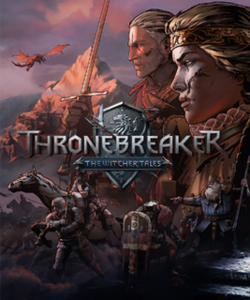

Thronebreaker: The Witcher Tales on Switch greets you like a grizzled court bard who drank too much mead, then remembered where they left the map to the kingdom. You play as Queen Meve, the stubborn, sword-wielding, politically inconvenient monarch of Lyria and Rivia, and the game hands you a pretty tidy marriage of single-player RPG beats and Gwent-like card battles for thirty-ish hours of plot and decisions. This review is less about how many pixels the Switch version squeezes out of pocket-mode and more about how the cast grows, cracks, and sometimes explodes like an overheated alchemy pot when the Great War rolls over the northern kingdoms. If you like your storytelling with a side of tactical card-play and morally filthy choices, this is the game that will whisper the worst possible advice into your ear and then validate your terrible instincts by letting the story keep going anyway. Thronebreaker started life as a Gwent single-player expansion and was reborn as a standalone RPG, which explains why the narrative scaffolding and character moments feel so deliberately constructed around a system of allies and cards. The Storyteller narrates and guides, but it is Meve who drags the story forward, kicking and kissing diplomatic protocols into submission. This review focuses on the people you meet, fight beside, betray, pardon, or watch sink quietly under the weight of political expediency. Those arcs are where Thronebreaker shines; the card mechanics are the bones, but the characters are the beating heart that makes you care which cards get burned.
At its core Thronebreaker is a deck-driven RPG: exploration happens on isometric maps that resemble a storybook version of classic party-based RPGs, and combat resolves in matches that riff on Gwent. Each battle is played over up to three rounds where players take turns playing one card or passing, with the highest total board value winning the round. Cards have values and special abilities, and hero cards-your companions-bring unique power that only exists while those characters are part of your court. The neat bit is how narrative choices and party composition bleed into the card game itself. If you exile Reynard or let Gascon live, the cards representing them disappear from your deck, and the mechanical consequences of that choice become a story beat in cardboard form. Queen Meve is the axis the whole system spins on. She is introduced as a warrior-queen newly fragile from loss but still sharp enough to carve a path through conspiracies. Her arc is classic and satisfying: a ruler underestimated by her nobles who learns, through the betrayals and saves you orchestrate, how to transform from exiled leader into the sort of king (queen) who can simultaneously be merciful and deadly. What makes Meve interesting is the way player agency shades her morality. You can be ruthlessly pragmatic or almost naively honorable, and the game keeps changing the stage lighting to suit whichever mask you pick. That flexibility makes later choices sting: forgive a traitor and watch their loyalty prove useful, or punish them and then wonder if you just cut off the only ladder that would save your army. Reynard Odo and Gascon are the narrative twin knives in Meve's back, and they are written with pleasantly human selfishness. Reynard reads like the archetypal courtier who thinks reconciliation is a great idea as long as it avoids his head ending up on a pike. Gascon is the roguish wild card whose self-preservation makes him both annoying and strangely useful. Both of them present a moral puzzle the game enjoys tormenting you with: both can betray Meve, both claim repentance, and both can be forgiven or discarded. The gameplay punishes simple moralizing because each decision reshapes your deck and your tactical options. Forgiving a character might keep a powerful hero card in play; killing or banishing them removes that option but can also free up narrative space for the survivors to have richer arcs. Thronebreaker treats betrayals not as binary punchlines but as continuing threads that affect relationships, available quests, and the composition of the army deck. Prince Villem's arc is a compact Greek tragedy wrapped in courtly robes. He is the son who can be either heir and ally or regent and antagonist depending on how you play the parlay. If you forgive him at their meeting, he becomes an ally and possible heir; if you refuse, he remains a political threat. The game stages Villem as a fulcrum of emotional investment: sparing him can be a comforting nod to family, but letting him go can cost you on the battlefield or soil your conscience with consequences later on. The tragedy option-letting him sacrifice himself to open the gate during the assault on Rivia Castle-plays like a cruel but narratively potent choice that rewards players who have been building out personal stakes. Count Caldwell and Duke Ardal aep Dahy serve as the political antagonists who are not cartoon mustache-villains but agents of a failing system. Caldwell is the aristocratic rot that prefers capitulation to war; Ardal is a more personal military foil. Their arcs are functional: they exist to force Meve into hard decisions and to show the cost of both ambition and cowardice. Killing Caldwell and chasing Ardal underscore Meve's transformation from regional refugee to liberator, and the game manages to make these military objectives feel intimate because the cast around Meve reacts with real grief and triumph. Brouver Hoog, Gabor Zigrin, Barnabas Beckenbauer, and the Mahakam crew bring an earthy, communal counterpoint to courtly intrigue. The dwarves are practical, blunt, and stubbornly honorable. Brouver's reluctant support becomes a study in earned loyalty: it takes a battle and a near-death experience to convert skepticism into full-throated aid. The Dwarf storyline rewards patience and creates a thick texture of camaraderie that contrasts with the fickleness of human nobles. Smaller arcs-Isbel of Hagge, Black Rayla, Demavend-are short but sweet. Rayla's rescue from the Scoia'tael and Demavend's advice to pursue allies in Mahakam are precisely the sort of narrative scaffolding that feels meaningful because of the performances and the way you, as Meve, repeatedly choose who deserves trust. The Storyteller's reveal at the end, that the narrator is Borch Three Jackdaws, ties the game into the larger Witcher mythos while adding one last twist to the narrative perspective. Mechanically, the way Thronebreaker integrates choices with card-play is the game's strongest trick. Battle outcomes, who lives to appear on the final roll call, and even the availability of certain resources depend on the human drama you create. That design choice turns every dialogue into a tactical consideration and every tactical victory into a potential character beat. It is delightful and occasionally cruel, because you will sometimes realize you nerfed your own deck with a heartbreaking but narratively satisfying choice. The Switch port preserves this loop: deck-building remains meaningful, the passing-and-play tension from Gwent intact, and exploration rewards curiosity with side-stories that expand character arcs.
The Switch edition renders Thronebreaker like a moving storybook stitched into your handheld. Exploration maps are presented in an isometric style reminiscent of old-school RPGs, which suits Meve's road-trip through the north: you feel like a queen on a campaign map rather than a player clicking icons on a menu. Card art is rich and evocative, and the character portraits sell personality with a few careful brushstrokes. Because the game is built around cards and tableau-based combat, many of the visual highlights are miniature set-pieces on the battlefield art and on the character illustrations that appear when their hero cards are played. These moments give the Switch version enough visual sparkle even when the hardware forces compromises to 3D fidelity. Performance on the Switch is solid; load times are sensible and the UI scales fine for handheld play. The game leans into voice acting and narration, so the art rarely has to do everything alone. That frees the visuals to be expressive rather than photorealistic. If you expect Witcher 3-level open-world graphics, you will be disappointed, but if you want painterly scenes, expressive cards, and readable battlefield layouts that work on a 6-inch screen, the Switch port makes the right trade-offs. The Storyteller sequences and cutscenes maintain their charm, and the animations on cards-small flourishes when abilities trigger-add satisfying tactile feedback that is just as enjoyable on a docked TV as it is in sleep-deprived handheld mode.
Thronebreaker on Switch is a love letter to character-driven storytelling disguised as a card game with an attitude problem. Meve's arc from exiled ruler to liberator is the kind of heroic spine that movies wish they had, and the supporting casts deliver consistent, meaningful beats that affect both the plot and the way you play. Mechanically, the fusion of exploration, choice, and Gwent-style battles makes for a loop where narrative consequences truly matter: forgiving, banishing, or trusting someone is rarely an abstract morality checkbox and more often a change in available tactics at the next siege. This is not a flawless gem. The card combat will sometimes feel repetitive, and the reliance on the Gwent system means some battles have a sameness that only the story can rescue. On Switch the visuals are scaled to fit the hardware, but art direction and voicework carry the emotional load. If you are into the Witcher universe, single-player narrative games, or card systems that respect and react to story-level decisions, Thronebreaker is a rare marriage of mechanics and narrative where the characters earn every twist, stab, and reconciliation. Final verdict: a robust single-player package that rewards players who want to watch people change their minds and face the fallout. It is a game about choices that bite back, and it does so with humor, brutality, and a surprising tenderness. Solid 8.4 out of 10.
 Cris Tales on Switch
 Cris Tales on PS4
 Coloball 2002 on PS2
 Press Your Luck on PS3
 Talisman: Digital Edition on Xbox Series X/S
 Game Dev Story on PS4










 Another SquareThought Site