

 Apr 2021
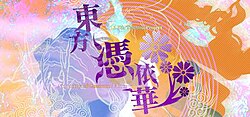

If you like bullet hell bullet points and you enjoy pairing a shrine maiden with someone who can detach their arm at will, then Touhou Hyouibana: Antinomy of Common Flowers for the Switch will feel like coming home to a house you didn't know you owned. Originally a 2017 doujin fighting game released at Comiket and later ported to Steam, Antinomy of Common Flowers (AoCF) arrived on consoles in 2021. The Switch version finally made the franchise's most recent fighting entry a little more portable and, crucially, the console release ships with an English fan patch built in - a curious milestone for a series that has mostly spoken only Japanese since forever. The tone of the whole package is politely chaotic. You get 19 characters, an absurd roster of folklore, saints and immortals, and a combat system that encourages you to play two characters at once. The result is a fighting game that is comfortable being both approachable and weirdly clever. It doesn't scream for your attention. It politely steals it and spends it on something else.
On paper, AoCF is a fairly straightforward fighting game. You reduce the opponent's health using punches, kicks and special moves. Special moves require the usual arcane inputs, and then there are spell cards - the jouissance of Touhou fighting - which are more powerful abilities unlocked by charging a meter through dealing damage. Each character offers three spell cards, which is both generous and a tactical headache. Where AoCF stops being 'fairly straightforward' and starts being 'that thing you keep explaining to your friends and then forgetting halfway through' is the master/slave system. You control two characters at once: a master and a slave. The master is your starring role; the slave is the terrible roommate who helps you stretch combos like taffy. You can switch between them, use the slave to extend combos, and recover a special kind of health when the slave is active. There is an occult meter that sits in the background of the fight: take damage while in slave form and the meter drains, and if it empties you are forcibly sent back to your master. The game nudges you toward swapping strategically rather than haphazardly throwing people into the ring like sides of beef. Aeons of fighting-game design thought have gone into the aerial play here. There is effectively no ground, and that eliminates a lot of stomping and camping strategies; instead, matches feel like a mid-air ballet where the choreography is trying to light you on fire. Character movement is intentionally floaty and allows for complex aerial sequences, which is both thrilling and slightly terrifying if you still rely on walking forward to win fights. Variety is AoCF's middle name. Every character has a distinct toolkit - Reimu mixes melee and danmaku, Marisa is a speed demon, Mokou throws fire, and Koishi exists to make your brain uncomfortable. Many characters summon familiars or use unusual weapons, so every matchup plays differently and learning one main is not an instant ticket to mastery. The game's story mode hands you preset master-slave pairs and can unlock additional characters if you beat them. There are also the expected options: single matches against AI, online play (with the caveat that player population can be thin), and a training mode for those who prefer to master the mechanics in private before embarrassing themselves publicly. Accessibility-wise the game does well. IGN Japan noted how the game manages to be welcoming to newcomers to both Touhou and fighting games, and that's fair. Basic inputs get you moving, and the spell card system offers easy payoff. But accessibility doesn't mean lack of depth. The occult meter, white health that regains under slave control, and the choice between three spell cards create interesting decisions under pressure. There are a few practical irritants. The console release inherits a couple of issues mentioned by reviewers: the translation can feel patchy in places, and the pause menu lacks a comprehensive move list - which is a little like selling a Swiss Army knife with no instructions and assuming everyone enjoyed Swiss Army knife puzzles as a child. Some outlets also noted input lag on certain builds, and though it's not a universal problem it's the sort of flaw that will sour online matches where frames matter. Finally, while the online mode exists, finding matches can be hit-or-miss depending on time and region.
AoCF's art direction is the game's polite, confident sweater: it doesn't shout but it looks very good at parties. Reviewers praised the soundtrack and visual presentation, and those compliments are earned. Character portraits, stage art (each character has their own stage) and spell card animations feel like the product of people who care deeply about the source material and the aesthetics of fighting games. Music often gets singled out in the reception and with good reason: the soundtrack is punchy, memorable and fits those mid-air melees like a glove designed for punching. There are compromises though, mostly of the budget and doujin variety. Voice acting is absent, which leaves some characters feeling slightly less immediate compared to modern fighting games that scream dialogue at you until your ears surrender. The Switch port itself is competent; it benefits from the portability factor but naturally runs into the architectural limits of the hardware - this is not a showcase Switch exclusive. Some critics flagged input lag and translation roughness that made the experience less polished than the art would suggest. If you care about flawless netcode and a glossy tutorial system holding your hand like a gentle electric eel, this isn't the package for you. If you care about style, music, and a roster stuffed with delightful nonsense, it is.
Antinomy of Common Flowers on Switch is the kind of game that will quietly insinuate itself into your routine if you give it time. It balances approachability with systems that reward curiosity: the dual-character master/slave dynamic, three spell cards per character, occult meter management and airborne combat create a space where both newcomers and veterans can find something to obsess over. The roster is large and inventive, the stages and soundtrack are charming, and the fact the Switch release ships with an English fan patch is a small cultural miracle for a series that traditionally keeps its language like a secret handshake. The problems are practical rather than conceptual: occasional input lag, a spotty translation, no move list in the pause menu and an online lobby that can be lonely depending on when you play. These are not dealbreakers for everyone, but they do mean that AoCF feels like a brilliant indie at heart rather than a polished AAA fighter. If you are a Touhou fan or you enjoy weird, tactical tag-team fighters that ask you to think vertically, pick this up on Switch. If you demand the pristine online ecosystem of a modern eSport, this one will probably make you sigh and then go play something with rollback netcode. Score: 7.5/10. Strong ideas, excellent presentation, a few rough edges. Also, it lets you fight mid-air while your partner happily fixes your health. That is, in its own dry way, very charming.
 Touhou Gouyoku Ibun ~ Sunken Fossil World on Switch
 Touhou Kobuto V: Burst Battle on Switch
 ACA Neo Geo: Art of Fighting 2 on Xbox One
 ACA Neo Geo: The King of Fighters '98 on Xbox One
 Art of Fighting Anthology on PS2










 Another SquareThought Site