

 Sep 2025
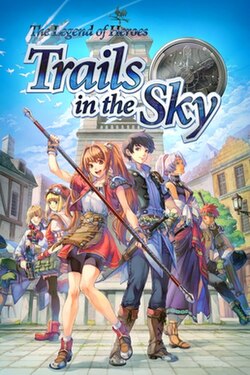

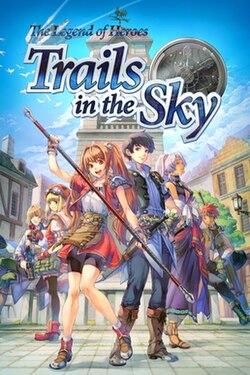
If you like your JRPGs served with a side of meticulous planning and a mountain of dialogue, Trails in the Sky 1st Chapter is the kind of feast where you will need a fork, a map, and a notebook. This is a remake of Nihon Falcom's classic that keeps the original's tactical heart intact while moving the engine into modern territory. For players who get a charge out of outsmarting an enemy by two moves and then patting themselves on the back for 15 minutes, this one is basically catnip. The remake's strengths are in its systems rather than explosive spectacle: visible enemies on field maps, a grid-based turn combat system, and an AT Bar that makes turn order feel like a living thing you can manipulate. That means Trails in the Sky isn't just a story you read with battles in between - it's a strategy course disguised as a warm-hearted adventure. If you're buying this for the challenge, you're in the right aisle. If you're buying this to skip through fights, the game politely hands you a difficulty slider but will judge your life choices if you crank down too far.
Gameplay in Trails in the Sky splits into two neat zones: field/town exploration and grid-based battles. Field maps have roaming enemies you can walk into, which starts a fight, while towns are the safe, slightly less violent places where you buy items, take guild quests, and interrogate NPCs until they reveal their tragic backstories or, more usefully, a key to a hidden chest. The NPCs aren't static bulletin-board models; their dialogue changes as the plot moves, which rewards attention and patience. That's part of the challenge: reading pays off. A lot. Combat is where the game shows its teeth. It's turn-based, placed on a grid, and governed by the AT Bar - a timeline that shows when characters and enemies will act. Mastery isn't just about whacking the highest number on the screen; it's about thinking two and three steps ahead like a paranoid chess player. The AT Bar introduces AT Bonuses that trigger at particular moments, so battlefield tempo can swing wildly. Successful players learn to time movement and attacks around those bonuses, or even bait enemies into doing something suboptimal. You have four main action types: normal attacks, Arts, Crafts, and S-Crafts. Arts are essentially magic and require an extra turn to cast, which turns them into commitment moves; Arts can be brilliant if paired with AT timing but disastrous if interrupted. Crafts are character-specific abilities that you can use in the same turn as movement, but they cost Craft Points (CP). Managing CP is a non-trivial resource puzzle: you want to build CP for S-Crafts - powerful finishers that require 100+ CP and then wipe the gauge - but you also need to spend CP for smaller tactical wins. S-Breaks let you immediately use an S-Craft regardless of turn, which is a beautiful panic button or a beautiful setup when timed with an AT Bonus. The game's difficulty model leans into player skill rather than RNG. Earlier versions had Normal and Hard, and later editions added Nightmare. Importantly, if you lose, the game offers continuous retries and will lower the battle difficulty on each retry. That's a kind mercy - you won't be stuck banging your head on an encounter forever - but you should take it as a learning tool rather than an easy out. The encounter-retry mechanic lets you experiment with strategies: reposition, swap characters, prioritize certain enemies, or save the big CP builds for the correct opening. Party composition is another strategic layer. There are eight playable characters in total and, outside the main duo, others rotate in and out. Each brings different Crafts and playstyles, so mastering the game means learning a few character kits and how they interact. Some characters are better at area-of-effect control; others are one-on-one brawlers or support staples. Because NPC conversations and optional guild quests matter - sometimes they provide gear or XP that change how a fight plays out - the real challenge is juggling your main story momentum with optional content that materially helps your tactical options. The skills Trails in the Sky asks of you are specific: tactical foresight (reading the AT Bar and anticipating enemy turns), resource juggling (CP and Arts timing), positional play (grid placement and movement), party adaptation (learning multiple character kits and swapping tactics), and attention to detail (following shifting NPC dialogue and optional quest threads). It's a game that rewards slow, deliberate thinking. If you enjoy honing a plan, executing it, failing, and refining - like a tabletop RPG campaign with a harsher DM - you'll find the difficulty satisfying. There's also a meta-challenge: the sheer amount of text. Localization of the original was massive, and one of the reasons Trails in the Sky built a devoted niche was the depth of its script. That means reading stamina and patience are part of the skill set. You won't sprint through this; you'll read, you'll strategize, and you'll occasionally sigh with the exhausted joy of seeing a plan come together.
The remake runs on the Trails Through Daybreak engine, so expect a visual step up from the PSP-era original. The game modernizes the UI and cleans up sprites and backgrounds without throwing out the franchise's cozy steampunk vibe. Character portraits and menus are clearer, and animations during S-Crafts feel snappier, which helps when you're watching a risky S-Break land and silently praying to whatever tiny gods govern turn order. Graphical changes are functional for challenge, too: clearer unit outlines and readable AT Bar visuals make tight tactical decisions less guesswork and more skill. If you were worried the remake would go full cinematic and hide the mechanics under glitter, relax - the visuals support strategy rather than replace it.
Trails in the Sky 1st Chapter is a love letter to patient tactics. Its combat is layered and rewarding: timing, CP management, and grid positioning combine to create fights that feel like puzzles rather than stat checks. The game nudges you toward being thoughtful - reading NPCs, doing optional quests that make a real difference, and learning a rotating cast's strengths - so it's not for someone who wants to mash A and watch a health bar fall. If you enjoy strategic JRPGs that test your ability to plan, adapt, and execute over many hours, this remake gives you modern polish on a system that still loves to make you work for your victories. If you need a final pitch: buy it if you like tactical depth, narrative weight, and the smug satisfaction of timing an S-Break at the perfect moment while muttering, "Told you so." Score: 8.5/10 - a must-play for strategy-minded RPG fans, and a friendly but firm tutor for those willing to learn.
 Trails in the Sky 1st Chapter on PS5
 Beyond a Steel Sky on PS4
 Combat Elite: WWII Paratroopers on PS2
 The Banner Saga 2 on PS4
 Arcania: The Complete Tale on PS3
 Gnosia on Xbox Series X/S
 The Legend of Heroes: Trails Beyond the Horizon on Switch 2
 The Legend of Heroes: Trails in the Sky SC on PS3
 The Legend of Heroes: Trails of Cold Steel IV on PS5
 The Legend of Heroes: Trails of Cold Steel II on PS3
 The Legend of Heroes: Trails Through Daybreak on PS5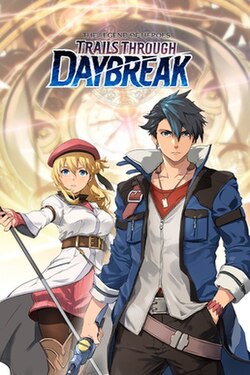










 Another SquareThought Site