

 Sep 2025


Ty the Tasmanian Tiger HD arrives on Switch wearing a shiny remaster jacket and carrying two trusty boomerangs. The premise is classic platformer fuel: a wide-eyed orphan with family in peril, mystical talismans scattered across an Australian playground, and a cassowary villain hell-bent on drama and world domination. This review intentionally treats the game as an episodic cartoon about character trajectories rather than just a collectibles treadmill. If you're the kind of person who judges games by the strength of their supporting cast and how well a boss's motivations pass a soap-opera sniff test, read on. I'll dive into Ty and friends, villainous birds, romantic park ranger beats and redemption arcs, and tie those story threads back to the game systems that make them matter (or not) in practice.
Ty (our titular thylacine) is written as the prototypical underdog hero: orphaned, energetic, sentimental about an ironbark boomerang that belonged to his mother, and painfully earnest. His arc is delightfully straightforward: curiosity leads to discovery (a glowing mural and a spectral Nandu Gili), responsibility follows, and then the long work of fetching Thunder Eggs and talismans begins. Gameplay mirrors that growth. Early levels teach you how to jump, bite and lob wooden boomerangs; later, Julius the koala upgrades your arsenal with techno-rangs and elemental variants that expand both combat and traversal. That progression system doubles as narrative currency: each new boomerang equals a new capability for Ty and a line in his "I'm becoming my father" montage. Nandu Gili plays the mentor/prophet archetype, materializing out of Ty's boomerang to contextualize the stakes. His role is small but pivotal: he supplies the mythic weight to Ty's fetch-quest. As a spectral guardian of The Dreaming, Nandu is less a fully realized character than a plot engine, but he's effective - he sets the emotional north star (rescue family = righteous quest) so every Thunder Egg collected feels narratively justified. Julius, the koala scientist, is one of the better-developed supporting characters because his mechanical gifts have gameplay consequences. The trade-off loop - find Golden Cogs or finish levels to unlock techno-rangs; gather Thunder Eggs to power the Talisman Machine - makes Julius the literal gatekeeper of Ty's growth. In story terms, Julius is the kindly backstage genius who amplifies Ty's agency. That relationship is satisfying because it's two-way: Ty brings back resources, Julius translates them into new toys, and the world opens up in return. Maurie the cockatoo is Ty's cheerful sidekick, primarily a narrative compass and exposition carrier. He functions like the friend who narrates the group chat updates: helpful, chatty, lightly comic. Maurie and Julius together form the game's emotional support ensemble; neither undergoes dramatic growth, but both give the protagonist anchors that the player can rely on when platforming gets fiddly. Shazza, the dingo girlfriend, gives Ty a touch of romance and a recurring motivation beyond family rescue: social stakes. The kiss she gives after being saved is charming in a '90s/early-2000s mascot-platformer way - it's not subtle, but it signals a personal reward beyond the numeric collection goal. Ranger Ken, Rex the platypus (lifeguard who teaches Ty to swim and supplies Aquarangs), and the bilbies who raised Ty fill out a cast that's unthreatening and archetypal, designed to make Southern Rivers feel inhabited instead of empty hubworld real estate. Boss Cass is the real theatrical delight. As a cassowary with delusions of empire, he's cartoon-evil with cartoon consequences: mecha suits, frill-lizard henchmen, excavation sites. His arc is pure villain TV: he once opened a portal to The Dreaming and imprisoned Ty's parents, got thwarted, then schemed to get the talismans back. The writing gives him amusing, colorful set pieces (giant mecha boss, frill lizard henchmen) rather than psychological subtlety, but that's fine because his dramatic purpose is to be a moving target: he motivates rescue, creates henchmen subplots, and gives the player a final mecha throne room to topple. Sly is the game's attempt at something grayer. He's a mysterious tasmanian tiger who reports to Boss Cass, betrays him later, and has that awkward in-between scene where Ty saves him from falling into magma. He's our token 'ambiguous ally' and demonstrates an actual arc: spy to rival to unexpected helper. The game never fully commits to making Sly a tragic antihero, but the moments he betrays and then helps Cass's destruction give him enough spine to be memorable. Sly's arc benefits from the gameplay beat where you fight him multiple times - those encounters let the player experience his story through combat rather than cutscenes. The enemies you defeat often have tiny micro-arcs that are more set-piece than character development. Bull the boar gets pacified; Crickey the cyber-shark is freed from cybernetic control and thanks to Ty's oxygen-canister MacGyvering, becomes a sympathetic beast; Fluffy (the thorny devil piloting an ape-like mecha) retreats and returns in sequels. These encounters are short, clean story beats that tie into world-building: Ty is not just collecting; he's helping, and that helping gives the talismans emotional context. Mechanically, the game uses Thunder Eggs and talismans as both MacGuffin and pacing tool. Collectibles are abundant: Thunder Eggs power the Talisman Machine and push you through zones, Golden Cogs unlock techno-rangs, and hidden bilbies add a rescue-everyone impulse. Critics historically pointed out that Ty leans heavily on exploration and collectathon design (and is often called a Crash/Mario clone), but from a character-arc perspective, those collectibles function as small victories in Ty's heroic curriculum vitae. If you find that satisfying, the gameplay supports the narrative cadence. If you don't, you'll notice repetitiveness: repeating cutscenes, camera and control stumbles, and fetch-quest fatigue. The HD remaster preserves the structure while polishing visuals and adding quality-of-life improvements, but it does not rewrite the cast. The relationships between Ty, Julius, Maurie, Shazza, Sly and Boss Cass remain the heart of the experience, and the element-bottle-necking design (new elemental boomerangs unlock new zones) ensures the story's forward motion feels earned rather than arbitrary. The post-credits 100% reveal (a cybernetic tiger) is a cheeky nod for completionists and feeds sequel curiosity - a small but effective narrative carrot for obsessive players.
Visually, the HD remaster smooths out textures and leans into the original's love of big, colorful zones inspired by the Australian Outback, Snowy Mountains and the Great Barrier Reef. The original development implemented real-time lighting effects and a robust animation system; those choices age well when refreshed. Ice reflects, shadows move directionally on Ty, and shiny surfaces do the glossy-platformer thing that helps environments feel tactile rather than flat. On Switch, the art style - chunky character models, saturated palettes, cartoonish mecha - is serviceable and charming rather than photorealistic. A few practical gripes remain: camera angles and collision detection were concerns in the original and show up occasionally in the remaster, mostly in tight platforming sections. The game's animation system keeps characters expressive, which matters because the story leans on small gestures and personality beats rather than long cutscenes. The end result is a game that looks like it wants to be a Saturday morning cartoon and mostly succeeds; if you enjoyed the visual energy of early-2000s 3D platformers, the remaster will be a nostalgic treat.
Ty the Tasmanian Tiger HD is not the most narratively ambitious platformer you'll play, but as a character-driven romp it has a lot of heart. Ty's earnest hero arc, Julius's gadgetry, Sly's uneasy moral flip, and Boss Cass's delightfully absurd villainy keep the plot moving between levels of boomerang-based gameplay. If you come for polished storytelling in the modern indie sense you'll be disappointed, but if you want a bright, wholesome cast whose relationships are spelled out through toys and boss fights, this remaster delivers. The game's weaknesses - repetitive collectible loops, occasional camera frustrations, and derivative platforming trappings - are balanced by charismatic characters and an earnest narrative throughline that gives every Thunder Egg a tiny emotional payoff. Score: 7.0/10. Recommended for nostalgia seekers, younger players, and anyone who enjoys platformers where character moments (rather than plot twists) are the real reward.
 MultiVersus on Xbox Series X/S
 Bugs Bunny & Taz: Time Busters on PlayStation
 The Wacky History of Platform Games
 Roblox on PS4
 Toki Tori on Switch
 PlayStation Home on PS3
 Legend of the Guardians: The Owls of Ga'Hoole on PS3
 The Adventures of Jimmy Neutron Boy Genius: Jet Fusion on PS2
 Championship Surfer on PlayStation
 The Legend of Spyro: The Eternal Night on PS2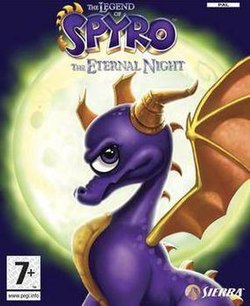










 Another SquareThought Site