

 Mar 2018
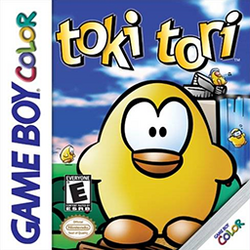

Toki Tori started life as a late-era Game Boy Color puzzle-platformer and has since been lovingly shepherded through multiple remakes and ports. The Switch release is billed by Two Tribes as "the most detailed portable version of the game so far," and it packages the HD remaster's content into a handheld-friendly package with Switch-specific bells: HD Rumble and video capture support. If you remember puzzle games that feel more like elegant logic exercises than twitch-heavy platformers, this is that medicine in feathered form. The core design is uncompromisingly deterministic: you have a tiny command set, a handful of limited-use tools, and levels designed such that misuse of a tool can make a run irreversibly unwinnable. For players who enjoy systems that behave like predictable toys, Toki Tori on Switch is a tidy, technical delight.
Toki Tori's mechanical vocabulary is deliberately small and precise, which makes analyzing its technical behavior fun to the kind of person who draws flowcharts for breakfast. At a systems level each level is a bounded deterministic environment: fixed spawn points, a finite set of enemies with simple patrol logic (walk, turn on obstacle, repeat), and a finite inventory of tools whose state changes the world irreversibly in most cases. That makes the game less about reflexes and more about state planning and resource accounting. The tool set is the real star when you break the game into subsystems. Tools fall into two conceptual buckets: navigational primitives and enemy interaction primitives. Navigation tools (Bridge Builder, Crate Creator, Telewarp, Bubble Suit in Bubble Barrage) modify reachable states by adding or removing platforms or teleport links; enemy tools (Freeze-o-matic, Snail Sucker, Ghost Trap) alter enemy states-freeze them, remove them, or temporarily disable tile footprints. The Eyes tool deserves a special mention because it's always available and functions as an information-gathering subsystem: it pauses agent motion (not the timer in the original GBC build, though that historical detail is relevant when comparing versions) and lets you scan the level, effectively converting the game into a planning sandbox before committing to state transitions. Because the tools are limited per level (you're handed a small integer count of each tool), the player is essentially solving a resource-constrained planning problem. The game's designers embraced that constraint: many later levels are nearly single-solution puzzles where any wasted use of a tool puts the level into an unreachable state. That unforgiving design trains the player to analyze the level as if reading the preconditions and postconditions of operations. For example, the Freeze-o-matic creates an ice block around an enemy; out of water that block becomes a platform and may fall, while underwater the frozen enemy floats upward and becomes a moving platform of its own. That means the same tool has context-sensitive physics-driven side effects-useful as a platform in one place, a blocker in another, and destructive in yet another. The Bubble Suit alters movement granularity, allowing half-width/half-height displacements in a pseudo-grid, which functions like giving the avatar a new micro-mobility primitive for bypassing otherwise insurmountable geometry. Enemy AI intentionally remains simplistic. This is elegant design rather than laziness: enemies act predictably, which is necessary for puzzles that require planning several moves ahead. Their patrols are deterministic, which reduces stochastic variance and allows the player to reason about timings and safe windows in a purely algorithmic way. Combined with the one-hit death mechanic, the result is a classic ''one-shot planning'' experience-fail and you restart, but every failure teaches you a deterministic lesson because nothing unexpected happened. Level structure is also engineered for layered difficulty. Each of the four worlds-Forest Falls, Creepy Castle, Slime Sewers, and Bubble Barrage-introduces or foregrounds a specific tool and the environment interactions that make that tool interesting. Forest Falls emphasizes Freeze-o-matic interactions with gravity and platform creation; Creepy Castle plays with the Ghost Trap's floor-collapsing interactions; Slime Sewers introduces the Snail Sucker with its ability to remove or reverse slugs; Bubble Barrage fundamentally alters movement mechanics by being underwater and by allowing the Freeze-o-matic to create floating platforms and the Bubble Suit to change movement discretization. This design creates a set of orthogonal tool-environment pairings that produce a large design space from a small number of primitives. From a level-design engineering perspective, the decision to include ten mandatory normal levels and five optional extra-hard levels per world is an efficient way of providing both onboarding and high-skill objectives without bloating the level set. The mandatory set teaches the primitives and composes them; the optional set forces players to exploit corner cases and emergent interactions-essentially test cases for the systems the designers created. Comparing platform iterations is useful for the technically minded. The original GBC release included a timer and the Eyes mechanic behaving in a particular way; later remasters enhanced visuals, redesigned some levels, and on certain platforms added convenience features (the PC version introduced a rewind/fast-forward undo system and additional bonus levels). The Switch edition pulls from the HD remaster lineage, preserving the deterministic core while adding Switch hardware features like HD Rumble to provide low-level haptic feedback and video capture for sharing runs. If you value the purity of puzzle constraints, it's important to note that some remasters introduced extra levels and optional quality-of-life features that change the play experience: those additions do not alter the fundamental finite-state-machine nature of the levels, but they do change the pragmatic cost of failure (i.e., rewind reduces the restart tax). Control mapping to Switch hardware is straightforward: the puzzle game doesn't require high-throughput analog input, so the Joy-Con or Pro Controller's button and d-pad mappings are sufficient. HD Rumble is a meaningful touch here because the game's interactions are small and tactile-bubbles, frozen enemies, and small jumps-so vibrational cues can reinforce success or failure states without interfering with the deterministic logic. The inclusion of video capture is useful for players who want to share particular elegant solutions or highlight the 'aha' moments that the level design aims to produce.
The Switch release is built on the HD remaster rather than the original Game Boy Color codebase, so assets are higher-resolution, sprites and backgrounds have more detail, and the game benefits from modern post-processing and scaling techniques. The original's charm-clean readable sprites, bold silhouettes, and clear color-coding of interactive objects-has been preserved, but textures and lighting have been spruced up to avoid the soft, fuzzy look that happens when you upscale retro sprites naively. From a technical standpoint this is a 2D gameplay plane with 3D or high-resolution assets layered behind it, a technique that gives depth without changing the collision/physics model. The Wii-era remake already experimented with a 3D bake for the visuals while retaining strictly 2D movement and collision; the HD remaster formalized that approach and the Switch port inherits it. That means collision detection remains grid-like and deterministic even while art assets may present a sense of parallax and shading that implies depth. That's important: players can still reason about reachability and platform placement without being confused by ambiguous sprite overlap. UI and HUD are minimal and functional-inventory counts for tools are displayed clearly, and the Eye/pause scanning is visually unobtrusive. In handheld mode, the designers balanced icon scale and text so information remains legible on the Switch's native resolution. Color contrast and palette choices favor readability: enemies, eggs, and tool pickups are high-contrast against background tiles, which is critical when planning multi-step interactions where a single misread can invalidate an entire run. Audio assets composed by Chris J. Hampton are crisp in the remaster and compressed efficiently for the Switch, offering pleasant loops that aid concentration without becoming intrusive.
Toki Tori on Switch is a careful, technically-minded port of a design that rewards formal reasoning. Its strength is the clarity of its systems: predictable enemy AI, context-sensitive tools with consistent physics-driven side effects, and levels that read like solvable logic puzzles rather than random platformer gauntlets. The Switch version's additions-HD remaster visuals, HD Rumble, and video capture-are sensible platform-specific upgrades that don't compromise puzzle integrity. The game's constraints (limited tool counts and one-hit deaths) will frustrate players who prefer forgiving checkpoints or heavy randomness, but those are design choices, not bugs: they make the puzzles matter. At a budget price and with the portability of Switch, this build is a great way to experience an elegant puzzle-platformer that's more about thinking than twitching. If you enjoy deterministic systems, tight resource accounting, and levels that reward planning, buy this and savor each methodical solution. Completionists and puzzle purists will love the optional extra-hard levels; casual players may prefer to sample the main ten levels of each world before deciding whether to invest in the harder puzzles. For the technically curious: this is a textbook example of how strong core mechanics plus clear visual communication and careful remastering creates a longevity that outlives the original platform. Score: 8.2/10.
 Toki Tori 2+ on Switch
 Toki Tori on PS3
 Puzzle by Nikoli 4: on PS4
 Tokimeki Memorial: Taisen Puzzle-Dama on PlayStation
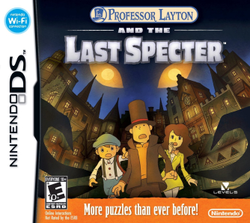
 Professor Layton and the Last Specter on DS
 Tokimeki Memorial 2 Taisen Puzzle Dama on PlayStation










 Another SquareThought Site