

 Feb 2018


In an era when videogame sequels often mean louder explosions and more lootboxes, Toki Tori 2+ arrives like a hand-written note folded into the instruction manual of a much older game. This is not a bombastic follow-up intent on shouting about itself from the rooftops. Developed by Two Tribes, originally released in 2013 and finally arriving on Switch as the "definitive" 2+ edition in 2018, the game takes the gentle bones of a classic platformer and lets them grow into something quieter, wiser and, if you will forgive a 1990s reviewer a theatrical turn of phrase, slightly mystical. The pedigree is modest but respectable: Two Tribes took the 2001 franchise name and remade it into a sprawling, exploratory puzzle platformer with Metroidvania trappings. On the Switch, the package runs at a steady 60fps in both docked and handheld realities (1080p TV / 720p handheld) and adds HD Rumble, video capture methods and a handful of new secrets. Critics at the time were broadly positive-praise clustered around the game's artful design, patient puzzles and quiet encouragement of curiosity-and while Toki Tori 2+ is not a game for players seeking non-stop combat or twitch reflex glory, it is a bracing exercise in design restraint and environmental wit. If you grew up with a stack of magazines on your coffee table and an appetite for considered challenge, this one speaks your language.
Toki Tori 2+ refuses to hold your hand. The game deliberately strips away the inventory-heavy, item-driven puzzle mechanics of its predecessor and replaces them with two elemental, context-aware skills: Whistle and Stomp. Whistle tends to draw creatures and certain elements toward Toki Tori, and through a series of melodic cues you can make this simple gesture do remarkable things-summoning the attention of wildlife or triggering subtle changes in the world. Stomp, conversely, scares fauna away, collapses weak bits of scenery, and otherwise rearranges the neighborhood by force. The genius of the design is that these two verbs-call and scare-are not tricks to be spammed mindlessly. They are tools for reading the ecology. Enemies and critters exist less as obstacles and more as moving parts in a set of mechanical puzzles. Water plays a role in the solution logic: walk through it and your feathers become wet; then, if you walk through a patch of cut grass while wet, the grass grows. That single interaction alone is emblematic of the game's ethos. Solutions are not always straightforward; often you will discover causal chains of three, four or five steps where a stomp here and a whistle there, followed by a careful step through the environment, create a ripple effect that opens a path forward. The world is metroidvania-adjacent: interconnected, rewarding exploration and patient observation. You are not handed a map that points to the correct square; you are left in a space that invites study. Two Tribes added a "Tokidex," a collectible camera-driven compendium that encourages players to photograph the denizens of the world. It's a diversion that fits the temperament of the game-discovery is often its own reward, and the Tokidex gives a gentle nudge to completionists without turning the main experience into a checklist. Two Tribes' development path was interesting and public-minded. During earlier PC and Wii U development the studio invited fans into alpha builds, implemented a level editor (which later was shelved for Wii U due to technical and sales realities) and even included an input-recording feature to gather player solutions. The shift to the Switch polish is not merely a technical port: the 2+ edition is billed as the 'definitive' release, with added secrets and platform-specific niceties like HD Rumble and video capture. These are the kind of quality-of-life improvements that reassure the player that the team cared about making this version sing on Nintendo's hybrid hardware. Pacing will be the sticking point for many. This is not a game that rewards brute force or frantic button-mashing. Instead, it is happiest when you slow your heartbeat, watch creature patrol patterns, and think laterally. That will delight players who remember the days of methodical puzzle solving in dusty arcades or on weekend afternoons; it will frustrate those who bought the console to fist-pump through an adrenaline binge. The game's quietness is not a bug; it's a design choice, and one it commits to fully. Combat is minimal by design. Toki Tori is not an assassin, nor a soldier, nor a missile-baying action hero. The challenge is in arranging the world, not in beating it down. As such the narrative, if you want to call it that, emerges from exploration-an unfolding sense of place rather than expository set pieces. In 1990s parlance, this is the sort of game that makes the player earn their epiphany. There are brain-bending setups that will make you feel clever when you solve them, and that sense of cleverness is where much of the pleasure lies.
Two Tribes dresses the game in a painterly cloak. The backgrounds are rich with layered parallax, and the foreground flora and fauna move with a weight that suggests careful animation study rather than flash. The art is not trying to be photoreal; instead it opts for a stylized, high-contrast palette where silhouettes and color shifts guide your attention. On the Switch the presentation is clean: respectable resolutions in both docked and handheld modes and a locked 60 frames-per-second that keeps movement feeling immediate without robbing the visuals of their contemplative grace. What struck reviewers at the time-and still does on the Switch-is the way the aesthetic doubles as gameplay communication. A crevice's subtle shading suggests slipperiness; a swarm's arrangement hints at a potential chain reaction. The HUD is minimal to the point of being invisible, which suits the game's exploratory bent. Sound design mirrors the visuals: cues and whistles are musical notes in the game's lexicon and carry emotional weight. The Tokidex camera interface is another nice touch: it turns photography into a collectible mechanic without feeling intrusive or gamified to the point of parody. If the graphics have a weakness it is that the world is, by intention, sparse in moments. Where modern action titles saturate every screen inch with text, icons, streaks and effects, Toki Tori 2+ offers empty air and silence. That can feel like refinement to some players and austerity to others. Practically speaking, there are no technical problems to report on the Switch port: stable framerate, crisp image and platform-specific features like HD Rumble that add tactile satisfaction to the otherwise quiet interactions.
Toki Tori 2+ is not a shout; it's a knowing whisper. If you come to it expecting a frantic, pick-up-and-play catharsis, you will find its tempo maddening. If you come to it expecting puzzles that are social studies in flora and fauna, lateral thinking made tangible, then this is one of the more sincere puzzle-platform hybrids released in the last decade. Two Tribes took risks-removing items, centering two simple abilities, leaning into exploration rather than combat-and for the most part those risks paid off. The Tokidex and camera interactions are small but meaningful incentives to look closely at the world. The cancellation of the Wii U level editor was a shame for creative types, but the Switch 2+ edition's polish, added secrets and platform-specific features make this the version to pick up. Critical reception was broadly positive, and a score hovering in the mid-to-high eights is defensible: the game accomplishes what it sets out to do with charm, intelligence and restraint. If you still keep a mental shelf for games that prize cleverness over chaos and atmosphere over explosions, Toki Tori 2+ belongs there. It is a thoughtful, occasionally infuriating, frequently beautiful experience that rewards patience with small, genuinely satisfying moments of discovery. In the showroom of modern gaming, it is the title that asks you to slow down, look around, and be quietly smug when a chain reaction you engineered finally clicks into place. That, in the end, is a pleasure no flashy headline can buy.
 Toki Tori on PS3
 Toki Tori on Switch
 Puzzle by Nikoli 4: on PS4
 Tokimeki Memorial: Taisen Puzzle-Dama on PlayStation
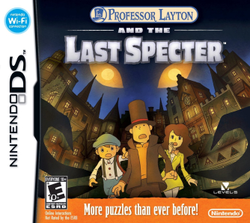
 Professor Layton and the Last Specter on DS
 Tokimeki Memorial 2 Taisen Puzzle Dama on PlayStation










 Another SquareThought Site