

 Jan 2022
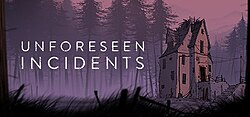

Unforeseen Incidents is the kind of cosy mystery that sneaks up on you wearing sensible shoes and a well-stocked toolbox. You play Harper Pendrel, a local handyman who gets dragged-willingly and sometimes against his better judgment-into investigating a viral outbreak in the quiet town of Yelltown. The Switch release landed in 2022, finally letting couch sleuths and commuters poke, prod and point at suspicious objects with the kind of smug confidence only a former bloke with a wrench could muster. This review zeroes in on what really matters for players: the challenge the game throws at you and the actual skills you need to survive its inventory mazes, social puzzles and red herrings without smashing the Joy-Con in righteous detective fury.
If you came in expecting open-world parkour or twitchy combat, this is not your rodeo. Unforeseen Incidents is a traditionally wired point-and-click adventure, and its challenges are Classic Adventure Game Problems: spot the thing, pick up the thing, figure out the slightly mad way to use the thing on the other thing, then repeat. The puzzles are 'extremely traditional'-which is both a compliment and a weaponized description aimed at your patience. Expect inventory-based brainteasers, environments that reward careful observation, and a handful of situational puzzles solved by using Harper's handyman tools rather than abstract logic alone. That tool angle gives the game a nice tactile flavour; you feel less like a cartoon murder detective and more like someone who could actually fix a leaking radiator. The main skills this game trains are observation, patience, and human decency. Observation matters because solutions often hide in the background: a painting on the wall, an offhand line in a conversation, or an item that looks innocuous until you try combining it with something else. Patience is mandatory because the game leans into classic adventure pacing-sometimes you need to try combinations that feel silly until the lightbulb goes on. A small handful of reviewers found certain puzzles frustrating, and that tracks: some solutions lean on lateral leaps rather than tidy logic. Those lateral leaps reward creative thinking and persistence, but can feel like bumping your head on a low shelf when you haven't quite connected the narrative clue to the inventory item. Inventory management is not mechanically complex but it is mentally finicky. You collect items, some of which are genuine solutions and some of which are delightful red herrings. That means you need to cultivate the ability to distinguish useful items from set dressing. The game intentionally plants red herrings to keep you honest-snooping everything is encouraged, but hoarding items like a squirrel can lead to mental clutter. A good approach is to make mental notes of odd objects and suspect their potential rather than immediately assuming every widget is a world-saver. Dialogue and social interaction provide a subtler challenge. Unlike adventure games that reward exploiting NPC weaknesses to manipulate outcomes, Unforeseen Incidents often pushes solutions that respect characters' dignity. You will solve some puzzles by helping a friend with a personal problem rather than tricking them. This flips the script on the usual cynical inventory-and-manipulate formula and asks the player to practice empathy, listening and tactical kindness. That may sound like moral grandstanding, but it functions as a gameplay mechanic: you need to interpret NPCs' motivations and emotional states as part of the puzzle toolkit. The mental profile of a successful player: someone who loves pattern-spotting, can keep a handful of inventory cues in mind, and is okay with the occasional head-scratcher that requires a jog around the map or a re-read of dialogue. Trial-and-error will happen; the difference between 'frustrating' and 'satisfying' here is often how willing you are to backtrack and re-evaluate a clue. If you enjoy methodical problem solving and the tiny triumphs of finally connecting two apparently unrelated objects, this game will scratch that itch. If you rage-quit after thirty seconds of ambiguity, maybe leave it on the eShop shelf. Pacing is part of the challenge equation. The game deliberately doles out story beats and clues so you can't steamroll through solutions by brute forcing combinations. That can feel slow but it builds atmosphere and encourages exploration. Voice acting, music and art-elements praised in critical responses-also support the puzzle structure by making investigation feel cinematic rather than checklist-driven. In short: the challenges are cerebral, sometimes sly, and usually rewarding if you bring logic, empathy and the willingness to be a little patient.
The visuals are a big part of how the puzzles communicate. The art style is distinctive and hand-painted enough to give Yelltown personality without turning it into a cartoon theme park. Backgrounds are detailed in ways that matter-items and clue-bearing objects are woven into scenes so you need to look properly rather than blithely mashing the 'use' button. The presentation softens the occasional sting of a maddening puzzle; when you finally solve something, it feels earned because the place looks and sounds like a lived-in town with secrets. Voice acting and music get frequent praise from critics, and for good reason: they elevate what could be a plain checklist of puzzles into an engaging mystery. Smart, witty dialogue and quality delivery make paying attention to conversations feel like a pleasure rather than an obligation. The English script is not a straight translation from German and includes original contributions, which helps the humour land and the characters feel human. All of this matters because Unforeseen Incidents uses tone to guide players; when an NPC slips a serious detail into a throwaway line, the voice work makes you notice.
Unforeseen Incidents on Switch is a solid port of a well-constructed traditional adventure. Its challenges are classic and occasionally sneaky: inventory puzzles, red herrings, and social problems that require empathy rather than manipulation. The skills you need are less about reflexes and more about observation, patience, lateral thinking, and reading people. If you treasure the satisfying click of a long-brewing solution finally falling into place, and you appreciate a mystery that treats its characters with respect, this is an 8/10 game that will repay your attention. If you expect constant hand-holding or despise backtracking and red herrings, prepare for a few head-scratching moments. For everyone else, grab your toolbox, keep your notebook handy, and enjoy being the most helpful handyman this side of Yelltown.
 Ready or Not on Xbox Series X/S
 Arcade Archives: Armed F on Switch
 PlayStation Home on PS3
 Gaelic Football '25 on Xbox Series X/S
 Together! The Battle Cats on Switch
 Unearthed: Trail of Ibn Battuta on PS3










 Another SquareThought Site