

 Sep 2023
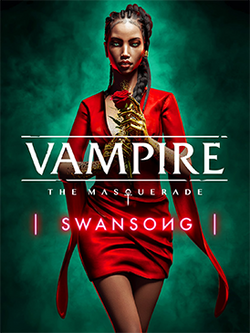

Vampire: The Masquerade - Swansong arrives on Switch a little like a nocturnal party guest who showed up late, apologised for the noise, then tripped over the coffee table and knocked over your favourite lamp. It is a narrative-driven single-player RPG from Big Bad Wolf, based on White Wolf's venerable tabletop setting and built on Unreal Engine 4. You play three vampires - Galeb, Emem and Leysha - who swap scenes, disciplines and moods as they investigate a bloody conspiracy in Boston. The Masquerade is in full effect: vampires try not to be noticed, humans try not to be eaten, and the game tries to balance mystery, choice and old-school RPG mechanics with occasional technical hiccups and dialogue that sometimes sounds like it was written by someone who prefers monologues. Swansong was developed by a Cyanide offshoot and went through the typical pandemic-era shuffle of release dates before reaching consoles in 2022 and finally sailing onto Switch in 2023. The writing leans heavily on lore, the mechanics lean heavily on player choice, and the presentation leans heavily on moody lighting and quiet rooms where bad decisions echo. Critics fairly agreed on one thing: Swansong has ideas it believes in and execution that occasionally forgets to show up. That is, in many ways, the game's aesthetic - earnest, a little broken, and oddly committed to its own nocturnal sense of style.
Swansong is at its core an investigative RPG that asks you to be clever, careful and, when necessary, morally ambiguous. You toggle between three protagonists: Galeb, a Ventrue with the kind of imposing presence that makes people hand over titles and keys; Emem, a Toreador who can charm and corrupt; and Leysha, a Malkavian who views reality like a slightly broken mirror. Each has a distinct set of vampiric disciplines - the supernatural abilities that let you charm, hide, read minds, or play with other people's perceptions - and you upgrade those disciplines and base stats to tailor playstyles. If you like solving logic puzzles, deducing culprit motives and feeling mildly superior for noticing small details in not-very-obvious places, Swansong will sing for you. The game rewards preparation: upgrading skills matters, inventory choices matter, and knowing when to keep your supernatural tricks in your pocket is frequently the difference between being a shadowy puppet master and being a headline. There's also an annoying, thrilling tug-of-war between using powers to make your life easy and preserving the Masquerade so that your clan doesn't run out of political favors. Moral choices are everywhere and rarely come with a blinking 'correct' answer, which is great if you enjoy ethical ambiguity and not great if you expected tidy moral tick-boxes. Exploration involves rummaging through rooms, hacking terminals, lockpicking and talking to a cast of NPCs whose allegiances might be metaphorical landmines. Conversations can lead to branches and consequences, and the game tracks which characters survive and which mysteries remain unsolved, producing multiple endings accordingly. The designers borrowed from the tabletop ruleset where it made sense - disciplines feel flavorful, and systemic interactions are sometimes clever - but they also leaned into a structure that favours deduction and scene-based problem solving over combat spectacle. The problem is that the game's tastefully gloomy surface sometimes conceals a slightly clunky chassis. Critics found the exploration puzzles uneven, the UI occasionally awkward, and the whole thing marred by 'janky issues' and rough edges. On Switch, these problems can feel magnified simply because handheld sessions reward immediacy and polish. Conversations sometimes lack emotional oomph - a sentence is delivered as if someone read it off a grocery list - and the promised fullness of player choice is occasionally undermined by awkward pacing or undercooked dialogue mechanics. Still, when Swansong leans into logic, deduction and well-designed investigative beats, it can be quietly brilliant; when it doesn't, it can feel like watching a good stage play where a few actors keep forgetting their lines.
Swansong's aesthetic is one of its stronger virtues. The art direction reliably nails World of Darkness atmosphere: smokey interiors, rain-slicked streets, and the right mix of grit and gothic glamour. Characters and environments are designed to evoke mood rather than photorealism, which suits a story about ancient politics and personal rot. Olivier Deriviere's score does a lot of the heavy lifting, backing scenes with music that knows how to be ominous without being obnoxious. Technical execution, however, is where the game takes a coffee table-sized stumble. The original reception flagged facial animations and a perceived lack of polish, and those notes translate into the Switch experience with occasional awkward expressions and timing that undermines emotional beats. The port doesn't rewrite the game's DNA: the visuals still sell the gloom, but the seams are sometimes visible. Puzzles and environmental interactions can feel fiddly, and superhero vampire powers sometimes feel underutilised - which, given how much effort the game puts into building them, is a little like buying a Swiss Army knife and only using the toothpick. If you're the kind of player who forgives a few rough edges for ambience and lore, you'll appreciate the look and sound. If you prefer your games polished down to the shine on your reflection, Swansong will show you just enough to tempt you before reminding you that it's still getting its makeup right.
Call it what you want - an ambitious detective story with vampire teeth, or a lovingly assembled tabletop adaptation that occasionally forgot to grease its hinges. Swansong is strongest when it plays to its investigative strengths: branching choices, three very different leads, and a setting that rewards curiosity. It falters when jank, uneven writing and undercooked mechanics get in the way of the payoff. Reviews were mixed for a reason: the game is a cocktail of great ingredients and imperfect mixing. On the Switch, the experience is largely faithful to the original, arriving late to the party but bringing most of the casserole. Fans of Vampire lore and players who enjoy methodical sleuthing will find value and replayability in the multiple endings and consequential choices. Casual players seeking slick, fast-paced storytelling or tight technical polish might leave disappointed. If you enjoy brooding, deliberate role-play with the occasional eyebrow-raising technical oddity, Swansong will be a night well spent. If your patience for dialogue that occasionally trips over its own cape is short, you may prefer to wait for future patches or pick this up on sale. Final verdict: an earnest, occasionally brilliant RPG in need of trimming and a tune-up. It has heart, it has teeth, and it will bite when it's meant to - sometimes it also bites the furniture.
 Vampire: The Masquerade – Swansong on PS5
 Vampire: The Masquerade – Bloodhunt on PS5
 Combat Elite: WWII Paratroopers on PS2
 The Banner Saga 2 on PS4
 Arcania: The Complete Tale on PS3
 Gnosia on Xbox Series X/S










 Another SquareThought Site