

 Aug 2024
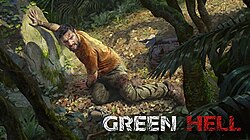

In an age when survival games often feel like checklist simulators with better lighting, Green Hell arrives on Xbox Series X/S carrying a machete, a battered field notebook and the kind of grim determination that belonged in the pages of old-school magazines. This is the sort of title that would have made for a stern, black-and-white cover story on survival design in the 1990s: a no-nonsense simulation of being both hopelessly lost and stubbornly resourceful. Developed by Polish studio Creepy Jar and originally spawned on PC in 2019, Green Hell finally puts its full Amazonian teeth into current-generation hardware with an August 14, 2024 release on Xbox Series X/S. The port arrives after a steady procession of consoles and expansions, and it brings the core experience intact - brutal, immersive, occasionally grotesque, and never apologetic about asking the player to think like a field anthropologist who forgot to pack a map. If you remember reading previews of survival titles in print, the sort that suggested you could learn a thing or two about real wilderness from a cartridge, then Green Hell will feel familiarly severe. It is not an abstraction of wilderness survival; it is a simulation that delights in the small cruelties of the rainforest. You play as Jake Higgins, an anthropologist who wakes on the banks of the Amazon and very quickly learns that the jungle has an opinion about visitors. The optional story mode frames the game with the search for Jake's wife Mia, a linguist who went to meet a remote tribe and vanished. The narrative is enough to push you onward, but it is the daily grind of hunger, infection, and weather that defines the gameplay loop. If you prefer your escapism polished and forgiving, Green Hell may be a lesson in humility. If you prefer survival games that refuse to hold your hand, then you have come to the right place.
Green Hell is played from a first-person perspective in an open-world simulation that encourages improvisation and punishes complacency. The fundamental loop is a familiar one: gather raw materials, secure food and water, fashion shelter and weapons, then explore further. But the game differentiates itself by insisting that survival is biological as well as logistical. A smartwatch in Jake's wrist is not a cheeky UI novelty; it becomes a constant chorus of nutritional readouts and health alerts that force you to balance macronutrients and stave off deficiency. Eating raw meat might keep you alive for another day, but it will cost you in terms of parasites and long-term debilitation. The game expects you to learn - and to learn quickly. There are realistic systems in play that read like a field manual. You must sleep enough or suffer psychological penalties. Cuts and scratches invite infection, and the game offers gruesomely inventive remedies: bandages and herbal concoctions are everyday tools, but infected wounds sometimes require putting maggots into an injury to clear away necrotic tissue. The developers treat these mechanics not as cheap horror but as practical medicine; the gag factor is present, yet it serves gameplay. Navigation is handled by compass and GPS, and while you can rely on these tools, the jungle is dynamic. Weather, day-night cycles, and even hallucinations intrude. The hallucinations are not window dressing; they become a psychological hazard that complicates decisions and turns routine exploration into an exercise in trust - trust in your senses, trust in the watch, and sometimes, trust in a fellow player when you elect for cooperative play. The optional story mode threads a narrative through the simulation. Its premise is simple: Jake is searching for Mia, her disappearance unfolding through radio transmissions and found documents. This narrative framework is purposeful - it gives context to the scavenging and the map markers - but it never softens the survivalist core. The Waraha, a splinter faction of the local tribe whose members paint their faces with skull motifs, provide human antagonists and a cultural friction that adds depth to encounters. Their presence complicates the moral geometry of the jungle: you are not merely fighting wildlife but navigating human conflict and misunderstanding. Crafting is matter-of-fact and satisfying. Raw materials yield tools and shelter that matter: a sturdy shelter will keep you dry and sane, a sharpened spear will extend your hunting range, and rudimentary traps can be set to secure food without endless tracking. The game's open-world encourages a cautious kind of exploration. Unlike some survival titles that reward reckless sprinting through biomes, Green Hell cultivates a slower, observational approach. You learn plant identification by trial, and the in-game encyclopedia becomes a hard-won textbook. For players who relish procedural systems that reward knowledge accumulation, Green Hell's learning curve is its principal pleasure. Multiplayer coop is available and slots smoothly into the survival design. Two or more players working in tandem feel like a small expedition: one player tends wounds while another forages; one builds shelter while another scouts for water. Cooperative play turns the game's difficulty into a shared project and makes the psychological elements - the stress and occasional hysteria - more bearable and often amusing. Creepy Jar has supported Green Hell with expansions, the Spirits of Amazonia content arriving in two parts, and a series of updates that polished the experience over years. The studio announced the culmination of development in September 2024, capping a long lifecycle that took the game from a gritty PC title to a polished next-gen console release. The game is not flawless. Its very devotion to simulation creates friction: inventory management can be fiddly, menu systems occasionally pedestrian, and some players will find the realism bordering on tedium. There are moments when the game wants you to stop and become a biologist, and if that is not your idea of fun, Green Hell will test your patience. Critics generally received the title well, with Metacritic scores in the high 70s and an Xbox One tally notably favorable, and sales numbers tell their own story: a million copies sold by mid-2020 and several million more since, reaching six million by mid-2024. Those figures are no accident; Green Hell found an audience that appreciates demanding, textured survival.
Rendered in Unity, Green Hell's jungle is a living, breathing tapestry on Xbox Series X/S. The foliage is dense without being indistinct, and the light filtering through canopy layers creates the kind of chiaroscuro that turns an ordinary path into a menacing corridor. On Series hardware the visual improvements are clear: draw distance, foliage density, and lighting fidelity all benefit from the power uplift. The hallucination sequences in particular use visual distortion and audio cues to communicate Jake's fraying mind, and these moments are as effective as they are unsettling. Far from being mere spectacle, the visual design doubles as gameplay; poor visibility, thick undergrowth and deceptive shadows are gameplay hazards as much as aesthetic choices. Character models and creature animations are serviceable rather than cinematic. There is an earnestness to the look: the jungle is rendered with a documentary eye rather than an eye for glamour. This suits the game's tone. Texture work on tools and improvised shelters shows wear and grime that communicates story without words. Performance on Series X/S is generally stable, though the game occasionally strains during very dense scenes; these are the kinds of hiccups that do not break the game but will remind the attentive player that they are in a simulation rather than a rendered diorama. UI elements remain utilitarian, prioritizing clarity for survival mechanics over cinematic presentation. Players who prize modern photorealism might find the aesthetics functional, but those who value atmosphere will find the visuals more than serviceable: they are integral to the experience.
Green Hell is a survival game with the moral character of a stern tutor. It does not hand out victories; it makes you earn each small boon of food, shelter and health through study and careful action. For those who remember reading sober, serious reviews in the 1990s that compared design philosophies rather than frame-rates, this game offers a familiar rigor with modern polish. The Xbox Series X/S port is the natural home for players who want the full experience on current hardware: it enhances the visuals and preserves the punishing yet rewarding gameplay loop. The optional narrative about Jake and Mia gives purpose to the grind, while the Waraha and other human elements ensure the world feels lived-in rather than merely hostile. If you are easily exasperated by slow-burn design, cumbersome inventories, or the occasional grotesque treatment option, this might not be your cup of jungle tea. If you are a player who relishes depth, atmosphere, and a survival title that treats ecosystem and psychology with equal seriousness, Green Hell is one of the more memorable entries in the modern survival canon. It refines its niche without compromising its uncompromising nature. In the marketplace of survival games, Creepy Jar has fashioned something that stands apart through consistency of design and perseverance in support. Buy it if you are ready to be taught by the rainforest; do not buy it if you prefer your entertainment to be polite.
 Constantine on PS2
 Painkiller: Hell and Damnation on PS3
 Cube Life: Island Survival HD on Switch
 Survival Kids on Switch 2
 The Forest on PS4










 Another SquareThought Site