

 Dec 2024
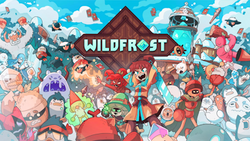

There is a particular pleasure in seeing a small, carefully assembled game arrive on a mammoth machine like the Xbox Series X/S and not feel the least bit intimidated. Wildfrost is one of those rare titles that treats the player's attention with respect rather than trying to dazzle it into submission with spectacle. Built by Deadpan Games and Gaziter and shepherded to console by Chucklefish, Wildfrost is a turn-based, roguelike card battler that wears its brightness like a winter cloak: deceptively cheerful on the surface, dangerous under the frosty veneer. Its history reads like a slow burn across platforms - originally landing on Switch and Windows in April 2023 and arriving on Xbox in December 2024 - and that staggered release has the virtue of allowing the game to mature before it finds itself under the Series X's cold blue glow.
If you have spent any time with deck-builders in the past decade, Wildfrost will feel familiarly attractive. You recruit a ragtag team of adventurers - companions who come with their own cards, equipment, and visual palettes - and set out to halt an encroaching, endless winter. The core of the loop is simple and elegant: run, fight, die, and come back for another go with a handful of persistent gains. The fights are turn-based card battles, but the cards are only half the story. Each encounter fields up to six allies and six foes, and position matters. The battlefield is arranged so that placement dictates not only who you can target but who can target you; a rear-line squishy archer can be suddenly exposed if a formation breaks, and the game punishes complacency hard. Wildfrost diverges from many of its peers by leaning into an initiative system that staggers actions rather than letting everyone go in simultaneous, predictable waves. Characters do not attack the instant they are summoned; they wait their turn according to initiative, and that wait can be the difference between a clean takedown and a chain reaction of heals, cripples and cursed snow. The initiative mechanic elevates the combat into a careful choreography: you will find yourself thinking three or four moves ahead, not out of mandatory complexity, but because the game rewards foresight. Leaders are another important wrinkle. Each expedition names a leader and the run ends if that leader falls. Losing a non-leader companion is a setback rather than an immediate calamity, but defeats do not come free: downed adventurers suffer penalties on future attempts unless you invest in equipment or other resources to mitigate the attrition. The roguelike trappings are honest. You will keep some equipment between runs, which introduces a welcome sense of permanent progression and reduces the sting of starting over. The larger rhythm is satisfying: short runs with meaningful decisions rather than long, punishing slog fests. That said, this is not a purely deterministic chess problem. Rock Paper Shotgun and other outlets rightly noted that luck sometimes intrudes; draw order and RNG can occasionally swing a tight fight. The randomness is not a bug so much as a design choice - it keeps runs from calcifying and forces adaptation - but perfectionists who demand absolute fairness in every skirmish will find moments that frustrate. The game rewards experimentation. Adventurers are generated with a variety of abilities and look distinct, thanks to the cartoon-like art direction, and each class has color palettes and quirks that make swaps and combinations feel meaningful. There are strategic finds: do you load up on tanky front-liners and hope to outlast the frost, or do you kit your builds with surgical burst and positional control? The best runs are those where you find a theme and lean into it, but the mid-run scrambles - where you must reconfigure your formation because the enemy has sniffed out your plan - are where Wildfrost reveals its depth. Accessibility is a quiet triumph. You can read the rules onscreen, and while the learning curve has teeth, it rarely feels cruel. Critics have praised the game's balance between approachability and strategic depth, and I concur: Wildfrost is generous with information and stingy only with victory. The more you play, the more the systems reveal themselves, which is the kind of slow-burn satisfaction that 1990s strategy reviewers used to covet. There are some balance issues, as noted by a few outlets, but these rarely break the game; they only nudge you to think differently. For anyone who prefers tactical puzzles wrapped in quick, repeatable runs, Wildfrost is a tidy little toothsome meal.
The visuals are the game's social currency. Wildfrost adopts a cartoony, hand-illustrated aesthetic that could have been painted on a crisp poster for a colder, kinder world. Asaf Gazit's art direction leans into clear silhouettes, cheeky character designs, and a color-coded clarity that does more than look pretty: it communicates. Each companion class receives a slightly different palette so the battlefield reads at a glance. The animations are economical but expressive; a single well-drawn leap or a shiver of frost communicates character and consequence better than a bloated VFX buffet. Paul Zimmermann's score supports the action without demanding attention. The sound design and music undergird the atmosphere: moments of triumph are accompanied by jaunty, arctic fanfare, and defeats are signaled with a sober little dirge that makes you want to queue up again rather than throw the controller. From a technical standpoint, the Unity build holds up well on the Series X/S. There are no graphical pyrotechnics to showcase next-gen horsepower, and that is perfectly fine. Wildfrost's fidelity is not measured in polygons but in intention. The camera is static, the UI is tidy, and every menu is readable even when projected onto a large modern TV. If you want blazing frame rates to show off ray tracing, this is the wrong hill to die on. If you want a game whose visuals are optimized to communicate tactical information and personality at once, Wildfrost is a small masterpiece of clarity.
Wildfrost is not a revolutionary title that reinvents deck-building; it is instead an exemplary execution of everything we already love about the genre. It marries an inviting visual language to a clever turn-based system built around initiative and formation. The roguelike scaffolding - persistent equipment, leader mechanics, and meaningful penalties for defeat - gives the series of short runs the kind of stakes that make each decision feel consequential. Critics have generally rewarded the game with strong scores, and the aggregate praise is deserved: its charms are many, its frustrations few. If there is a complaint to lodge, it is that RNG occasionally makes the cold take over your best-laid plans, and a handful of balance quirks rear their head. Those are not fatal flaws, however. On Xbox Series X/S Wildfrost translates perfectly: it is quick to pick up, hard to master, and oddly consoling in a way few modern deck-builders manage. For players who prefer their tactics neat, their runs brisk, and their art both witty and deliberate, Wildfrost is a recommended stop on the frosty road.
 Dawn of Discovery on DS
 TerraTech on Switch
 Project Highrise: Architect's Edition on PS4










 Another SquareThought Site