



Cricket 2004 is an entry in the long-running ball-and-bat simulator lineage developed by HB Studios and listed for release in 2004 on Microsoft Windows and PlayStation 2. This review looks at the PS2 version through a tech-focused lens: frame budgets, animation systems, AI decision-making, control latency, and memory-driven compromises. I won't pretend it reinvented the sport, but for a console that ran full-motion media on a chip older than some readers' teenage years, Cricket 2004 works as an interesting case study in squeezing simulation fidelity out of limited hardware. Expect an honest, slightly sarcastic appraisal of what HB Studios managed to get right, what they papered over with clever tricks, and where the PS2's boundaries loudly cough during a tense run chase.
Controls and input fidelity - The PS2 controller mapping leans conservative: face buttons for basic shot choices, the shoulder buttons for modifying timing or playing risk shots, and the D-pad or analog stick for adjusting shot direction. From a technical perspective, the implementation pays attention to read frequency and deadzone handling. Input polling appears to be synced with the main game loop rather than a separate high-frequency thread (pretty standard for PS2 era titles), which means perceived input latency is a function of both frame time and tick alignment. In practice that translates to a consistent feel - sometimes a hair sluggish - rather than unpredictable stutters. For players used to modern 8 ms reaction windows, expect to re-train to a ~30-60 ms world. Shot and bowling systems (the simulation kernel) - The game's core simulation is a blend of deterministic animations and probabilistic physics. Instead of computing full rigid-body ball-bat collisions every frame (costly on PS2), the engine uses a parametric approach: the pitched delivery registers trajectory parameters (speed, seam/no-seam, spin magnitude) which feed into a simplified aerodynamic model to compute bounce and turn. When ball meets bat, the result is resolved via a ruleset that mixes the relative contact point, bat angle (from animation frame), and a spin-influence scalar. That's a classic low-cost approach and allows consistent outcomes without expensive per-frame collision resolution. The trade-off: you get plausible, repeatable outcomes that sometimes feel "scripted" - the ball behaves like it lives in a constrained tube of physics instead of the full, gloriously chaotic real world. - Bowling AI is state-machine driven with probability weightings for line/length choices. There's evidence of situational bias: early overs favor fuller deliveries, tail-enders trigger wider lines, and attacking fields increase the chance of short balls. This isn't machine learning-level nuance, but it yields defensible, cricket-like decisions. What disappoints slightly is adaptivity over a match. AI adjustments are incremental and lack the exponential learning curve that would make it feel like the opposing captain is reading your batsman after a session. Fielding and collision systems - Fielders are animated with relatively few keyframes (conservative memory usage), but HB Studios layer procedural offsets to avoid robotic repetitions. Pathfinding uses a simple Navgrid with heuristics for intercept time calculation: which fielder reaches ball fastest versus who is best positioned to stop runs. This results in generally sensible chase assignments, but you will occasionally see two fielders hesitate like roommates both trying to be polite. Diving and catching success are governed by a catch-window scalar and an animation blending factor: if the ragdoll window (no, there is no modern ragdoll physics) aligns nicely with the animation, you get cinematic grabs; otherwise you get clumsy clutches or dropped chances. Match pacing and modes - The PS2 build balances CPU and I/O by streaming stadium assets while keeping player models resident. This reduces loading during over changes but can create brief spikes when field assets (advert boards, crowd LODs) swap. The modes are functional: various match lengths are present, and the UI exposes tactical options without burying them. For those who like statistics, the stat-tracking subsystem is adequate - it stores ball-by-ball outcomes and computes aggregates offline, which is CPU-friendly but makes mid-game analytic deep-dives clumsy. Network and multiplayer - The PS2 version is local-multiplayer focused, which is consistent with the era and the hardware. There is no online matchmaking to critique, so multiplayer evaluation focuses on split-screen and turn-based interactions. The engine manages two UI contexts reasonably well; there is a frame reallocation mechanic that directs more CPU to active player's camera, minimizing input lag for the side in play. Difficulty curve and tuning - Difficulty scaling is achieved by modifying shot-timing tolerances, bowl accuracy, and AI risk thresholds. This is computationally tiny but effective. The tuning feels conservative: novice settings are gentle, while hard settings demand precise timing, not strategic nuance. Players who prefer tactical chess over mechanical execution will find the ceiling defined more by reflexes than by captaincy brilliance. Performance and stability - Frame-rate targets hover around 30 fps on PS2 hardware with dips in crowded stadium situations. The team clearly preferred stability over visual fidelity; the framerate is steady for most of the match, with occasional frame pacing hiccups during camera transitions and crowd-dense cutscenes. Crashes or soft-locks are rare in a stable run; the memory footprint is well controlled, though save/restore operations can be slow because of the PS2's limited I/O bandwidth. Sound, commentary, and feedback loop - Audio cues are succinct and designed for clarity. Commentary is functional rather than flamboyant, acting mostly as a state labeler for what has just occurred. The auditory feedback from bat-to-ball contact is mixed prominently so players have a clear associative signal for timing - a smart design decision that compensates for the controller latency.
Art direction and model fidelity - On PS2, Cricket 2004 opts for pragmatic art rather than aiming for photorealism. Player models are mid-polygon, with silhouette accuracy prioritized over micro-detail. Cost-saving measures include shared rig architecture and low-variation texture atlases for faces, meaning you will encounter a family resemblance among unrelated players. From a technical perspective, HB Studios applied texture atlasing wisely to reduce draw calls, a necessary optimization on the PS2's limited GPU pipeline. Animation system and blending - The animation implementation is one of the game's smarter engineering choices. A modest library of handcrafted animations is combined using animation blending driven by parametric inputs: bat swing intensity, footwork direction, and so on. Blend trees are shallow but efficient, and inverse-kinematics-like offsets are applied to hand/arm joints to improve perceived contact accuracy. The result is generally believable batting and bowling, though some transitions - notably sudden stops after a sprint - look like someone hit a "pause" button. Rendering, LOD and crowd systems - The engine uses a classic LOD (level-of-detail) system: nearby players and pitch geometry render at higher detail, while outfield and stands use progressively lower LOD meshes and billboard sprites for the crowd. This keeps memory and pixel fill under control. Lighting is baked and ambient; dynamic shadows are sparse, so you won't see per-frame shadowing from the ball or subtle depth-based occlusion. For a 2004 PS2 title, this is expected and allows the game to maintain a consistent frame budget. Camera, UI and HUD - Camera controls are pragmatic: a set of fixed cinematic camera angles complemented by a player-focused chase cam during play. The HUD is minimal and legible; font rendering uses anti-aliased bitmaps for clarity. The menu UI sacrifices flair for performance, loading quickly and keeping menu animations simple and frame-friendly. Visual polish and technical tricks - There are tasteful uses of alpha blending for dust and pitch effects when players land, and the developers employ screen-space billboards for stadium lighting flares. These are cheap visual tricks that sell atmosphere without taxing the PS2's GPU. The only notable visual shortcomings are texture pop-in at the edges of the field and occasional shadowless models that break immersion during close-ups.
Cricket 2004 on PS2 is an exercise in practical engineering more than artistic bravado. HB Studios clearly understood the platform's limits and built a simulation that feels consistent, playable, and reasonably authentic without brittle ambition. The control model and match simulation are conservative and dependable, the animation blending is efficient and clever, and the AI, while not a genius tactician, behaves like a competent opposition captain. If you're chasing a cricket title that prioritizes spectacle - dynamic lighting, ultra-detailed faces, online leagues - this isn't that game. If you value predictability, tight audio-visual feedback for timing, and a clear technical approach that minimizes surprises, Cricket 2004 delivers a respectable, workmanlike experience. For its era and platform, it earns a solid recommendation for fans who want cricket that feels like cricket, even if it's not the prettiest thing in the pavilion. Score: 6.5/10 - competent engineering with a few artistic compromises and the occasional PS2-era rough edge.
 International Cricket 2010 on PS3
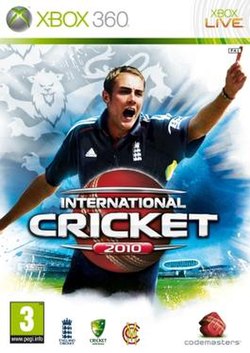 Cricket 07 on PS2
 Cricket Through the Ages on Switch
 Accolade Sports Collection on Xbox Series X/S
 Deca Sports DS on DS
 Alan Hansen's Sports Challenge on PS2
 EA Sports MMA on PS3
 NHL 09 on PS2
 The Golf Club 2 on PS4
 Cricket 2005 on PS2
 The Golf Club 2019 featuring PGA Tour on PS4
 NHL 08 on PS2












 Another SquareThought Site