

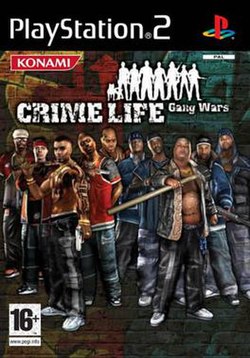

Crime Life: Gang Wars is the kind of game that promises gritty urban drama and then tries to deliver it with the emotional subtlety of a lead pipe. What it actually gives you is an oddly compelling central arc - one man's violent ascent from green rookie to possibly undead gang overlord - wrapped in mechanical and visual packages that reviewers politely called "unfavorable" and less politely called other things. This review is less interested in whether the punches land or the textures load and more interested in what the game attempts, however clumsily, to say about loyalty, betrayal, and the idea of power as an ugly inheritance. At the center is Tre, our protagonist, who arrives in Grand Central City the way many protagonists do in beat-'em-up lore: with more bravado than nuance. Tre's story arc is textbook tragic-ascendence. He starts as a rookie in the Outlawz, once the city's most formidable gang and now a relic. Where some games would let you grope for a 'respect' bar and call it character development, Crime Life hands Tre a wake-up call in the form of Big Dog's betrayal. Big Dog, the man who should embody the gang's code, is instead tempted to defect to the rival Headhunterz. The decision to have Tre kill Big Dog is violent, immediate, and narratively efficient: this is the point the game wants you to believe in, the switch from victim to monarch. Big Dog's fall is less a nuanced portrait of an aging leader and more a narrative device that forces Tre's hand. Still, it creates a stark moral pivot. Tre's murder of Big Dog is not treated as an ethical dilemma so much as a promotion ceremony with blood. That choice pushes Tre into a classic arc - he becomes the thing he sought to avenge the Outlawz from: a ruthless leader who must decide what kind of control to wield. The game flirts with the consequences - the gang executes the police chief, Tre slaughters Headhunters, and then collapses after being shot in a climactic fight with Justiss - but it rarely pauses to examine the interior cost. What it does give us is a kind of operatic rise: rookie → patricide → gang leader → myth. Justiss and the Headhunterz operate more as mythic antagonists than as nuanced characters. They are obstacles dressed in rival-jersey clichés; their arc is simple and purposeful: they must be eliminated. The lack of shades of gray here is both a weakness and a strangely fitting choice. Gang narratives - whether in film, music, or games - often succeed when they deliver archetypes that keep the story moving like a freight train. Crime Life picks archetypes and beats them like drum patterns in its soundtrack. Speaking of soundtrack, one of the game's few unambiguous wins is the music: a roster of UK hip-hop artists bolsters the atmosphere, and an exclusive track and likenesses from D12 give certain characters an extra layer of personality. For a game that struggles to emote with facial animation, it leans on music to provide mood, and in that it mostly succeeds. The police chief's execution is a plot beat that shows how the Outlawz - under Tre - abandon any attempt at moral high ground. In a different story, that might spark genuine introspection or a slow spiral into paranoia. Crime Life touches those notes only briefly, preferring action-driven momentum. The final sequence, where Tre seemingly dies after shooting Justiss but then vanishes (leaving only Justiss's corpse), is the one narrative gambit the game plays with subtlety: ambiguity. It hints that Tre might become legend, or escape, or be swallowed by the city - something the game's mechanical roughness unfortunately cannot transform into profundity. The ambiguity works as a hook: despite the game's technical faults, Tre's arc ends on a note that invites fan theories. Did he live? Did the city swallow him? Did he join witness protection with a new haircut and a taste for yoga? The answer isn't given, and in this case that's a mercy.
The gameplay of Crime Life: Gang Wars is a peculiar hybrid: beat 'em up meets small-scale open world. Mechanically, it's much closer to arcade brawlers like Final Fight - waves of enemies, weapons you can pick up (baseball bats, lead pipes, hammers, guns), and a choreography that often looks like a drunken swing set. The single-player campaign contains over 25 story-mode missions, plus free-play missions, which sounds generous until you notice that repetition quickly becomes the game's true currency. Free roam is available and explicitly modeled after Grand Theft Auto's style, but don't expect sprawling cityscapes or inventive side activities. The areas are compact, and the roaming feels like squeezing an ambitious sandwich into a small lunchbox: the ingredients are there, but they're cramped. These smaller maps do serve a storytelling purpose - they make the city feel claustrophobic, like a maze where everyone knows your face - which echoes Tre's arc: small streets, big betrayals. Combat is the place where the character arcs and gameplay occasionally tango. The beat-'em-up encounters amplify Tre's transformation: early fights mark a rookie learning to swing, later battles present Tre as a leader orchestrating violence. The game lets you use weapons, and there's a satisfying visceral thud when a bat connects, but the combat lacks polish. Enemies rubber-band, collision feels inconsistent, and animations loop like a hip-hop track when the DJ runs out of new samples. When the game leans on spectacle - like throwing Tre into overcrowded street melees - it occasionally captures the chaotic energy of a gang war. Most of the time it feels like controlled chaos executed by a development team who ran out of time. One of the design choices worth discussing is the cast voicing and likeness contributions from D12. Their presence elevates some of the cutscenes from awkward to authentically urban - voices lend weight to certain characters and make interactions feel like they're happening in a lived-in world. The soundtrack, dominated by UK hip-hop with a D12 exclusive, does heavy lifting for atmosphere; IGN noted the music as a positive amid an otherwise critical review. Sadly, the sound effects and ambient audio are inconsistent, so the soundtrack often feels like a neon sign in a dim alley: bright but surrounded by grime. Structurally, missions tend to be straightforward: move to a point, clear enemies, maybe escort a teammate or destroy some property. There's no denying the appeal of a game where you literally fight to restore a gang's reputation, but the lack of narrative interstitials - real moments of dialogue or consequence outside combat - makes the arc feel episodic rather than epic. In short, Crime Life wants you to live Tre's rise through fists and weapons, not through dialogue choices or moral decisions. That approach makes for visceral gameplay and shallow introspection. If you play for bonkers brawls, there's fun here. If you play for character study, the bones of an interesting story are present but undernourished.
Graphically, Crime Life feels like a relic wearing a new hat. Reviewers compared the visuals to the first wave of Xbox-era titles: blocky geometry, stiff animations, and textures that look like they were painted with a blunt brush. On PS2 the presentation lands somewhere between 'serviceable' and 'embarrassingly dated' even for 2005 standards. Characters are recognizable silhouettes more than expressive faces. That matters because the game leans on dramatics: for a story that wants you to care about betrayal and power, the actors (in polygon form) rarely convey it. Environmental variety is limited. Grand Central City has neighborhoods, but they repeat assets and feel like stage sets reused with different lighting. Animations are choppy; combat pops with impact but is let down by stiff recovery frames and occasionally wonky hit detection. The small free-roam areas highlight how repetitive the level design can be - once you learn the nooks, the city stops feeling alive and starts feeling like a maze made by someone who hates you. On the plus side, the character designs capture a certain urban realism in silhouette and wardrobe: hoodies, jackets, and gang turf markers. D12's likenesses help key characters stand out. The game's visual identity pairs well with its soundtrack, creating a cohesive mood even when technical execution is lacking. Unfortunately, mood cannot entirely compensate for the polygonal limitations and the limited facial acting that leaves cutscenes feeling like radio plays with static art.
Crime Life: Gang Wars on PS2 is a study in narrative ambition hamstrung by technical limpness. It offers a raw, archetypal tale - Tre's violent coronation, Big Dog's cowardice, the Headhunterz as opposing myth - that flirts with the tragic gangster template. There is an honest kernel of storytelling here: a plot about loyalty unraveling and the intoxicating nature of power. Tre's arc, culminating in an ambiguous vanishing act after taking down Justiss, is the sort of ending that spawns fan theories and late-night forum debates. For a game that rarely pauses to breathe, that cliffhanger breathes longest. Mechanically and visually, the package is rough: awkward combat, small free-roam areas, uneven sound effects, and dated graphics that earned the game a pile of critical scorn (Metacritic scores in the 30s and a chorus of low reviews were not unearned). Yet the soundtrack and the D12 involvement offer authenticity that sometimes makes the world feel lived-in despite its cracks. If you want a polished experience with nuanced character studies and meaningful choices, this isn't the game. If you want to play a game that occasionally hits the cinematic beats of gangland tragedy while you swing a hammer at a rival's kneecap, and you don't mind dated visuals or repetitive combat, Crime Life has that in spades. As a character-driven analysis, my final verdict is this: the story wants to be a grim urban fable and gives us the skeletal outline of one. Tre is a memorable protagonist more for his trajectory than for subtlety; Big Dog is a cautionary tale about leaders who lose their nerve; the Headhunterz and the police exist to test Tre's conviction and brutality. The game's ambiguity at the end - Tre's possible survival - is its most intriguing stroke. That, and the beats where the soundtrack and voice work actually sync to give a moment of real atmosphere, are the reasons this title still gets mentioned. It earns a solid point for narrative promise and soundtrack execution, but loses ground for its clunky execution. That pushes the final score to a hesitant 3 out of 10: interesting ideas, badly executed, occasionally fun if you have low expectations and a high tolerance for brawling through a rough cityscape.
 Fantasy Life i: The Girl Who Steals Time – Nintendo Switch 2 Edition on Switch 2
 DX Jinsei Game IV on PlayStation
 Jinsei Game DS on DS
 Onimusha: Dawn of Dreams on PS2
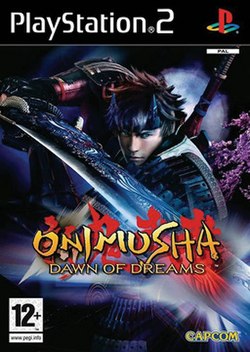 Action Man: Operation Extreme on PlayStation
 Door Kickers: Action Squad on Switch
 Combat Elite: WWII Paratroopers on PS2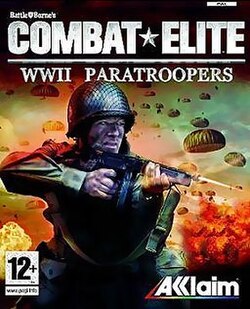












 Another SquareThought Site