

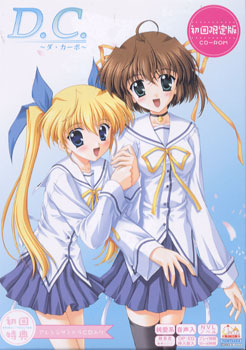

Think of Da Capo as one of those music-box toys that, instead of breaking after a few winds, keeps looping the same wistful melody while slowly revealing a new ornament inside each time you open it. On PlayStation 2 the adult edges were sanded down, the choreography of the routes stayed intact, and the island of Hatsunejima continued to smell perpetually faintly of cherry blossoms and plot conveniences. Jun'ichi Asakura is an unremarkable protagonist in the best possible way: a human hinge whose main function is to swing open the story-doors of seven very different heroines. The charm of Da Capo isn't in revolutionary mechanics or flashy set-pieces; it's in how the game writes its women - quietly, insistently, and with the occasional theatrical tear - and how their arcs reveal a surprisingly thoughtful core hidden beneath candy-floss romance. Da Capo's setup is intentionally domestic and slightly magical: Hatsunejima is saturated in eternal sakura bloom, a single magical tree spawns small miracles, and people wear little quirks like badges - Jun'ichi can see dreams, Kotori can read minds, Sakura hasn't aged in six years and keeps a promise. The PS2 release trims the adult content but doesn't mute the emotional beats. It invites players to sit cross-legged on a tatami of nostalgia and watch personalities unfurl like petals. This review will take the scenic route: we will live inside the characters' heads, examine their arcs scene by scene, and point out how the game's structure and writing choices either help or hinder the emotional payoff.
Da Capo on PS2 plays like a letter-reading exercise for people who like voice-acted feelings. Interaction is minimal: you read, click, occasionally make a choice about where Jun'ichi will spend his afternoon, and then wait for the conversation to do its thing. Those branching moments are the meat of the experience; each choice is a fork that leads to one heroine's route. There are seven primary arcs - one per heroine - and the only real skill the player needs is curiosity (plus maybe a pen for route notes). The original PC release contained explicit scenes that served as endpoint rewards for routes; the PS2 ports remove those but keep the narrative scaffolding, which is where the meat of the characters lives anyway. Jun'ichi: At first glance Jun'ichi is the textbook nice-guy protagonist: decent, occasionally clueless, and generous with ear-time. He functions less as a rounded person and more as an empathic surface upon which the heroines project and grow. That can be frustrating if you want a protagonist with agency, but it's also the point: his role is to listen and, through that listening, enable the other characters' transformations. The best moments come when his ability to see dreams becomes plot-gear rather than a one-line gimmick. Sakura Yoshino: Sakura is the game's gravitational center. Returning from America unchanged since childhood, she embodies the game's strange time-loop motif. Her arc revolves around promise, memory, and the bittersweet weight of being the person who never quite ages. Sakura's presence reframes ordinary moments into fragile reliquaries; her route explores themes of nostalgia and the moral discomfort of holding onto the past. Scenes with her often feel like someone playing an old record: you know the notes, but the voice is different. The writing here leans on longing and the surreal nature of her stasis; it doesn't always answer all questions, but the ambiguity is part of the appeal. Nemu Asakura: Nemu, Jun'ichi's adopted sister, is the archetypal gentle anchor - modest, self-effacing, and quietly strong. Her route is written to expose the difference between being devoted and being whole. Mikage, who penned both Nemu and Sakura's scenarios, uses small domestic crises to let Nemu face internal contradictions: loyalty versus selfhood, caretaking versus independence. Her emotional payoff is subtle: you leave her arc feeling like you've watched someone learn to ask for what they deserve instead of only giving it. Kotori Shirakawa: Kotori trades on the idol-with-a-secret formula: she reads minds, she's cute, and everyone wants to protect her. Her arc is a study in persona. Kure's writing (Kotori and Yoriko) treats Kotori's idol life as both armor and performance. Her route interrogates how much of identity is curated for an audience and whether authenticity is a price characters are willing to pay. Tonally, her storytelling veers lighter, with comedic beats that mask more painful revelations about loneliness. Yoriko Mizukawa, Moe, Mako, and Miharu: The game balances its heavy moments with more playful or eccentric routes. Yoriko, written by Kure alongside Kotori, is often comic relief with a surprisingly tender streak; her arc asks what courage looks like when it's small and sudden. Moe and Mako (double-duty by Yoko Yoko) provide more archetypal slice-of-life sweetness - think mischief, sibling dynamics, and the kind of cute conflicts that cause both laughs and soft sighs. Miharu, written by Mari, is perhaps the most thematically neat: a concise route that tackles loyalty and childhood vows in a compact, emotionally efficient way. The writers split duties intentionally, and that division shows in how distinct each route feels. Mikage's pair are wistful and slow-burn; Kure's feel performative and scene-driven; Yoko Yoko's routes are light-hearted and character-focused; Mari's work is tight and thematically sharp. The result is a collection of tonal microphones: sometimes the studio sound is warm and expansive, sometimes it's a close, breathy whisper. The PS2's removal of explicit content slightly shifts how the endings are perceived. Without sexual scenes as endpoint rewards, emotional closure is forced to stand on writing alone. This helps Da Capo in a strange way: you're left to evaluate routes based on development and honesty, not on fetishized punctuation. The trade-off is that a handful of scenes that relied on physical intimacy for catharsis feel thinner on PS2. Still, in terms of character study, trimming those edges often reveals the underlying bone structure - and that structure is generally solid.
Visually Da Capo is a love letter to early-2000s bishoujo aesthetics. The PS2 ports preserve the original artwork and character designs, which were split between Naru Nanao (Nemu, Sakura, Kotori), Igul (Miharu, Moe, Mako), and Kanon Ikutata (chibi art and extras). That distribution matters: Naru Nanao's designs skew toward ethereal melancholy - very good for Sakura's mysterious 'hasn't-aged' vibe - while Igul's work leans toward playful and rounded features that fit the lighter routes. The art direction uses familiar visual-novel techniques: expressive CGs for emotional climaxes, gentle backgrounds of an island that is basically a postcard, and chibi interludes when the script needs to wink. On PS2 the game isn't trying to be a technical flex. This isn't the era of photorealism but of stylized stills that aim for emotional clarity. The opening animation, produced by Nitroplus, provides a nicer slice of motion than the static in-game art and helps set tone: bittersweet, musical, repetitious in the way the title's musical metaphor implies. There is also satisfying attention to small details - sakura petals, the way evening light softens school corridors, the design of festival stalls - that give the game's world a lived-in warmth. Voice work and music are notable strengths. The PS2 ports benefit from seiyuu performances that give the characters inflections absent from the original text, and the soundtrack, composed and curated with care by Tororo and collaborators, leans cinematic at key moments. If the writing sometimes stumbles over natural-sounding dialogue, the music almost always carries the emotional freight. Graphically the game won't stun you in a showcase reel, but it does what it sets out to do: make characters readable at a glance and mood palpable with a single painted CG. For players who prioritize character voice and song over polygons, Da Capo's presentation is more than adequate.
Da Capo on PS2 is not a game that will change your life, but it's one that will quietly rearrange a corner of it. The PS2 ports remove the explicit content and in doing so ask you to judge the routes purely on narrative and emotional merit. That proves partially successful: when writers hit their marks - as they often do with Sakura's haunting ambiguity or Nemu's gentle awakening - the stories are resonant and memorable. The game's central conceit, the unceasing sakura and periodic 'da capo' loop, frames the emotional beats as part of a larger melancholic music box, which makes every promise, memory, and confession feel slightly amplified. There are flaws. Jun'ichi's passivity will annoy players craving a protagonist who pushes back. Dialogue occasionally slips into awkwardness - a criticism noted even in later English reviews - and tonal shifts between routes can feel mismatched because multiple writers handled different heroines. If you want plot-heavy, twist-laden spectacle, Da Capo is not the right fit. If you want a slow, character-driven excavation of longing, promises and small domestic miracles, then it's a very good fit. On PS2 the game becomes a character study more than a romantic reward machine, and that suits it. Strong music, committed voice work, and designs that capture each heroine's emotional palette make for a package that rewards patience and repeat plays. Given its place in visual-novel history - spawning anime seasons, manga, drama CDs and numerous sequels - Da Capo earns its cult reputation. Score-wise, it's a solid 7/10: not flawless, but sincere, frequently touching, and often smarter about relationships than it first lets on. So wind the box, press play, and let the sakura fall again - each route is another ornament to find beneath the lid.
 Tokimeki Memorial Drama Series Vol. 3 Tabidachi no Uta on PlayStation
 Oshiete! Popotan on PS2
 DearS on PS2
 Tomoyo After: It's a Wonderful Life on PS3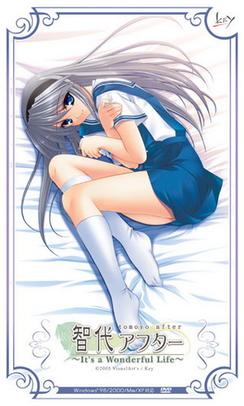












 Another SquareThought Site