



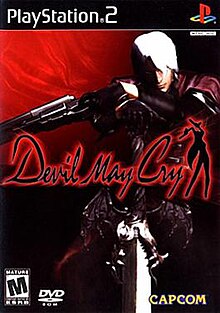
Devil May Cry arrived like a leather-clad meteor in 2001: loud, stylish, and refusing to play by Resident Evil's survival-horror rulebook. At the center of the chaos is Dante, a demon hunter whose business card might as well read "Professional Menace to Demons and Bad Hair Days." The game borrows scaffolding from Dante Alighieri's Divine Comedy - names, borrowed gravitas, a dash of existential angst - but Capcom turns the poetry into punchlines and aerial combos. What elevates the title beyond being merely a button-mashing fashion show is how its characters and their arcs are woven directly into the gameplay. This is not just a tale about slaying monsters; it's a compact, operatic three-act drama in which each fight, transformation, and betrayal tells you something about who these people are and what they've lost.
Devil May Cry is mission-based: a series of castles, puzzles, and arena-like boss fights that read like set pieces in a gothic rock opera. Each mission hands you combat, platforming, and a grading system that rewards showmanship. The 'style' meter - from Dull to Stylish - is a mechanical applause meter for creativity; use the same move over and over and the game insults your taste. It forces you to be theatrical, which hilariously aligns with Dante's persona: he is performance incarnate. Taunting enemies to keep a Style rank is less trolling and more character work: Dante's smirking confidence becomes a resource. If you play like a brooding wreck, the game will grade you accordingly. Mechanically, the Devil Trigger is the clearest example of character informing design. When Dante taps into his demonic side, he doesn't just become stronger - he reveals a different facet of himself. Visually the transformation is a statement; mechanically it restores health, boosts damage, and unlocks special attacks. Narratively, it's a moment of honest contradiction: Dante hunts demons because of loss, yet the demonic inheritance inside him is the sole thing that can turn the tide. That tension between vengeance and self, repression and power, is embodied every time a player chooses to 'go dark' and trigger the beast within. Boss encounters double as plot beats. The Phantom and Griffon fights are not just skill checks; they punctuate Dante's progress through the castle and through grief. Nightmare's clash with Dante is where the emotional stakes spike: Trish's betrayal and then her near-sacrifice function as the inciting emotional beats that unmask Mundus' cruelty and give Dante the spark to become Sparda-adjacent in a way that also rewards the player mechanically. Nelo Angelo deserves a paragraph: on first blush he's a "dark knight" boss with a slick moveset, but design choices make him memorable beyond frame data. The hesitation when he recognizes Dante's amulet - and the later reveal that he's Vergil, Dante's long-lost twin, brainwashed by Mundus - turns repeated duels into chapters of sibling tragedy. Gameplay-wise, Nelo Angelo is nimble and punishing; story-wise, his identity flips your mental model of the fights you just had. That emotional retrofit - 'oh, that guy was my brother' - is rare in action games and the effect is grateful and cruel: every parry suddenly rings with familial Echoes. Trish's arc is the tightest little double-cross in modern action gaming. She starts as a femme fatale set to manipulate Dante, then reveals herself as Mundus' spy, only to ultimately choose the human side by taking the beam meant to obliterate Dante. This act is framed in both cutscene and mechanics: her magic becomes a literal gameplay modifier at the finale, infusing Dante's guns. In one elegant twist, a narrative moment - Trish crying, shown as proof she's become human - gets encoded into the mechanics of victory and the cathartic payoff of the final battle. The game's puzzles, Secret Missions, and orb-collecting feed the fiction of exploration and Dante's resourcefulness. The mission grading system encourages replay, which is thematically apt: Dante refines his technique and grows, both as a player and as a man learning to let go of a single-minded vendetta. Even the learning curve and deliberately high difficulty are extensions of the story. Kamiya intended difficulty to be a challenge because, like Dante's trials, growth in this world isn't handed out for free.
Visually, Devil May Cry trades photorealism for mood. The castle on Mallet Island and its gothic architecture were built from a practical design choice: Kamiya hated fixed camera angles that made the hero look cowardly, so the team used a dynamic camera and real-world textures gathered from a trip across Europe. That texture work gives many levels a tactile, stone-and-blood feel. The mix of in-engine cutscenes and pre-rendered FMVs means you get cinematic moments that read like short films, while the engine keeps gameplay fluid. Being early PS2 hardware, the game shows its age in flicker and jaggies - criticisms contemporary reviewers noted - but the art direction compensates. Character models are expressive where it counts: Dante's coat, the silhouette of Sparda's sword, the knightly menace of Nelo Angelo. Lighting and particle effects punch above the system's weight class, and the rail-shooter twist in the finale is stylistically jarring but dazzling. If you nitpick pixels you'll find issues, but if you judge by atmosphere, style, and readable animation for combat, the visuals do exactly what they need to: make you feel like a living, leaping action figure in a gothic comic book.
Devil May Cry is shorthand for 'how to make a character-driven action game that actually respects its characters.' It's more than a milestone for flashy combat; it's an economical, theatrical story about grief, sibling rivalry, and the odd comfort of being half-demon. Dante is the franchise's soul: a reckless, charismatic avenger who's more 'two-for-one espresso and sarcasm' than Shakespearean hero, but whose emotional beats land because the gameplay lets those beats breathe. Trish turns from plot device into a layered partner, Vergil's Nelo Angelo persona converts boss fights into tragic echoes, and Mundus stays satisfyingly operatic as the kind of villain who deserves capes. Critiques - the steep learning curve, occasional camera issues, and the rail-shooter final act - are valid. They are the burrs on an otherwise velvet glove. For players who want their action to feel like a performance and their characters to mean something beyond flavor text, Devil May Cry remains essential. It invented a subgenre, gave us one of gaming's most memorable anti-heroes, and stitched gameplay to story in a way that still influences modern action design. Play it for the combos, stay for the sibling drama, and whenever you taunt an enemy seconds before a devilish finishing move, remember: you are, in a small way, acting out Dante's complicated grief with impeccable style.
 Devil May Cry on Switch
 Devil May Cry HD Collection on PS3
 PlayStation Home on PS3
 Ōkami on PS2
 Gaelic Football '25 on Xbox Series X/S
 Unearthed: Trail of Ibn Battuta on PS3
 Resident Evil HD Remaster on PS4
 Dino Crisis on PlayStation
 Resident Evil – Code: Veronica X HD on PS3
 Dino Crisis 2 on PlayStation












 Another SquareThought Site