

 Aug 2016
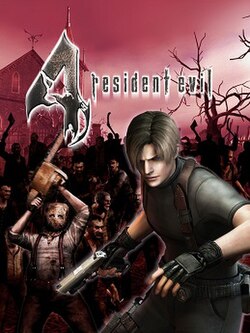

Resident Evil 4 is often celebrated for reinventing camera and combat for action-horror, but beneath the laser-sighted headshots and exploding islands is a tightly packed ensemble of characters whose arcs drive the game's lasting emotional punch. Leon S. Kennedy shows up looking like the grown-up answer to a rookie cop's prayer: still sardonic, now surgically precise with a rifle and reactive with a quip for every squeal. Ashley Graham begins as the poster-child for 'damsel in distress' but gradually becomes the object that reveals others' motives - a political pawn, a living biological MacGuffin, and ultimately fuel for Leon's moral engine. Ada Wong floats through the plot like a smoke-ring of ambiguity: ally, lover, thief, and narrative complication. Meanwhile, antagonists and side characters - Saddler, Salazar, Krauser, and Luis - are not just boss fights, but mirrors that reflect Leon's stubborn neutrality, the world's greed, and the ethical cost of science. The PS4 HD re-release keeps the game's dramatic backbone intact and sharpens the visuals, but the true magic remains in how these people (and monsters) change each other as the story detonates toward its volcanic finale.
Resident Evil 4's gameplay innovations - over-the-shoulder aiming, context-sensitive actions, and the grid-based attaché case inventory - are usually explained as mechanical evolution. If you look at those mechanics as the language the game uses to tell character stories, they read like a surprisingly literate screenplay. Leon's arc is the clearest choreography between action and character. He's not just a gun-wielding avatar; the over-the-shoulder camera invites intimacy, placing you right behind his moral spine. When you aim at ankles or arms to make foes stumble, you're performing Leon's restraint - he prefers disarmament and precision over chaos. The frequent quick time events during boss fights aren't arbitrary: they dramatize his survival instinct and personal touch. The inventory grid is a practical metaphor for Leon's life: constrained, organized, upgraded incrementally as he learns that brute force alone won't clean the dossier of threats he's been handed. Ashley's arc is encoded in gameplay pressure. Escort missions often reduce the player to a manager of responsibility, and her AI limitations cleverly turn what could be a weak character into a narrative device that intensifies Leon's heroism. The infection (Las Plagas) turns Ashley from vulnerable to dangerously valuable; she becomes a character who catalyzes choices - protect, rescue, panic, or bargain. Her presence also exposes other players' impulses: some will prioritize her safety, others their ammo cache. It's a barometer of morality, and Capcom uses it to great effect. Ada is defined by omission: 'Separate Ways' on the PS2 (included in later ports) expands her perspective and shows how her arcs overlap with, but rarely intersect fully with, Leon's. In gameplay terms, Ada's segments introduce stealth and subterfuge mechanics, reinforcing her role as an operative whose goals rarely align transparently with others. Her habit of getting the sample at the end is less a twist and more the logical endpoint of a consistent behavioral script. Luis Sera and Jack Krauser provide emotional counterweights. Luis's research and his eventual death are placed at the narrative fulcrum where science becomes human tragedy; the pills and Plagas sample he sacrifices are tangible proof that good intentions in the Resident Evil universe often have messy receipts. Krauser's betrayal is both a gameplay escalation (tougher duel, different tactics) and a character beat: an old comrade repurposed into an ideological foil. Saddler and Salazar are theatrical villains whose grotesque machinations (cult politics and castle traps) make Leon's task feel mythic. Encounters with Regenerators force the player to change tactics and find the infrared scope; narratively, those moments hammer home that brute-force solutions aren't always possible - sometimes you must change tools, not temper. Finally, the merchant and the upgrade system give an economy to choices. Who you upgrade, what you sell, whether you invest in a shotgun or a rifle - these are small character decisions. They read like personality quizzes: pragmatists hoard handguns, show-offs shovel parts into the rifle, and completionists inflate Leon's self-sufficiency. The result is a gameplay loop that both tests reflexes and reveals the player's own micro-arc in parallel with Leon's.
Resident Evil 4's visuals were revolutionary at release and the PS4 port smooths the edges while preserving the expressive character work. The move from fixed cameras to the over-the-shoulder view wasn't just an ergonomic triumph - it turned faces into stories. Facial modeling and voice acting (noted in original reviews) give characters an unusual amount of emotional bandwidth for their era; Paul Mercier's Leon breathes exasperation, Carolyn Lawrence's Ashley registers fear with a brittle timbre, and Ada's clipped tones are layered with inscrutable intention. The environments - from the claustrophobic village to Salazar's absurdly baroque castle - act like stage sets designed to test character. Lighting cues and texture work (the team's field photogrammetry trips to Spain and the UK, documented in development notes) add authenticity; the dirt on a villager's sleeve, the cracking stone in the castle, the oily shine of a laboratory table, all give physicality to narrative beats. Monsters like Regenerators are well-integrated into both visual and gameplay design; their heavy breathing becomes a diegetic cue, and visually they are grotesque reminders of the cost of experimentation. The HUD choices (laser sight vs. Wii reticle in other ports) alter the feel of aiming, but the PS4's HD clarity helps read body language in heated moments, making it easier to appreciate small animation cues that signify a shift in an enemy's or ally's state.
Looking at Resident Evil 4 through the lens of character arcs makes the game feel less like a relic of genre innovation and more like a compact novel of action-horror. Leon's quiet competence, Ashley's reluctant centrality, Ada's delicious moral fog, Luis's tragic note, and Krauser's betrayal form a chorus that elevates the plot beyond rescue mission staples. The PS4 re-release is an excellent way to revisit those arcs with crisper visuals and stable performance, and most of the canonical extras (like "Separate Ways") are available to flesh out perspectives. If you come for the over-the-shoulder shooting, stay for the surprisingly patient character work; the mechanical innovations serve to reveal people, not just kill monsters. For veterans, it's a nostalgic masterclass; for newcomers, it's an invite to watch characters twitch, learn, and change as bullets fly. Bring ammo, bring patience, and maybe a soft spot for a mercenary with a complicated past. Resident Evil 4 remains a near-perfect example of how gameplay and story can hold hands - and then blow the island up together.
 Resident Evil 7: Biohazard on PS4
 Resident Evil Survivor on PlayStation
 Evil Genius 2: World Domination on PS4
 PixelJunk Shooter 2 on PS3
 Obscure: The Aftermath on PS2
 Tom Clancy's Rainbow Six: Vegas on PS3
 Resident Evil HD Remaster on PS4
 Dino Crisis on PlayStation
 Resident Evil – Code: Veronica X HD on PS3
 Dino Crisis 2 on PlayStation










 Another SquareThought Site