

 Jun 2007
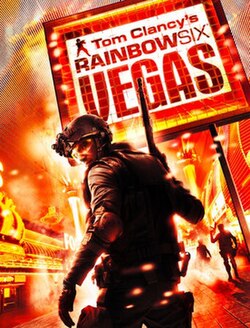

Tom Clancy's Rainbow Six: Vegas arrives on the PS3 as the franchise's attempt to be both a serious tactical shooter and an action movie that forgot to hire an actual screenwriter. Developed by Ubisoft Montreal and released for PS3 in June 2007, Vegas recasts Rainbow Six as something flashier than the series' spreadsheet-level planning roots, while still pretending that tactics matter. You play Logan Keller, a character whose résumé probably lists 'carries a pistol, performs mildly dramatic rope entries' under special skills, and you spend the campaign shuffling between Mexico and Las Vegas trying to stop terrorists, defuse micro-pulse bombs, and remind buildings that they are not meant to be rearranged by bullets. The PS3 port is the console version that inherited a lot of the Xbox 360 praise: solid core shooting, smarter enemies than you expect, and an online component that earned awards in 2006. It uses Unreal Engine 3 for visuals and leans into modern design choices of the era - regenerating health, transient third-person cover moments, and minimal cutscenes. If you came expecting the slow chess of earlier Rainbow Six titles, Vegas will hand you a chessboard with grenades and ask you to checkmate it while blind-firing around corners.
Gameplay is Vegas' personality: mostly calm, occasionally explosive, and always ready to show you how quickly someone who ignored your 'do not engage' order can become decoration. The series' old mission planning is gone, replaced by a more immediate, checkpoint-based campaign. Instead of drafting a detailed assault plan and assigning team roles over several cups of coffee and moral compromise, you get context-sensitive D-pad commands to tell teammates to breach, hold, or look sad and heroic. The squad response is competent; the voice commands via a PS3 headset are a neat trick, if you enjoy telling computer teammates to do the job you were supposed to do anyway. The health system moves away from the strict hit-point accounting of earlier games into a regeneration model: take some fire, fall back behind cover, wait, and your vision will stop looking like a malfunctioning kaleidoscope. It borrows from contemporary shooters in giving you a forgiving margin, yet it keeps the threat of instant death for close-range shotgun blasts and grenades. This means that planning matters but muscle reflexes matter more. You can be methodically tactical and still die because the enemy had a better relationship with a grenade than you did. A notable mechanical addition is the ability to switch to a third-person blind-fire mode while pegged against corners. It's less about spectacle and more about giving you a pragmatic way to suppress enemies while exposing as little of your torso as humanly possible. The aiming system has an echo of the franchise's older feel, rewarding careful shots and headshots with a satisfying finality. Assisted aiming is present, but kills feel earned rather than handed to you on a silver platter. AI in Vegas is stingy with its mistakes. Enemies work in larger numbers and tend to coordinate in a way that suggests someone briefed them on basic squad tactics. Grenadiers will toss frag and flashbangs with a hopeful recklessness, and there are times when you are forced to evolve from 'person with a gun' into 'person who uses cover, timing, and the element of surprise.' Friendly AI behaves well; teammates follow commands, move into positions, and sometimes get shot so you can feel like a leader who needs both better coffee and better protective gear. Story beats are cinematic in the efficient, no-cutscene style. Ubisoft tells the tale through HUD video feeds, radio chatter, and the occasional hostage rescue. You start off in a Mexican border town, get separated, and end up in Vegas - because nothing says 'escalation' like a city built on neon and questionable architecture. The plot's villain, Irena Morales, moves like a drafty plot device, and the later revelation that Gabriel is a mole gives the finale an interpersonal betrayal the game flirts with but does not overstay. The final moral choice - shoot the fleeing helicopter or let the traitor vanish into the desert - is more of a theatre prop than a branching narrative, but it's a nicely tense punctuation mark after hours of breaching and unbreaching doors. Multiplayer is a strong component and was part of what earned Vegas several online awards. The PS3 retail release bundled DLC maps and modes that were previously released as Player's Pack Red and Black on Xbox Live, so PS3 players got a healthy online palette from day one. Modes like Assassination and Conquest add variety beyond old-school team deathmatch, and the map design rewards both map knowledge and the kind of improvisation you only learn after accidentally throwing yourself off of something three times. Ubisoft supported the game with patches, smoothing out rough edges after launch. The PS3 version plays very much like its Xbox 360 counterpart in spirit, offering an experience that blends tactical incentives with modern action pacing. If you crave a methodical simulator of entry corridors, this isn't as austere as the originals. If you want a shooter that expects you to think and then rewards you for not acting like a human bullet sponge, it hits the balance most of the time.
Visually, Vegas is convincing enough to make you forget you're playing a game and remember you're making a very small part of a very loud demolition plan. Unreal Engine 3 gives the PS3 version respectable lighting and texture work for its era. The casinos and hotels are built with a tasteful combination of neon fury and structural laws that distrust your presence. Environmental destruction is present in prescribed quantities: glass shatters when you ask it to, lights flicker dramatically when you do the same, and the odd set piece will remind you that physics is only as serious as the game's script allows. Damage feedback is both aesthetic and functional. When you're hurt, vision blurs in a way that communicates 'you should probably not still be sprinting into that corridor' without resorting to giant warning labels. Animations, particularly for rappelling and fast-roping, feel weighty and purposeful. Character models are competent, voice acting is functional, and while some lines stumble into melodrama, it rarely pulls you out of the action - unless you actively listen for it, in which case you will notice a few wooden deliveries and the occasional convenience-store philosophy. The PS3 copy includes the DLC maps, which diversify the visual palette and keep the environments from becoming stale. Frame rate holds up for the most part; you will not find the kind of stuttering that ruins immersion in lesser ports. In short, Vegas looks like a high-budget shooter from 2006/7 should look: polished, occasionally showy, and very willing to let a chandelier have a dramatic career-ending moment.
Rainbow Six: Vegas on PS3 is the game that tried to have a tactical conversation with its past while throwing a Vegas-sized party for its future. It trims the wardrobe of the franchise's old planning-heavy approach in favor of immediate, punchy encounters, without completely abandoning the 'think before you shoot' ethic. The result is an accessible tactical shooter that still rewards cautious play, precise aiming, and a willingness to use cover other than as a polite suggestion. The campaign is lean and cinematic, the AI is sharp enough to make you feel competent only when you actually are, and the multiplayer - boosted by the inclusion of both Red and Black player packs - delivers longevity and variety. Visuals and sound do a fine job of selling the theatre-of-war atmosphere, though voice acting occasionally trips over its lines. The checkpoints-and-regeneration health model modernizes the series, and the third-person blind-fire mechanic is an unexpectedly practical addition. For PS3 owners in 2007 and for anyone revisiting the title now, Vegas remains a strong entry in the Rainbow Six lineage: not as buttoned-up as the original planning sims, but far more satisfying than a run-and-gun shooter that mistakes noise for nuance. It won awards for a reason, sold well, and even made a brief stop on the Major League Gaming circuit. If you want tactical intentions wrapped in action-friendly pacing, and you enjoy the idea of telling a team to breach while the world tries to breach you right back, Vegas is worth the download. Score: 8.6/10.
 Tom Clancy's Rainbow Six: Vegas 2 on PS3
 Tom Clancy's Rainbow Six Extraction on Xbox Series X/S
 PixelJunk Shooter 2 on PS3
 Commandos: Strike Force on PS2
 Assassin's Creed II on PS3
 Tom Clancy's Rainbow Six Siege on PS5
 Far Cry 3 Classic on PS4
 Assassin's Creed: Origins on PS4










 Another SquareThought Site