



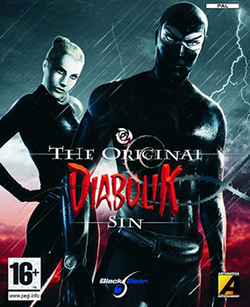
There are few things more comforting to a jaded lover of adventure games than the sight of a trench coat, a smoky rooftop and a gentleman thief with a moral compass that only occasionally points north. Diabolik: The Original Sin takes that familiar film-noir silhouette and drops it into a late-decade point-and-click format, developed by Italian studio Artematica and shepherded to western consoles by Black Bean Games. This is not a blockbuster adaption attempting to reinvent the wheel. It is, rather, a fan's translation of a comic-book antihero into an interactive caper - sometimes faithful, sometimes fumbling, and at moments quietly clever. The core conceit is simple and suitably pulp: Diabolik's girlfriend has been taken hostage and our titular thief is compelled to pilfer a priceless work of art to secure her freedom. That plot against a backdrop of smoky interiors and coastal hamlets is the engine that pushes you from room to room, puzzle to puzzle. Artematica claims to have combined 3D locations with a point-and-click interface and a proprietary engine with dynamic dialogue systems; on paper it is a promising marriage of classic adventure sensibilities and modern infrastructure. In practice, the game occupies a middle ground - it offers a respectable atmosphere and stylistic fidelity to the comic, but stumbles on pacing, puzzle design and technical polish.
Diabolik plays like a heritage piece: classic point-and-click mechanics, inventory-based problem solving, environmental puzzles and the occasional quick-time-ish action beat to keep console players awake. The interface is conservative; a context cursor and inventory ring handle most interactions. For purists, that will be a relief. For players expecting the brisk tempo of contemporaneous action-adventures or heavy branching narratives, the game may feel like reading a dense detective novel in slow motion. The puzzles are the backbone, and regrettably they are also the part of the spine that creaks. Many of the challenges are straightforward, almost sedate: find the missing key, combine item A with item B, trigger a scripted event and proceed. A handful of scenes demonstrate genuine craft - moments where observation and timing reward patience and wit - but too often the experience roams into two problematic camps: either puzzles that are too trivial and break immersion, or obscure daisy-chains that lean on pixel-hunting and mental leaps that feel arbitrary. Mini-games pepper the main progression, and most of them are functional rather than inspired. They fill gaps, but they do not thrill. Action elements are modest and never threaten to overthrow the point-and-click roots. They manifest as scripted interludes: chase segments, timed interactions, or simple stealth windows where Diabolik must avoid an NPCs line of sight. These sequences are not the game's strong suit - they are serviceable at best and occasionally sluggish. The underlying engine powers the 3D locales and a dynamic dialogue system, the latter of which is a pleasant if underused feature: conversations sometimes shift depending on the order of discoveries, offering a flicker of consequence in an otherwise linear story. Linearity is the game's most persistent complaint. While the story is coherent and the script competent, the path forward is mostly prescribed. There are few genuine forks or satisfying lateral routes to explore; the game nudges you along a single track. For a character like Diabolik, whose entire career hinges on improvisation and lateral thinking, it is a shame not to see that reflected more boldly in design. Still, the atmosphere does a lot of the heavy lifting. Suspense is built with patient pacing and a soundtrack that understands restraint, and when Artematica leans into mood over spectacle, the results are quietly effective. For players coming from the golden era of LucasArts and Sierra, the game will feel familiar and, on occasion, dated. For modern players or those expecting high production values, the compromises are more obvious. But for fans of the comic and anyone who enjoys a detective yarn told with a degree of class, Diabolik offers a modestly entertaining evening of sleight-of-hand and skulduggery.
The visual presentation is a study in affectionate imitation. Character models and set pieces channel the inked, shadow-rich aesthetic of the Diabolik comic books; faces are stylized, costumes recognizable and backgrounds often framed like a panel from a graphic novel. This stylistic fidelity is among the game's strongest virtues. It never aspires to photorealism, and it does not need to. Instead, it leans on atmosphere: the geometry of a room, the placement of a lamp, the way a rainy street is lit - all of which contribute to mood. Technically, the game sits firmly in the late-2000s console generation and the PlayStation 2 version shows the expected compromises. Textures can be soft, animation is sometimes robotic, and there are moments where camera choices feel overly scripted, forcing an awkward viewpoint during interaction. On the other hand, the engine renders scenes with a confident composition: many environments are detailed enough to invite examination and reward curiosity. The character design is consistently praised for echoing the source material, and the score - while not bombastic - is a pleasing companion, providing a steady underscore that supports tension without hogging the scene. Performance is generally stable though not immaculate. Expect the occasional hick-up or UI quirk; these are nuisances rather than gamebreakers, but they will remind you that the developer is working with a constrained budget and an ambitious brief.
Diabolik: The Original Sin is an honest curio: a game made by people who love the source material, translated into an adventure format with both affection and limitations. It succeeds best when it embraces the comic's mood and the slow-burn suspense of a noir caper. It falters in pacing and puzzle design, and its linear nature will frustrate those hoping for more emergent, improvisational play from a thief who makes his living off improvisation. As a debut console outing for a beloved Italian antihero, it is a respectable one - competent in design, occasionally inspired in atmosphere, and disappointing in places where ambition outruns resources. For collectors, fans of the comic and players who want a measured point-and-click experience on the PlayStation 2, Diabolik is worth a look. For those seeking modern pacing, inventive puzzles or technical polish, this is likely to be an exercise in patience. Consider it a late-night graphic novel with a controller: stylish, occasionally slow, and worth the read if you appreciate the genre and can forgive the rougher edges.
 Final Fantasy Tactics: The Ivalice Chronicles on Switch
 Resident Evil Zero HD Remaster on PS4
 PlayStation Home on PS3
 Gaelic Football '25 on Xbox Series X/S
 Together! The Battle Cats on Switch
 Unearthed: Trail of Ibn Battuta on PS3












 Another SquareThought Site