



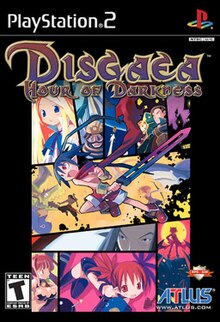
Disgaea: Hour of Darkness arrived on the PS2 at a time when tactical RPGs were branching into both deep systems and spectacle. On the surface it's a madcap demonic sitcom about overlords, exploding penguins and angels obsessed with love, but the part that kept me awake past midnight was the math hiding under the jokes. The game pairs a classical grid-based SRPG shell with a handful of system-level ideas that encourage emergent optimization: lift-and-throw positioning, persistent Geo Panel state machines, a recursive Item World for item levelling, and a political layer (the Dark Assembly) that turns menu management into a minigame of votes, bribes and optional brawls. From a technical standpoint Disgaea doesn't try to wow with flashy 3D fidelity; it instead stacks mechanical depth on top of a compact runtime budget and makes every combat square feel like a tiny machine you can bend to your will.
Mechanically, Disgaea is a textbook grid-based tactical RPG with a few screws tightened to 11. Units occupy single tiles on a square grid and actions resolve with predictable deterministic rules: move range, attack reach, and positioning determine hit zones and multi-target effects. That's all standard, but the first design lever that flips vanilla SRPG logic on its head is the lift-and-throw system. Humanoid units can pick up allies and enemies and toss them, which is more than a cameo mechanic - it becomes the primary tool for extending movement budgets, creating chaining combos, and enabling capture. Throwing an enemy into the base panel gives you a chance to capture them and convert them into a recruitable unit; the capture probability is influenced by in-game factors (level differences, enemy type and likely other hidden parameters) and the risk is nontrivial: a failed capture attempt will kill every character standing in the base panel. That single risk/reward loop encourages precise spatial planning and an awareness of failure modes rare in peer SRPGs. Geo Panels are where Disgaea shows design cleverness that reads like a small state machine per tile. Each Geo Panel has a color and may host Geo Symbols that confer effects (invulnerability, HP drain percentage, stat modifiers) to all units standing on panels of the same color. Destroying a symbol on a different colored panel triggers a color flip and a damage pulse to units on those panels; chain-destruction of multiple Geo Symbols propagates this effect across the map and increases a 'chain' counter which drives bonus gauge fill rates and the magnitude of Panel Termination Bonuses. The interaction space here is elegantly exponential: a relatively small number of symbols and colors can create long chain reactions if the player sequences destruction correctly. That creates opportunities for both tactical short-term bursts and long-term battle planning; map architecture matters more than raw character stats on Geo-heavy maps. The Item World introduces procedural depth inside otherwise deterministic systems. Each item contains up to 100 randomly generated floors; inside, defeating Specialists increases the parent item's stats. Floors contain their own Geo Symbol configurations and occasionally unique 'Gate Keeper' monsters that block the exit gate. The Item World mixes randomized dungeon traversal with deterministic reward scaling (e.g., every tenth floor includes an Item Boss whose defeat boosts the item), producing a meta-loop that encourages grinding, careful level scaling, and time investment to craft rare weapons. Small QoL touches - such as the ability to exit every tenth floor or using a specific consumable (Mr. Gency's Exit) - balance the trade-off between commitment and convenience. Out-of-battle systems reward systemic thinking. Laharl's castle acts as the hub, but the Dark Assembly is the game's interesting experiment in connecting combat and civic management: proposals cost mana (a pooled resource generated by character kills), can be voted down or bribed into acceptance, or forced through by combat. The vote mechanic creates a feedback loop where combat prowess funds political leverage, and political decisions alter available tools (shop inventories, new classes, maps). Promotion examinations - single-character trials against monsters - gate access to proposals and give a continuous incentive to specialize and train units beyond raw levels. Shops are intentionally limited (weapon and armor stores only), so improving availability via Assembly proposals forces players to engage with the political subsystem to alter the economic systems. On difficulty and balance: Disgaea's systems are tuned to enable massive numerical escalation. The core progression and the later New Cycle (New Game+) encourage stat inflation and stacking optimizations: reincarnating units, exploiting class changes, and grinding Item Worlds enable levels and stats far beyond what the main campaign expects. This creates a dual playstyle: a 'pure tactical' route where the player accepts the encounter difficulties as presented, and an 'optimization' route where the player spends hours engineering a supremely min-maxed squad that trivializes threats. From a technical design perspective that's deliberate - the engine supports extreme numbers and sustained playthroughs, which is a big part of the franchise's identity.
Visually Disgaea on PS2 opts for stylized 2D sprites over high-polygon 3D characters, and that decision is pragmatic and clever. The team explicitly chose sprites because 3D models often follow a fixed set of motions that limit expressiveness; Disgaea's sprite work gives characters more emotive faces and over-the-top poses during cutscenes and battle animations. Battle maps are tile-based and modest in draw complexity, which keeps frame pacing smooth even when dozens of units and explosive Prinnies are in the same screen. The Geo Panels and Symbols are color-coded clearly, which is a UX win - the player can quickly infer state without diving into menus. The game uses the PS2 CPU/GPU budget for tight deterministic animations and visual clarity rather than pushing raw fidelity; the result is a readable, lightly cartoonish aesthetic that supports the deep mechanics underneath. The North American PS2 release also included language audio options and, in English mode, a licensed opening track (Tsunami Bomb's 'The Invasion From Within') which was a cosmetic but memorable addition - an example of how audio choices can shape perceived production value.
Disgaea: Hour of Darkness is a systems-first tactical RPG that dresses its design ambition in goofy demons and exploding penguins. On PS2 the game runs like a disciplined machine: clear tile-state visuals, deterministic combat rules, and several interlocking subsystems (lift/throw, Geo Panels, Item World, Dark Assembly) that reward players who think like engineers rather than button-mashers. Its willingness to scale numbers to absurd heights and hand the player tools to manipulate game state is polarizing - some players will love the insane depth and meta-systems, others will be overwhelmed by the grind potential. For anyone interested in how a compact engine can deliver persistent mechanical depth, Disgaea is a masterclass: it sacrifices graphical flash for expressive sprites and piles on interacting subsystems that keep the math hobbyist and the strategy nerd happily busy for dozens (if not hundreds) of hours. It's not perfect - the UI can feel menu-heavy and the grind is intentional - but as a technical exercise in emergent tactical systems, it's hard to beat. If you like your strategy games with more gears than a Swiss watch and a penguin that explodes when thrown, give it a spin.
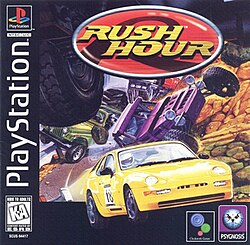 H-Hour: World's Elite on PS4
 Disgaea D2: A Brighter Darkness on PS3
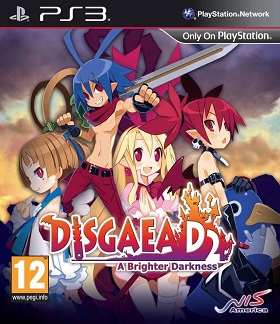 Utawarerumono: Itsuwari no Kamen on PS3
 Combat Elite: WWII Paratroopers on PS2
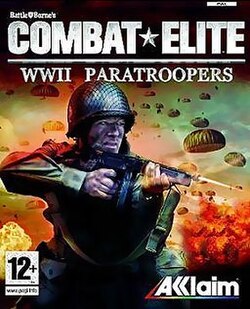 Rainbow Moon on PS4
 The Banner Saga 2 on PS4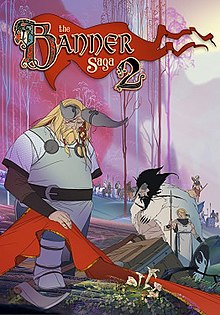
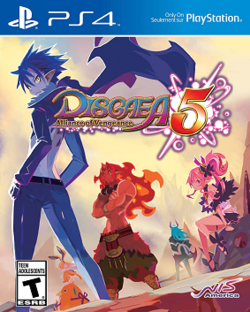 Disgaea 5 Complete on PS4
 Disgaea 1 Complete on PS4
 Disgaea 6: Defiance of Destiny on PS5
 Little Princess: Marl Ōkoku no Ningyō Hime 2 on PlayStation
 Disgaea 4 Complete+ on PS4












 Another SquareThought Site