


 Aug 2025


If you grew up believing life's big questions could be solved with dramatic key changes and perfectly choreographed high kicks, then Disney Sing It! - High School Musical 3: Senior Year on PS2 is basically a nostalgia grenade. The game takes the High School Musical soundtrack and turns it into a SingStar-style karaoke party, using the actual musical sequences from the films rather than cartoonish reenactments. That means you get the real visuals and the emotional baggage of Zac Efron's coiffure while the game judges your alto, tenor, or throat-scratchy-but-passionate rendition of 'Breaking Free'. The release bundles songs from all three movies, includes a 'Singing lessons' mode with Olesya Rulin as a vocal coach, and offers both single-player and multiplayer options. If you care about challenge and skill rather than just belting your heart out in the shower, this is the part of the review where we get precise, cruel, and mildly pedagogical.
At its core the PS2 version plays like a SingStar clone, which is great news for anyone who's ever been scored by an algorithm that understands pitch better than your ex. The gameplay loop is straightforward: pick a song, match pitch and timing to the on-screen prompts, and hope the meter likes you. Unlike rhythm games that punish you for missing a physical beat input, this one punishes your vocal sins: off-key warbling, timing that lags behind the backing track, and breathless attempts at the final chorus are all tallied and converted into a score. The challenge here is primarily musical rather than manual, so your skills matter more than your reaction speed. Skillset breakdown: - Pitch accuracy: This is the game's lingua franca. Notes are judged on how closely your voice hits the target frequency. Songs like 'Breaking Free' will expose weaknesses in pitch control because they ask for sustained, stable notes. If you're the type who slides around notes like you're ice-skating in a wind tunnel, expect low scores. - Timing and rhythm: Tracks with syncopation or rhythmic spoken sections demand tight timing. 'Get'cha Head in the Game' and 'I Don't Dance' lean on groove as much as melody, and the scoring engine notices when you sing on the wrong beat. Rhythm practice here translates directly into higher scores. - Breath control and stamina: Several HSM songs include long phrases and big belt-outs. Poor breath management results in pitch droop and strained vibrato. The 'Singing lessons' mode aims to help with exercises like sustaining notes and managing breath, which is useful if you plan to go for high-score runs. - Range and register flexibility: The soundtrack hops across registers. 'When There Was Me and You' and 'Can I Have This Dance?' require a softer touch and more delicate head-voice work, while 'I Want It All' and 'Scream' push for power. Knowing where your throat likes to live will save you from mid-verse panic. - Harmonies and ensemble sense: A few tracks are ensemble-heavy. The scoring algorithm is primarily melody-focused, so harmonies don't get scored independently, but having a sense of where the melody sits relative to backing vocals helps you stay in tune when the chorus swells. Modes that matter for the skillful singer: - Singing lessons with Olesya Rulin: This is the educational heartbeat of the package. It's not a conservatory, but the exercises are targeted: pitch-matching drills, breathing exercises, and some basic stagecraft tips. For players who arrive with zero formal training, the lessons reduce the learning curve and make the scoring system feel less like an arbitrary arbiter and more like a coach. If you take the lessons seriously, you'll notice steady improvements in small, measurable ways. - Single-player high-score chasing: This is where the micro-skills shine. Picking a song because you love it is one thing; optimizing your performance to get every pixel of the pitch meter to smile green is another. Replay a single song, focus on a specific phrase, and use the lessons to plug holes in your technique. - Multiplayer party mode: The social challenge is more psychological than technical. Duets and competitions expose weaknesses faster because the pressure is real and someone else is literally getting judged next to you. If you want to train under fire, bring a friend who is merciless or, ideally, worse than you. Song selection is also part of the challenge. The PS2 release mirrors the game's approach of including tracks from all three films: 'We're All in This Together' forces big group dynamics, 'Breaking Free' tests sustained tone, 'I Don't Dance' and 'Get'cha Head in the Game' test rhythm and articulation, while 'Can I Have This Dance?' asks for control and phrasing. North American versions have a few extra tracks that change the difficulty curve slightly, so the challenge can vary depending on your release. If you want a truly hardcore run, try stringing together three or four contrasting songs in a row: you'll need breath control, quick register shifts, and the mental stamina to stay accurate. The engine doesn't invent difficulty spikes; it reveals your weaknesses and makes you work on them.
The PS2 version's visual strategy is simple and effective: it uses the actual musical sequences from the films rather than animated stand-ins. For a karaoke game this is a boon - watching the original scene gives you cues about phrasing, emotion, and when the chorus hits for dramatic effect. Expect PS2-era video playback quality, which means compression artifacts and occasional banding are part of the nostalgic package. The visuals won't win awards, but they don't need to. They provide a rich reference for performance choices - facial expressions, staging, and choreography - which is useful if you're training stage presence as well as vocal technique. Compared to fanciful animated scoring bars, the authentic sequences make you feel like you're performing alongside the cast, and that emotional feedback loop can tighten your phrasing and timing.
If your aim is to stare dramatically out a bedroom window and pretend you're auditioning for East High's spring musical, this game will put a crown of approval on that fantasy - or at least a numerical score. From a challenge perspective, Disney Sing It! - High School Musical 3: Senior Year on PS2 is rewarding because its difficulty is honest: it evaluates actual singing skills rather than button-mashing dexterity. The 'Singing lessons' mode is a surprisingly useful training ground, and the mix of song types pushes players to work on pitch, timing, breath control, and range. The shortcomings are mostly content and polish related: the PS2's presentation is constrained by its hardware and the game doesn't invent deep progression systems beyond high-score chasing and lessons. That said, the core loop is tight and satisfying for anyone serious about improving their singing or competitively humiliating their friends at family gatherings. Final verdict for challengers: buy this if you want a karaoke experience that doubles as a practice tool. Expect improvement if you use the lessons and focus on technique, but don't expect the game to hold your hand forever. It's a coach, not a miracle worker - and for anyone who enjoys a clear, measurable musical challenge wrapped in teen-movie nostalgia, that coach is pretty good. Score: 7/10.
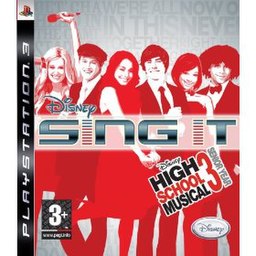 Disney High School Musical 3: Senior Year on DS
 Tokimeki Memorial 2 Substories: Leaping School Festival on PlayStation
 Disney Sing It: Pop Hits on PS2
 Disney Sing It: Family Hits on PS3
 The Voice: I Want You on PS3
 Joysound Dive on PS3
 Chime Sharp on Switch
 Marvel: Ultimate Alliance 2 on Xbox One
 Disney Sing It: Party Hits on PS3
 Risk on PlayStation
 Marvel: Ultimate Alliance 2 on PS4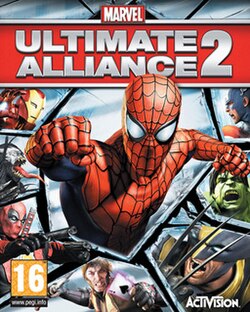










 Another SquareThought Site