


 Jan 2001


Tokimeki Memorial 2 Substories: Leaping School Festival is the middle child of the Tokimeki Memorial 2 Substories trilogy - the one that shows up to the family photo with a slightly different haircut and three pocketfuls of charm. Released for the PlayStation in 2001 by Konami, Leaping School Festival swaps the mainline game's sprawling roster for a focused, three-heroine package. The subtitle may sound like an indie musical, but this is classic TokiMemo: calendar juggling, stat-building, and short-but-sweet date scenes stretched over a fixed high-school timeline. If you know the series, you know the rhythm; if you don't, imagine trying to keep three relationships alive while acing exam week and not becoming a tragic loner in a pixelated school courtyard. Where Substories as a concept shines is in emphasis: each volume focuses on a small set of heroines from Tokimeki Memorial 2 and pairs them with mini-games that dovetail with their character-focused scripts. Leaping School Festival centers on Ichimonji Akane, Akai Homura and Ijuuin Mei, and unlike the other Substories entries it gives each of its three leads a dedicated mini-game. Those minigames are the hook, but the true meat is how the writing tries - with varying success - to map small gameplay arcs onto emotional beats. As a side dish you get cameo appearances from nearly everyone in Tokimemo 2, which means if you've got a soft spot for fanservicey school banter, you'll get your fill.
Leaping School Festival wears its Tokimeki roots proudly: you build stats, pick events from a calendar, and respond to tight, often single-question date encounters that move love meters up or down. The Substories formula condenses the three-year mainline experience into slices that highlight each heroine, and this volume leans into that with three separate mini-games - one for each of the main girls - that act like mechanical leitmotifs for their storylines. Ichimonji Akane's arc is the one that reads most like a classic TokiMemo redemption sequence. The game frames her as a student whose growth is measured in tiny victories: a practice accepted, an embarrassing moment later brushed off, a festival performance that doesn't implode. Her mini-game is a dance of timing and precision (metaphorically, if not literally), and winning at it feels like earning the permission to see the softer moments beneath her stoic exterior. In practice this means you'll spend a chunk of your schedule juggling stat-boosting activities that align with the mini-game's demands while checking in on her scenes. The arc's payoff is deliberately modest - a confession or a quiet scene at graduation rather than a Broadway-level climax - but it lands because the game gave gradual wins instead of a single dramatic moment. Akai Homura brings the contrast. She's written with sharper edges: quick quips, a tendency to push people away, and emotional beats that flirt with the "tough exterior, soft interior" trope. Her mini-game leans on reflex and pattern recognition, which fits nicely with the narrative that getting past her defenses requires quick thinking and persistence rather than brute charm. Story-wise, Homura's progression is less about transformation and more about trust: the game rewards repeated, patient choices that chip away at her walls. Those who prefer a slow-burn romance will find her path satisfying; fans of instant gratification might fume at how long the game makes you wait for genuine vulnerability. Ijuuin Mei's arc is the gentle counterbalance. The mini-game tied to Mei is structured like a puzzle: small, solvable problems that accumulate into something meaningful. Her writing leans into warmth and domesticity, and the scenes you unlock emphasize companionship over fireworks. Mei's storyline is the one that benefits most from the Substories model because the mini-game's pace gives you slotted opportunities to see her world expand with the player character. The emotional hits are quieter, but they stick, especially if you let the relationship develop over multiple festival events and small, normal moments. A consistent strength of Leaping School Festival is how the mini-games inform how you play. They're not just tacked-on distractions; they push you to shape your weekly choices differently depending on which girl you're pursuing. Want to spend an evening grinding stats? That'll help one mini-game. Prefer to focus on conversation choices and event triggers? That supports a different heroine. This creates replay value without requiring the player to slog through three identical runs; each heroine's route feels like a different game with a shared shell. On the other hand, compression of the Tokimeki formula is both blessing and curse. Giving the spotlight to three women means those girls get fuller arcs than cameoed characters, but it also means the rest of the cast becomes background noise. The game itself acknowledges this: most other characters still appear and can be 'won', but their stories are thin - a slice of fanservice rather than a full loaf. If you're the kind of player who enjoys chasing obscure endings and bleeding every nook of a relationship tree dry, Leaping School Festival can feel like a tease. Narrative pacing is episodic. Because the game still relies on the high-school calendar, you'll encounter scenes tied to festivals, exams, and club activities - the usual trio of visual-novel tectonic plates. The writing is competent, often charming, and sometimes hilarious in its self-awareness. Konami's experience with the franchise is evident: the event flags are well-placed, the cutscene rewards are timed to keep you motivated, and the mini-games inject variety. But the game was never trying to reinvent character drama; it aims to give each heroine a compact, satisfying arc, and for the most part it succeeds. Where Leaping School Festival truly shines is in its replayability. Beating a mini-game and watching the relationship bloom yields real gratification, and the different mechanical demands mean each run teaches you something new about the school's rhythms. The trade-off is depth: the arcs are concise, often prioritizing mood and atmosphere over complex character psychology. That's not a flaw if you play for the charm and the slow accumulation of small scenes; it is if you expect a deep, multi-act character study.
Graphically, Leaping School Festival is very PlayStation-era Konami: chunky 2D portraits, sparse animated menus, and stage-less visual-novel backdrops that do their job without trying to steal the scene. If you're hoping for lush sprites or animated facial acting, this won't be your grail; if you were alive in the era of memory cards and CRT displays, the aesthetics will feel nostalgically lovely. The character portraits are expressive in a way that matters for a game like this: eyes, mouth, and tilt of the head carry most of the emotion, and the screenplay leans on those stills to sell beats. Mini-games introduce slightly more dynamic elements - simple animations, timing bars, and score feedback - that break up reading stretches and keep the eyes engaged. Sound design is unobtrusive: familiar series music cues, little victory jingles, and enough voice snippets (when present) to add personality without becoming cloying. In short, Leaping School Festival looks like a polished PlayStation visual novel. It won't wow anyone with technical showmanship, but the art and UI serve the writing and mini-games cleanly, which is the real priority here.
Tokimeki Memorial 2 Substories: Leaping School Festival is an exercise in pleasant constraints. By narrowing its focus to Akane, Homura and Mei and giving each a mechanical echo in mini-games, it turns what could be a bloated dating-sim roster into three compact, replayable romances. The game's writing favors tone and incremental emotional payoff over sprawling psychological inquiry, which fits the Substories brief: quick but memorable arcs that reward multiple playthroughs. If you want a dumptruck-sized narrative with all the inhabitants of your high school unpacked and interrogated, look elsewhere. If you want three finely tuned slices of Tokimeki that pair character beats with gameplay hooks, and you don't mind PlayStation-era visuals and brevity for depth, Leaping School Festival is a charming ride. Score: 7.5/10 - a warmly recommended detour for fans of the series and anyone who enjoys relationship sims that treat mini-games as a meaningful part of storytelling rather than carnival filler.
 Tokimeki Memorial 2 Substories: Memories Ringing On on PlayStation
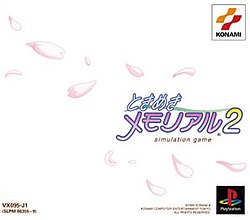
 Tokimeki Memorial 2 on PlayStation
 Pro Evolution Soccer 2015 on PS4
 Power Pro Kun Pocket 13 on DS
 MotoGP 19 on Switch
 Theme Park World on PlayStation
 Metal Gear Solid: Integral on PlayStation
 ISS Pro Evolution 2 on PlayStation
 Pro Evolution Soccer 2 on PlayStation
 Metal Gear Solid 3: Snake Eater on PS2
 Dance Dance Revolution Best Hits on PlayStation










 Another SquareThought Site