


 Jan 2000


Tokimeki Memorial arrived in the 1990s like a secret note left in your locker: quietly influential, a little cheeky, and habit-forming for anyone interested in the curious alchemy of schedule management and adolescent romance. By the time Tokimeki Memorial 2 rolled around, Konami had refined the formula into something that reads like a tactical dating manual - you train stats, pick your spots, and hope that the girl with the bulging love meter shows up on graduation day. Dancing Summer Vacation is one of the Substories spin-offs born of that success. Marketed as an extension to Tokimemo 2 rather than a full sequel, this PlayStation-only release from 2000 packages focused story arcs for three main heroines - Miyuki Kotobuki, Kaori Yae and the Shirayuki twins, Miho and Maho - and straps a rhythmic mini-game to the whole affair. If you were a 1990s import-hungry gamer with a penchant for school uniforms and memory-card milestones, this is the kind of niche release that made import bins smell like opportunity.
Tokimeki Memorial's core DNA is present here: time is the currency, your calendar is the battlefield, and romantic success is a function of careful stat-building, timely dates, and answering the right multiple-choice prompt when the lights go dim. The original series is built around a fixed three-year high school arc - roughly 5 to 10 hours per proper playthrough - where you shepherd your protagonist from awkward freshman to graduation-day suitor or footnote. Dancing Summer Vacation borrows that framework and narrows its lens. Instead of presenting a full roster of rivals and random school events, the Substories format focuses on three (technically four, if you count the twin factor) central heroines, giving them more concentrated narrative beats than a standard Tokimemo route might afford. Mechanically, the Substories are conservative in the best way: they do not try to reinvent scheduling or stat management. You still allocate limited time between study, part-time jobs, club activities and dates; stats like academics, charm and physical ability influence who notices you and what choices you can make. Dates remain brisk, often distilled to a single multiple-choice exchange whose result nudges a love meter up or down. That design choice can be maddening or elegant depending on your tolerance for tight, menu-driven gameplay - there is no pleasing everyone when romance is reduced to a percentage bar - but it keeps the experience tight and replayable. One of the more interesting bits mentioned in the series documentation is Konami's deliberate nonlinearity: TokiMemo titles reward experimentation, and the Substories games are no different. You can still pursue other girls, but the spotlight - and thus the meatier scenes - go to the stated heroines. Where Dancing Summer Vacation attempts to be bold is with its mini-game architecture. Konami, always keen to cross-pollinate its properties, grafted a Dance Dance Revolution-style rhythm game onto the dating sim shell. The steps are performed against remixed tracks from Tokimeki Memorial 1 and 2, which gives the music a meta quality: you're literally dancing to the franchise's own soundtrack while trying to win over a character. It's a smart, if slightly indulgent, bit of fan-service that does two things. First, it gives Konami a practical way to leverage DDR's arcade energy without turning the whole release into a cabinet port. Second, it creates narrative justification for the kind of set-piece moments Tokimemo fans crave. Imagine a school festival finale where hearts and arrows are decided not by dialogue trees but by timing and rhythm. For importers used to the stiff elegance of the main series, the mini-game feels like a carnival ride bolted onto a slow-burning novel. The Substories series as a whole is known for these kinds of experiments - each volume centers on a trio of girls and offers a memorable mini-game. Dancing Summer Vacation's DDR-inspired mechanic is probably the most obvious crossover, and it's also where the title's accessibility and flaws become visible. Rhythm sections lift the emotional pitch, but they can also interrupt the flow for players who prefer the pure scheduling puzzle. If you like the idea of falling in love to a four-beat measure, you'll find the graft delightful. If you find yourself resenting a button-pressing detour in the middle of a quiet conversation, the graft may feel like a misstep. Replay value is healthy. The game encourages multiple runs to unlock different endings for Miyuki, Kaori, and the twins. The design choice to give the main heroines deeper stories is sensible: it allows the writing to breathe, and it compensates for the relative scarcity of wide-cast interactions. Fans of Tokimemo lore will enjoy the focus on character beats and image songs, while newcomers may appreciate the shorter, more directed playtime versus a sprawling, unfocused sequel. Ultimately, Dancing Summer Vacation is a carefully tailored expansion: it understands what Tokimeki players care about and leans into it, even if the lean sometimes makes the rest of the body wobble.
Presented on PlayStation hardware at a time when developers were still negotiating the line between pre-rendered charm and primitive 3D, Dancing Summer Vacation wears the era's limitations with nostalgic dignity. Character portraits are cleanly illustrated in the anime style fans expect, and menus are functional and readable - the sort of interface that looks like it was designed by a student of magazine layout. There's no attempt at flashy polygonal scenes here; Konami leans on 2D art, occasional sprite work and the borrowed spectacle of the rhythm sections to give the game moments of motion. The DDR-like mini-game injects animation and visual feedback in ways the main scheduling screens do not, which makes it feel like the game's cinematic highlight. Audio is where the PlayStation format does the most work. CD-quality remixes of the Tokimeki Memorial back catalog are an obvious selling point, and they elevate the mini-game beyond mere gimmick. Hearing familiar melodies reworked into dance beats gives the experience a slightly surreal, celebratory quality - like watching your high-school yearbook perform in a nightclub. Sound effects are serviceable, dialogue is delivered via text (as is tradition for the genre), and image songs reward patient players who clear the mini-games. If you're approaching this as an import title - and many who chased Tokimemo in 2000 were importers - the music alone is worth the plunge. Visually ambitious it is not, but that isn't the point. The design is deliberately intimate: portraits for the heroines, readable stat graphs, and festival stages that do the job without stealing focus. For a Substories release, the balance between practical UI and an occasional visual flourish is appropriate. The graphics accomplish what they must: they make the girls readable, the dates plausible, and the mini-games satisfying.
Tokimeki Memorial 2 Substories: Dancing Summer Vacation is a paradoxical little import: both conservative and experimental, slender and indulgent. It will not convert rhythm-game skeptics into love-sim devotees, nor will it satisfy fans demanding a full-blown Tokimemo 2 expansion packed with every possible event. What it does is offer a concentrated, well-executed chamber piece for people who already appreciate Konami's formula. The DDR mini-game is an inspired connector - a way for the company to remind fans that it can make both arcade frenzy and quiet, character-driven moments - but it also defines the audience. This is a romantic oddity best enjoyed by players who like their sim games with a dash of spectacle. If you owned a PlayStation in 2000 and were the sort of person who kept Japanese imports on a shelf like forbidden literature, Dancing Summer Vacation would have been a satisfying, slightly smug acquisition. It honors the spirit of Tokimeki Memorial while giving a few of its characters room to breathe and an excuse to perform onstage. For modern players curious about the era, it's a useful historical footnote: a showcase of Konami's willingness to experiment with format, and an object lesson in how to graft arcade mechanics onto a slow-burn narrative. My score lands at 7.5 out of 10: a commendable, niche-pleasing title with personality to spare, and a reminder that even in a genre about tentative adolescent feelings, Konami knew how to make you stamp your foot to the beat.
 Tokimeki Memorial 2 Substories: Leaping School Festival on PlayStation
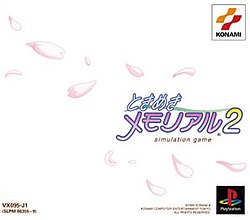
 Tokimeki Memorial 2 on PlayStation
 Pro Evolution Soccer 2015 on PS4
 Power Pro Kun Pocket 13 on DS
 MotoGP 19 on Switch
 Theme Park World on PlayStation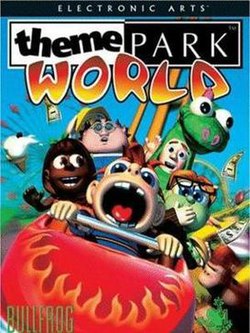
 Metal Gear Solid: Integral on PlayStation
 ISS Pro Evolution 2 on PlayStation
 Pro Evolution Soccer 2 on PlayStation
 Metal Gear Solid 3: Snake Eater on PS2
 Dance Dance Revolution Best Hits on PlayStation










 Another SquareThought Site