

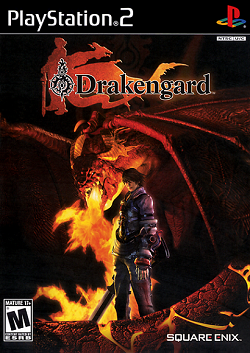

Drakengard arrives with the cheerful subtlety of a medieval tragedy wearing dragon leather. Officially a 2003 PlayStation 2 action role-playing game from Cavia and Square Enix, its pedigree is an odd but intriguing hybrid: imagine Dynasty Warriors and Ace Combat sat in a bar, compared notes, and produced a story so bleak it apologised to you for existing. You play Caim, a prince with a face made for swordplay and a backstory made for existential dread, who forms a soul-binding pact with a red dragon, Angelus. Together they set out to stop an empire that thinks breaking magical seals is a good idea. That empire is wrong. The rest of us are relieved the game exists so we can point at its moral compass and laugh until we remember the endings.
Gameplay is two things at once and one thing that keeps insisting it is both. There are three main modes: Ground Mode, Air Mode and Strafe Mode. Ground Mode lets you hack and slash as Caim, with three basic attacks (sword slash, magic and a dash that sends foes sprawling), an array of up to eight weapons that level as you use them, and the stubborn insistence that enemies will keep coming until you internalise repetition as a lifestyle choice. Combos are straightforward: tap attack, watch a crowd of grunts behave predictably, press the special button mid-combo and enjoy a brief impression of being an action hero. Air Mode hands you control of Angelus and the game's more interesting flirtation with flight-based combat. Angelus has a free-aim heavy blast and homing bolts that mow through multiple targets, plus a special magic that clears the area like a medieval Roomba. Boss fights live here, which is convenient: nothing says 'epic' like whittling a sky fortress down with dragon breath. Strafe Mode is a hybrid that lets you ride Angelus during ground missions; controls segue neatly, and the select button politely ejects you from your dragon when drama or plot contrivance demands it. Missions are called verses and grouped into thirteen chapters and presented on an overworld map you access between levels. Each verse has a generous one-hour limit per attempt and occasionally lets you swap from stomping peasants to piloting a dragon without the awkwardness of modern multitasking. Optional missions exist and they matter for unlocking multiple endings and recruiting allies-characters like Leonard or the troubled Arioch can be briefly useful, and sometimes morally alarming, depending on how you feel about plots that read like fever dreams. The role-playing layer is modest: Caim's and Angelus' progression is simple but coherent. Weapons gain up to four levels; Angelus gets stronger as she levels, and shared health grows as Caim levels. There are five endings, some earned through optional chapters and weird conditions. The game makes a point of punishing optimism. This is both its charm and its frustration: the story consistently outmuscles the repetitive loop of the combat, meaning you'll play for narrative payoffs while your thumbs file down the same two-button routine.
Visually, Drakengard occupies a 'competent with signs of stress' zone. Character and monster design have real personality - Kimihiko Fujisaka's art leans medieval with occasional tasteful lunacy - and the FMV cutscenes are genuinely cinematic. In contrast, actual in-game environments suffer from blandness, limited draw distance and that early-PS2 tendency to cough up enemies from just off-stage. Enemy animation sometimes resembles people doing their best impression of oxygen, and framerate dips and pop-in are frequent companions. Critics at the time split the difference: some praised the dragon designs and cutscenes while others called out repetitive enemy visuals and murky battlefields. Audio is similarly conflicted. The soundtrack, assembled by Nobuyoshi Sano and Takayuki Aihara from rearranged classical excerpts, aims for 'experimental madness' and often hits the intended unsettling note. Voice acting ranges from evocative to 'renaissance festival left its script at home,' depending on where you listen. Overall, the game looks and sounds like a project that wanted to be grander than its hardware budget politely allowed.
Drakengard is not a game you play for balance or comfort. You play it because it offers a dark, oddly sincere narrative, a handful of genuinely striking scenes, and a willingness to pull the rug out from under heroic archetypes. Its gameplay borrows the enjoyable core of hack-and-slash and aerial combat but doesn't always disguise the repetition; the aerial sections tend to be more fun, the ground missions steadily more grindy. The music and story are the game's real lifelines: experimental tracks and Yoko Taro's bleak storytelling make you want to see the next chapter even when your hands have stopped cooperating. Commercially, it did well enough to spawn sequels and unofficial descendants, and its legacy includes threadlines into Nier and beyond. If you are the sort of person who enjoys being narratively unsettled, who likes multiple endings that range from grim to 'what on earth was that,' and who can tolerate PS2-era rough edges, Drakengard rewards mild masochism with memorable ideas. If you want polished, endlessly varied combat and visual fidelity like a showroom, this is not that. Verdict in deadpan: poignant story, experimental score, repetitive combat, and five endings so you can replay until you forget why your thumbs hurt. Recommended to those who care more about narrative audacity than repetitive button-press therapy.
 PlayStation Home on PS3
 Gaelic Football '25 on Xbox Series X/S
 Ōkami on PS2
 Together! The Battle Cats on Switch












 Another SquareThought Site