

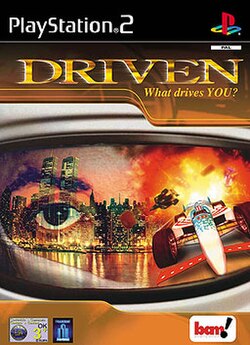

Driven arrives in the autumn of the PlayStation 2 era like a tie-in suit bought one size too small: it has the right stitching and the logo is in the correct place, but it makes the wearer look uncomfortable. Based on the 2001 film of the same name and developed for PS2 by BAM! Studios Europe, Driven was the publisher's first internally produced outing and BAM!'s first PS2 and GameCube release. In an age when arcade thrills and realistic simulators were both finding their footing on next-generation hardware, a film tie-in needed either panache or polish. Driven has neither in sufficient quantity. This review addresses the PlayStation 2 version specifically, the edition Metacritic records as the least forgiving among the trio of ports (the Game Boy Advance and GameCube versions fared better in aggregate). Driven ships with the usual promises of rubber-burning races, multiplayer scraps and cinematic license-plate garnish. The reality, however, is closer to an overambitious trailer that never makes it to the feature presentation. For readers who remember the 1990s with both fondness and a pocketful of skepticism, think of this as a car that looks aerodynamic on paper, but whose hood pops open every other lap.
If you strip Driven down to its skeleton you find a conventional racing game: single-player and multiplayer modes, circuits to learn, and a film license to slap on the menu screens. The game's credentials - a mainstream movie tie-in aimed at mainstream audiences - promise quick thrills rather than deep simulation. That promise is where the PS2 edition most conspicuously fails. Controls on the PlayStation 2 build lack the crisp responsiveness one expects when steering at speed. The handling feels hesitant in moments that demand decisiveness; small corrections turn into choreography, and what should be instinctive becomes deliberate. A racing game lives or dies by how it communicates the car's behavior to the player through the controller, and on PS2 Driven often miscommunicates. When the physics are vague, even basic AI racing lines can't rescue the experience. Opponents alternately cling to the ideal racing line like barnacles and behave so erratically they become little more than moving traffic cones. This collision of passivity and aggression makes for a race that rarely feels competitive in the right way. The single-player progression follows an expected arc of unlocking content and learning tracks, but there is little in the way of meaningful reward design. Races blend into one another without memorable moments, and the cinematic tie-in never genuinely integrates with the mechanics; the movie license is present in name and art direction, but not in a way that meaningfully enriches gameplay. Multiplayer offers a respite, as the social joy of racing with a friend can paper over many mechanical sins. Yet even here, the technical shortcomings - occasional awkwardness in collision and AI behaviour - are more noticeable when two players are attempting precision maneuvers. BAM! Studios Europe were, by their own admission, taking their first steps on Sony's new hardware with this title. As an early internal effort, some rough edges are forgivable; as a published product intended for mass-market consumption tied to a theatrical release, the execution is less so. The Game Boy Advance and GameCube versions received more tempered critical responses, suggesting platform-specific problems hampered PS2 performance more than the core design alone.
Graphically Driven is a study in contrasts. On boot the menus and branding are glossy enough to catch the eye - the game clearly wants to look cinematic - but once you're on circuit the illusion begins to fray. The textures on the PS2 version are serviceable at a distance but reveal their limitations up close: trackside details often pop in and out, and car models lack the refined silhouette that separates competent from convincing. Lighting and effects attempt to sell atmosphere, but the PS2's implementation reads as environmental makeup applied with a broad brush. Reflections, bloom and particle effects are present, but they are uneven in both intensity and placement. Occasional framerate dips and stuttering moments further undercut the aesthetic; a racing game loses significant impact when the image judders at speed. In 1990s parlance, think of it as a flashy paint job over a chassis that creaks. By contrast, contemporary reviews noted that the Game Boy Advance and GameCube ports were received more positively in aggregate, implying that either the PS2 version suffered technical problems or expectations for PS2 graphical fidelity were higher. Given that this was BAM!'s first PS2 effort, the takeaway is that ambition met hardware unfamiliarity. Visually Driven is not offensive, but it rarely rises above the level of 'adequate for rental' and struggles to be compelling on a console that was already hosting visual standouts.
There is a point at which movie tie-ins can be defended as faithful fan service, and another where they can be judged on their own mechanical merits. Driven lands awkwardly between those verdicts, leaning too heavily on its cinematic connection while offering an incomplete racing package on PlayStation 2. The Metacritic aggregation reflects a clear divide: the GBA and GameCube ports drew mixed reactions, but the PS2 release earned decidedly unfavorable marks (38/100 on Metacritic). Individual outlets were unforgiving; scores in prominent magazines and websites ranged from single-digit appraisals to brief praise for elements that worked in isolation. For collectors or completionists with an affection for oddball PS2 catalog entries, Driven is a curiosity: an early attempt by BAM! Studios Europe and a first step for a fledgling publisher on next-generation paddock ground. For anyone looking for the sort of polished, addictive arcade racing or the deep mechanical fidelity of a simulation, there are better roads to travel. The game's multiplayer can produce a laugh or two with a mate on a couch, but that alone does not constitute a robust recommendation. Viewed without nostalgia goggles and judged against the standards of its contemporaries, Driven is a title that looks the part but does not quite drive it home. It's instructive as a piece of early-2000s tie-in history and as a reminder that the jump to new hardware can be unforgiving. If you insist on a film-associated racer from the era, you would be better served hunting down one of the versions that fared more kindly with critics - or, more sensibly, sticking to racers that made the leap to PS2 with clearer confidence and cleaner execution.
 Cars 3: Driven to Win on Switch
 Punch Club on PS4
 Roary the Racing Car on DS
 Team Sonic Racing on Switch
 Garfield Kart: Furious Racing on Switch
 Ben 10: Galactic Racing on PS3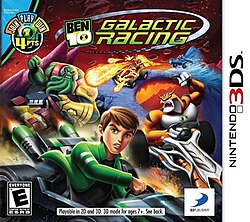












 Another SquareThought Site