



There is a particular strain of licensed games that thrived in the late 1990s and into the early 2000s: small, earnest projects that sought to translate a television identity into something you could hold in your hands and slot into a grey plastic console. Tenshi no Shippo (known in English as Angel Tales) for the PlayStation belongs to that lineage. Published by Bandai Games on February 27, 2003, it arrives less as a blockbuster and more as an artifact - a piece of franchise merchandise intended first for fans, and only then for anyone else. The anime on which it is based is unabashedly sentimental and slightly odd: Gorō Mutsumi, a man pursued by terrible luck and a very specific romantic ineptitude, is suddenly surrounded by twelve guardian angels who are the reincarnations of his deceased pets. The girls are possessive, phobic in charmingly scripted ways, and intent on fixing their master's life while sorting through their own traumas. The series is more comfortable with domestic comedy, melodrama, and a dash of mythic underpinnings than it is with spectacle. If the game sets out to capture that tone - rather than pretend to be something it is not - it has a fighting chance to be agreeable company, even if it will never win your heart the way the anime's opening theme might. This review looks at Tenshi no Shippo not as an action blockbuster or a systems-driven marvel (it is neither), but as a licensed production: how well it turns characters and episodes into gameplay, whether it gives fans value for money, and whether someone who only knows the PlayStation era by its scratched discs and double-duty memory cards will find anything to enjoy. The documentation on the title is thin - the official listing is modest - so part of the evaluation must be a structural one: what the material affords and how the game likely uses it.
The PlayStation listing for Tenshi no Shippo gives little away beyond the fact of its existence, which means the most solid footing for evaluating its gameplay is the anime itself. Angel Tales is fundamentally episodic and character-focused; its conflicts are emotional and personal, not about blasting rooms full of goons. A sensible adaptation, and the one this game appears to pursue, is therefore an adventure/visual-novel hybrid: static or semi-animated scenes, branching conversations, short missions that reenact key incidents from the episodes, and a handful of minigames to break up the talky bits. What this game likely offers - and what would make the most sense for Bandai to ship on the PlayStation at the time - is a chaptered interface where each segment corresponds to an episode or a character arc. You spend time with Ran (the aquaphobic goldfish-turned-girl), Tsubasa (the parakeet who fears heights), Kurumi (hungry little hamster), and the rest, guiding their interactions with Gorō and making choices that influence affection levels. These affection meters are the meat of the game: raise a character's trust and you unlock scenes that clarify backstory, heal childish traumas, and progress the larger plot that involves the Four Saint Beasts and Gorō's past life as Seijya. The pacing is likely deliberate. Expect long conversations intercut with short gameplay sequences - perhaps a rescue mission where you shepherd the angels through a hazard inspired by their phobias, or minigames that test reflexes in a gentle, forgiving way. The PlayStation's hardware and the game's pedigree suggest the minigames are serviceable rather than inspired: menu-driven puzzles, timed reaction challenges, and maybe a simple spacial navigation section to mimic Tsubasa's flight or Tamami's wall-scaling. None of these push the console, but they keep you engaged between dialogue blocks. A licensed title lives or dies by its writing and fidelity. Tenshi no Shippo's source material gives it a rich well to draw from: each girl has a distinct phobia and a past that can be dramatized into playable events. Mika's fear of loneliness, Yuki's pyrophobia and maternal calm, Akane's trauma-driven mistrust of dogs - these become natural chapter goals. If the game respects those beats, allowing players to resolve fears through choices that foreground tenderness and small heroics rather than hokey "power-ups," it succeeds in spirit. The risk, and the place Bandai's budgetary constraints might show, is in reducing emotional arcs to a checklist: "raise Tsubasa's affection to X by doing Y and Z" without the connective tissue that made the anime feel lived-in. One other pragmatic point: voice work and music. The anime benefits from a strong cast including Rie Tanaka and Sakura Nogawa; the appeal of a PlayStation tie-in would be greatly amplified if the game licenses the same talent for key lines and the opening theme. Bandai's own archive suggests official support for the franchise, so fans could reasonably expect some familiar audio cues. Even sparse voice snippets - a character's catchphrase, a scream at a jump scare, a whispered confession - would lift the experience above the static page-and-text norm of visual novels. For the uninitiated, the gameplay will read as gentle and methodical. For the seasoned anime fan, it will be an exercise in recognition and comfort. For anyone hoping for a full-blown role-playing system or frenzied platforming, it will be a disappointment. The game aims to reproduce the show's domestic warmth rather than reinvent the medium, and whether that is a knock against it or a compliment depends entirely on the player's appetite for intimacy over spectacle.
Graphically, this is where expectations have to be tempered by the PlayStation's limits and the timeline of the project. Bandai's adaptations on the console were rarely about polys and particle effects; they were about faithful sprites, pretty painted backgrounds, and character portraits that matched TV designs. Tenshi no Shippo most likely adheres to that template: 2D art framed in a 3D menu, interstitial FMV and stills that reproduce the anime's color palette (pink for Ran, red for Tsubasa, blue for Yuki, and so on), and character portraits that carry the expressiveness needed for a story-driven title. The charm of licensed anime games on the PlayStation is how artwork compensates for polygonal poverty. A well-drawn still can convey more feeling than blocky characters could. If Bandai invested in good character portraits, the game's emotional scenes will read well. Animation will be sparse - blinking, mouth flaps, one or two gesture frames - but that economy is a stylistic cousin to the page-turning of a manga. Backgrounds will likely be detailed enough to evoke Gorō's home, the udon shop where Midori and Akane toil, and familiar landmarks from the episodes. The Four Saint Beasts, when they appear, will probably be given slightly more production value: full-screen illustrations and dramatic text boxes to sell the mythic beats. Anyone hoping for cutting-edge visuals will be frustrated, but anyone who values accurate character depiction will find comfort. The aesthetic choice is not to dazzle, but to evoke. That is perfectly in keeping with the anime, which always preferred cozy close-ups over widescreen spectacle.
Tenshi no Shippo for the PlayStation is not a reclamation project; it is a translation. It takes a small, idiosyncratic anime about love, regret, and twelve ghostly pets reborn as baggage-laden guardian girls, and tries to let you live inside its quieter scenes. On those terms it largely succeeds: the characters form a lovable ensemble, the episodic structure lends itself to chaptered gameplay, and the likely use of portraits, music, and occasional voice work means fans will get familiar pleasures back. There are caveats. The game's scope is modest; the PlayStation is not the right home for a game that wants to be anything other than conversation-driven. Bandai's title will strike many players as a middling visual novel with a smattering of easygoing minigames, and budgetary realities mean it will be faithful more than luxurious. If you come for fast-paced systems or surprising mechanical innovation, you will be disappointed. If you come for the characters - for Ran's tragic fish origin, Tsubasa's conflicted wings, and the quietly mythic undertow of Gorō's past life as Seijya - you will find small, satisfying returns. As a late-era PlayStation tie-in, Tenshi no Shippo earns a respectable 6.5 out of 10. It is not a classic; it is not a train wreck. It is a competent, affectionate curio for fans of the anime and for collectors who like their licensed titles to be as earnest as the cartoons they love. For everyone else it will be a pleasant, short diversion: the interactive equivalent of putting your favorite episode on and letting it play while you eat instant noodles. Sometimes that is precisely what a game is meant to be.
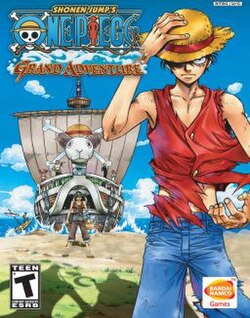
 One Piece Grand Adventure on PS2
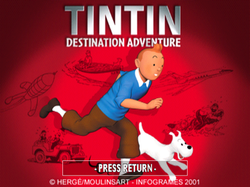
 Tintin: Destination Adventure on PlayStation
 Nicktoons: Battle for Volcano Island on PS2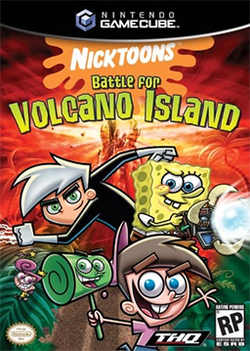












 Another SquareThought Site