

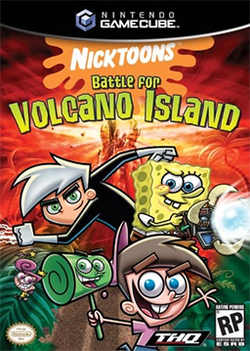

Nicktoons: Battle for Volcano Island is the kind of crossover that sounds like a fever dream written by a cartoonishly over-caffeinated multiverse architect: SpongeBob, Danny Phantom, Timmy Turner, Sam Manson, Tucker Foley, Sandy Cheeks (and a reluctant Squidward cameo) all get shoved onto a single island to stop an ancient lava-lurking bad guy named the Mawgu. On PlayStation 2, Blue Tongue Entertainment turned that improbably adorable premise into an action-adventure romp that mostly treats the cartoon personalities like toolkits of abilities rather than characters with dramatically evolving inner lives. This review will unapologetically nerd out on the character beats and (attempted) story arcs: where the game succeeds at honoring the shows' personalities, where it reduces them to button-mashing archetypes, and how those choices affect the narrative heft of a title whose main mission seems to be 'let's mash everyone together and see what explodes.' The narrative skeleton is simple and serviceable. A trio of island crabs attempts a summoning ritual at Summoner's Rock to call 'The Nine' heroes who can stop the Mawgu, but the Mawgu interrupts the ceremony and scatters the summoned across Volcano Island - and, shockingly, creates an ooze that corrupts everything. The game then hands you a motley crew of six playable heroes and a fetch-quest MacGuffin (Jimmy Neutron's Rift Zipper) to stitch together. That setup is fertile ground for character interplay: you have the unfailing optimism and physical comedy of SpongeBob, the brooding ghost-heroism of Danny Phantom, Timmy's wishful chaos, Sam's moral center, Tucker's tech-flavored snark, and Sandy's science-and-martial-arts competence. The question the game flirts with but rarely answers: can a licensed kids' action game balance large-canvas heroics with genuine arcs for characters who were, originally, designed for thirty-minute TV episodes? The short answer is: mostly by implication. The long answer is what follows.
If you're hoping the PS2 version is a deep role-playing meditation on identity, you're playing the wrong game. Mechanically, Battle for Volcano Island is an action-adventure that leans on platforming, combat against Mawgu minions, environmental puzzles, and an item-collection through-line: you find parts to build Jimmy Neutron's Rift Zipper. That whole 'gather parts' structure is the game's spine, which means a lot of your time is spent revisiting zones, smashing ooze-corrupted critters, and using characters' signature moves to progress. Where the gameplay becomes interesting to anyone who likes character-driven design is in how each nickelodeon contributes a small vocabulary of abilities that reflect their shows' identities. SpongeBob's bubbling optimism translates into bouncy, physics-friendly moves - he's the platforming MVP, the one you rely on for slapstick traversal and comic resilience. Danny Phantom brings the ghostly toolkit: phase-through hazards, a spectral glide and attacks that visually nod to his show's ecto-flourish. Timmy is the wish-making wildcard in narrative terms, but mechanically he's more of a nimble utility - the game lets him feel like an agent of chaos without actually granting literal wish-plot cheats (thankfully, otherwise the Rift Zipper quest would be solved in a "I wish it was done" one-liner). Sam is the pragmatic, goth-adjacent team conscience, and her abilities emphasize precision; she feels like the game's moral and stealthy anchor. Tucker operates as the tech-savvy companion; his interventions are usually instrumental in side-objectives or info dumping via Jimmy's comm device. Sandy is the only character who lands somewhere between comic and competent badass: her science-and-karate combo is an attempt to portray a full person rather than a one-joke guest. The game also uses supporting NPCs - Jimmy Neutron, Tucker (in non-playable capacity sometimes), and Squidward - to fill narrative gaps. Jimmy, stranded in his lab after the Mawgu's interruption, becomes the brain in the box: he provides blueprints and the eventual Rift Zipper plans, and his absence is actually a useful narrative prop. It forces the eight assembled heroes to cooperate while relying on a remote genius for their tech fix - which is a slightly clever mirror of many cartoon crossovers where the inventor can't be everywhere. Squidward exists largely as a reluctant foil and comic contrast, providing both forced sarcasm and a modest emotional beat in the late-game ascent when he assists with the final push to the Mawgu's core. On paper, that final arc hints at emotional growth: Sam, Tucker, Sandy, Timmy and Patrick stall and fight while Danny, SpongeBob and Squidward ascend to the maw of the rift to slow the Mawgu and finish the job. The game stages this as a classic team-play climax - the heroes play their roles, the Rift Zipper drains the Mawgu's strength, and the closing rift seals him. For players expecting sweeping character transformations, what we get is more of a stovetop simmer than a slow-burn roast. Moments that could have been used to showcase character growth - Timmy confronting the consequences of unexamined wishes, Danny addressing the responsibility that comes with his ghostly powers, or SpongeBob being more than an optimist in the face of scale-level danger - are present as possibilities but rarely pushed beyond a line or two of dialogue. This isn't necessarily a failure; the game knows what it is: a mid-2000s licensed action-adventure aimed at kids and nostalgic adults. The problem is ambition: the script sets up nine 'Chosen Ones' and a multiversal-risk rift siphoning whole worlds, but it rarely takes the time to let the characters' internal arcs breathe in a way that satisfies an audience wanting more than cameo-based affirmations. Where the title does score points is in how it choreographs interactions. Every character's presence matters to puzzle design. Want to open a Dimmsdale-via-Bikini-Bottom rift door? Use Danny's phase powers. Need to haul a physics-heavy gizmo? Sandy or SpongeBob will be your muscle. That design philosophy - aligning mechanical roles with established personalities - is where the game shows respect to the source material. It transforms narrative shorthand into gameplay language. The trade-off is that 'character development' becomes functional shorthand: characters grow mostly as they learn to use the Rift Zipper, to cooperate, and to apply their unique abilities in increasingly high-stakes contexts. Emotional arcs are implied by teamwork and the final beat where the Wise Old Crab thanks them and Jimmy opens the portal home. Multiplayer exists, but on PS2 it feels like an appended party mode rather than a central design pillar. The single-player campaign is where the story and character interplay live, and it is there that the game's ambition - for a kids' crossover - is the clearest: it wants to be a fan-servicey, action-packed tribute to each franchise, but it's constrained by the forty-five-minute-game-session pacing and the necessity of accessible mechanics.
On PS2, the game's visuals are a mixed bag that mostly reads as 'competent for its time.' Blue Tongue Entertainment renders the Nicktoons with an affectionate 'cartoon-to-3D' translation. Character models are recognizable; SpongeBob retains his square-cheeked grin, Danny looks moody and bluish, Timmy is appropriately cartoonish, and Sandy's Texan engineering aesthetic survives the polygonal translation. The environments - Volcano Island, Summoner's Rock, and the later rift-spliced basins borrowing imagery from Retroville, Bikini Bottom, Dimmsdale, and Amity Park - are colorful and varied, though they tend to reuse assets in a way that makes the island feel smaller than the story implies. The Mawgu's ooze is a neat visual motif and successfully signals 'corruption' without ever getting gruesome (this is, after all, a Nickelodeon product). Particle effects near the final rift sequence are ambitious and occasionally impressive: debris, energy siphons, and the final draining animation have a cinematic flair for a PS2 title. Framerate hiccups and some bland texture work are present, though they're the kind of things that shuttle you back to the story rather than derail the experience entirely. Voice work is passable and intermittently delightful; knowing the characters' beats from the shows gives a boost to lines that would otherwise have read like disposable licensed quips. Overall, the graphical treatment respects the tone of the source material. This isn't a trophy-winning visual showcase; it's a competent, cheerful translation that does enough to make fans smile and nostalgia-driven adults reminisce about the mid-2000s era of licensed mashups.
Nicktoons: Battle for Volcano Island on PS2 is an honest attempt at a crossover that loves its characters enough to let them do the things they do best: SpongeBob bounces and enthuses, Danny phases and broods, Timmy adds wishful chaos, Sam provides the moral spark, Tucker chips in tech-savvy snark, and Sandy kicks butt while crafting solutions. The writing and structure set up potentially interesting arcs - the summoning of 'The Nine,' Jimmy's absence as a motivator, the Mawgu siphoning entire worlds - but the emotional payoffs are light and often play like cameos rather than transformations. The Rift Zipper quest does provide a unifying through-line, and the game's smart alignment of mechanics with character traits is a practical triumph. Critically, the game received mixed reviews (Metacritic clocks the PS2 version at 59/100, with outlets like IGN giving the PS2 edition a 4.2/10 while GameZone landed near the mid-5s), which feels apt. For an 18-year-old who grew up watching these shows, Volcano Island offers a satisfying nostalgia trip and some legitimately fun co-op moments, but it won't suddenly reframe any of the characters or stories. If you want a crossover that respects the cartoons and translates them into brassy PS2-era gameplay, it does the job. If you're craving deep character arcs and sustained emotional investment, you'll be left wanting more. I give it a 6.0 out of 10: a competent, occasionally clever crossover that prefers to celebrate character tropes through action rather than excavate them through drama. Postscript: The game's modest success spawned a sequel, Nicktoons: Attack of the Toybots, in 2007 - which is fitting, because if there's one lesson Volcano Island teaches, it's that Nickelodeon crossovers are less about single-story catharsis and more about the ongoing joy of seeing your favorites crash into each other and solve problems together. Sometimes, that's plenty of fun.
 Bakugan Battle Brawlers: Battle Trainer on DS
 One Piece Grand Battle! 3 on PS2
 Tintin: Destination Adventure on PlayStation
 One Piece Grand Adventure on PS2
 Taiko no Tatsujin: Dokodon! Mystery Adventure on Switch
 Onimusha: Dawn of Dreams on PS2
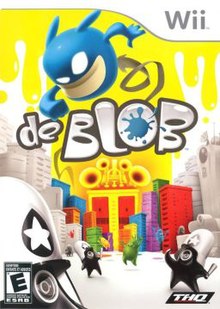 De Blob on Switch
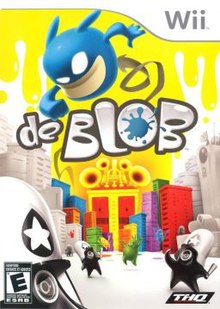 De Blob 2 on Switch
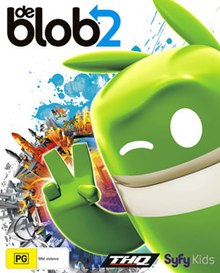 De Blob 2 on PS4
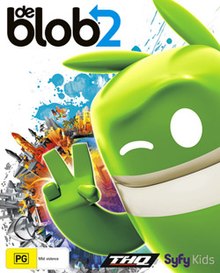 de Blob 2 on PS3
 Nicktoons: Attack of the Toybots on PS2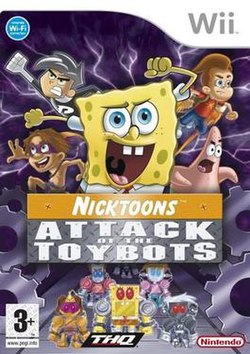












 Another SquareThought Site