

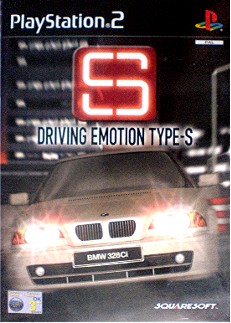

When a publisher famous for dragon-slaying RPGs presses its artisanal fingers to the steering wheel, you expect something polite, well-tailored and faintly magical. Square's first PlayStation 2 outing, Driving Emotion Type-S, arrives with that particular pedigree and the confidence of a company that can render a chocobo with convincing eyebrow animation. What it delivers is a peculiar, earnest racing sim that wants to be Gran Turismo's punctual cousin and ends up sometimes acting like a spirited go-kart with an attitude. This game is the work of Escape, a Square subsidiary whose team had tinkered with fighting and racing foundations before. Type-S lays its cards on the table from the outset: licensed cars, realistic interiors, a weight-aware physics model, and a soundtrack that swaps orchestral pomp for techno grooves. Critical response was mixed - the international release attempted to soothe complaints about handling and polish - and sales barely made a ripple. For players of the era who remember the PS2 as a brave new world, this was a strange, occasionally brilliant detour worth inspecting, particularly if you like your driving simulations with a side of obstinacy.
Driving Emotion Type-S observes the laws of vehicular dignity. Its physics are not arcade bravado; they are built around gross vehicle weight rating and an attempt at realism. Lighter cars feel lighter, heavy cars feel like they have opinions about cornering, and steering input is treated like a solemn promise. The game expects you to respect inertia and read braking points - it will not forgive you for treating it like a bumper-car free-for-all. There are 43 officially licensed cars spanning eight Japanese and five European manufacturers: everything from import scene hot-hatches to luxury and exotic metal. Honda, Nissan, Mazda, Subaru and Mitsubishi rub shoulders with BMW, Porsche, TVR, Alfa Romeo, Ferrari and even a Western-only Lexus appearance. Fourteen courses populate the game, including faithful takes on Suzuka and Tsukuba, plus a Western-exclusive West Coast circuit. Car setup options and color customization allow modest tinkering before you leap into the cockpit. Mode-wise, Type-S keeps things tidy. Arcade Type-S is the mainline experience: jump in, race, win, unlock. Line Training is the simmering heart of the simulation side - it shows an ideal racing line in red and turns jagged to warn you of approaching braking points. This mode also contains four autocross tracks unique to its remit, a neat little playground for mastering throttle and steering subtleties. Time Attack and split-screen Vs Mode fill the remaining slots, offering pace-chasing and friend-fuming in equal measure. Where Type-S earned both praise and ire is in its handling and AI. The Japanese release, by contemporary accounts, was almost unplayable for casual drivers - steering sensitivity could make a steady hand quake. International versions were tuned, with revised controls and some visual refinements, but the game remained touchy: intense and precise for the sim aficionado, frustrating for anyone who wanted an easy pick-up-and-go. AI behaves inconsistently; at times it follows the rules like a prim steward, at others it makes baffling choices that leave you questioning whether the CPU had secretly been to a rally school and then immediately forgotten the lessons. Load times are also repeatedly called out in reviews as tedious, an unwelcome interruption in an era when patience for spinning discs was thin. The audio package follows the same path of division. Shinji Hosoe led a techno-forward soundtrack with Ayako Saso and Takayuki Aihara contributing, producing a collection that ranges from sax-laced opener riffs to 80s guitar hooks and atmospheric piano. Some outlets hailed the music as a saving grace, while others found it grating or thin compared to the stadium-ready scores of the competition. Ambient sound design gets credit for detail; engine and cockpit noises are unflinchingly realistic though, according to some critics, a touch muted in the mix. After spending hours with Type-S you realise it is less a game of instant gratification and more a grudging relationship: it asks things of you, gives few consolations, but occasionally rewards with a cornering sensation so pure you feel like a scientifically improved stunt driver. If you like to tinker with setups, obsess over braking markers and treat each turn as a negotiation, this is the sort of title that will stalk your dreams - in a good way.
For its time, Driving Emotion Type-S made a compelling argument that interiors are not merely cutaways but sacred spaces. The cockpit views are dense with detail: dash gubbins, reflections, and a convincing sense of being belted into a working machine. Several critics compared the environmental richness and interior fidelity favourably to the big-name racers of the era, which is no small compliment in the dawning PS2 epoch. That praise comes with a footnote. Reviewers frequently reported shimmering and jagged edges - those PS2-era artifacts that made early titles look like oil paintings left to dry in a gust - and some found the geometry harsh where they expected silk. A later international build smoothed shading and beefed up body detail, but it could not entirely banish the jaggedness critics noticed. In motion, however, the game often masks its technical rough patches; speed and aerodynamic swagger can hypnotise even the most pixel-picky observer. Load times and occasional graphical roughness hold the package back from outright visual triumph, but the attention paid to driver perspective and the tactile feel of the cockpit lifts Type-S above many contemporaries that treated interiors like afterthoughts. It is a mixed bag visually: detailed and immersive in design, early-generation and brittle in execution.
Driving Emotion Type-S is the sort of game that will make you respect its ambitions and curse its temperament in equal measure. It is earnest where it needs to be, experimental where it should have been conservative, and occasionally brilliant in single moments of simulation fidelity. The international tweaks helped, but they were fixes to a temperament rather than a cure to the medicine. For the sim purist in 2000 - and for the nostalgic enthusiast revisiting the era - Type-S offers a compact museum of ideas: weight-based physics, a lavish roster of licensed cars, a demonstrably cared-for cockpit view, and a soundtrack that will either soundtrack your commute to victory or make you mute the TV and cry into a bib. For most players, however, the handling sensitivity, inconsistent AI and long load times make it a love letter to a niche audience rather than a mainstream hit. Critics were split, sales were modest, and Square learned a lesson about how RPG houses must temper their racing experiments. If you want a definitive recommendation: pick this up only if you enjoy patient, sometimes obstinate simulations and can appreciate the highs when they arrive. Otherwise, keep an eye on the big, polished racers. Driving Emotion Type-S is not a classic by universal consent, but it is a fascinating, occasionally infuriating artifact from the dawn of PlayStation 2 - and sometimes those are the most interesting games of all.
 Driver: Parallel Lines on PS2
 Type:Rider on Switch
 Roary the Racing Car on DS
 Team Sonic Racing on Switch
 Garfield Kart: Furious Racing on Switch
 Ben 10: Galactic Racing on PS3












 Another SquareThought Site