

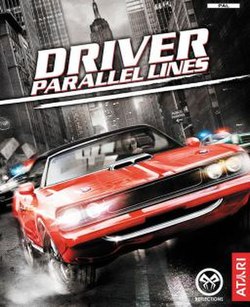

Driver: Parallel Lines lands like a vinyl record sliding off a turntable - nostalgic, a little scratched, but still very funky. Reflections Interactive ditched the undercover-cop protagonist and handed the keys to TK, a getaway driver with a 28-year prison gap in his resume. On PS2 the game is a focused return to what the series does best: driving. What makes Parallel Lines worth talking about with your friends (or loudly arguing with strangers online about whether Blondie is the superior sing-along) isn't just the soundtrack or the time-jump gimmick. It's the way the game turns your muscle memory and patience into measurable progress. If you like challenges that make you feel like a cunning wheelman rather than a magic button-masher, you're in the right borough.
Parallel Lines is an open-world driving playground with missions that are very often a test of vehicular competence disguised as a crime drama. The core challenges are simple to name but tricky to master: precision driving, car selection and tuning, situational awareness during chases, and a side-order of on-foot sneaking and shooting. The driving is central, which is good because Reflections removed some of the clunky on-foot nonsense that tanked their previous attempt. Instead you get missions that demand you weave through traffic, use your nitrous judiciously, and pick the right car for the job - the game includes over 80 vehicles, from mopier 1978 sedans to twitchier modern rides in 2006. That variety forces you to know how each chassis behaves. A vintage cruiser might soak up hits but understeer down an on-ramp; a tuner will laugh at corners but cry when the cops get nose-to-bumper with you. Skill number one: precision steering. Parallel Lines rewards clean driving. Smashing into lampposts, pedestrians, and other cars won't always end a mission immediately, but it will slow you down, blow your vehicle into smoked-glass confetti, and make your wanted level spike. The felony system is one of the more interesting challenge mechanics. It distinguishes crimes attached to certain vehicles from crimes attached to the player on foot, which means an escape isn't just about outrunning squad cars - it's about changing context. If you ditch a hot car and hop into a clean one you can briefly suspend pursuit, but a cop who recognizes you will reactivate your wanted status. That recognition mechanic forces tactical thinking: when to run full tilt, when to lay low and holster your weapon, when to swap cars in a tight alley. It's a stealthy twist in a game that otherwise wants your foot on the gas. Skill number two: vehicle management and tuning. Ray's Autos becomes a tiny RPG for gearheads. You can adjust engine performance, ride height, paintjobs, nitrous, and even bulletproof glass. Tinkering changes how the game expects you to approach a mission - want speed and sloppy handling? Go for power. Want a drivable workhorse for long chases? Play the long game and invest in handling. The test track is a welcome sandbox where you can see the difference a tune makes instead of learning by exploding in live missions. Knowing when to spend money is part of the meta-challenge: the 1978 money economy feels friendlier, whereas 2006 demands you pay harsher prices for upgrades, nudging you to be thrifty and deliberate. Skill number three: situational awareness and map knowledge. Parallel Lines shrinks and compresses New York into a condensed but believable city map that still rewards route memorization. There are around 222.5 miles of roads - in PS2 terms that's a whole lot of pavement to learn. Successful players build mental shortcuts: which bridges funnel traffic, which backstreets spit you out near the docks, where the police chokepoints sit. That knowledge turns annoyingly long police chases into satisfyingly tight escapes. Skill number four: gunplay and on-foot tactics. Although this entry leans heavily on driving, shooting still exists and is where the game gets oddly uneven. Auto-aim helps, but manual aiming can be awkward. The on-foot sections are not the primary show here and they expose the game's limits: cover is basic, enemy AI is competent enough to be irritating, and the balance between driving and shooting missions sometimes shifts suddenly, forcing you to swap mental modes. Expect to holster weapons to lose attention, to time shots during rooftop chases, and to accept that the game's real test usually funnels back into driving. Missions vary in difficulty in a way that can feel unbalanced. Some early jobs are satisfying learning curves in driving technique; others leap to boss fights, helicopter escapes, or timed getaways that require near-perfect execution. This means patience and repetition are part of the skillset - be ready to learn routes, adapt your car setup, and accept that a failed chase is a lesson, not a bug. Side activities like cab driving and towing are less glamorous but actually useful practice for cornering and dealing with traffic. They're also how you earn money to pay for the upgrades that make later missions survivable. The game's removal of the instant-replay film director and reliance on a single Thrill Camera means you can't bask in cinematic replays after a perfect getaway, so the reward is bragging rights and improved technique rather than a replayable highlight reel.
Parallel Lines doesn't win any awards for next-gen visuals - it's PS2-era, and it shows. The city looks atmospheric in both eras: 1978 gets a sepia sheen and neon that feels authentically tacky, while 2006 shifts to blue-tinged modernity and different pedestrian fashions. Landmark silhouettes like the Empire State Building and Times Square are readable, and the environmental details - vendor stalls, subway overpasses, and era-specific billboards - sell the illusion of a living city. The trade-off is some rough pop-in, flat textures, and character models that don't age gracefully. During fast chases the camera and draw distance can make it harder to spot hazards until they're in your grille, which ups the challenge but can also feel unfair. On the upside, the sound design and the killer licensed soundtrack do heavy lifting: they make you feel cool while executing maneuvers that otherwise might feel grindy.
If you think of Driver: Parallel Lines as an old-school driving exam with a killer playlist, you won't be disappointed. The PS2 package asks for patience, route knowledge, tuning savvy, and the ability to keep your composure when a cop slams into your rear bumper and you still have two minutes of mission time left. It's not flawless - the on-foot mechanics are a bit wobbly, and difficulty spikes can feel like a traffic cone to the face - but it fixes the worst sins of the series' previous outing and doubles down on the part that matters: driving. Scorewise, it's a solid 7/10: a game that demands skill, teaches it through repetition, and rewards players who treat their car like an extension of their reflexes. Bring your reflexes, tune your ride, and don't forget to enjoy the tunes while you're at it.
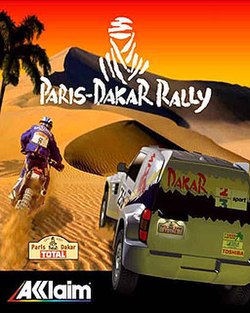
 Paris-Dakar Rally on PS2
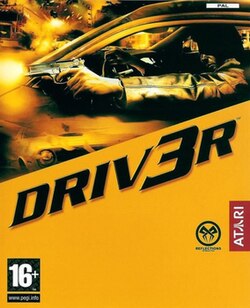
 Driver 3 on PS2
 Tintin: Destination Adventure on PlayStation
 Disney's Chicken Little: Ace in Action on PS2
 Pirates: The Legend of Black Kat on PS2
 One Piece Grand Adventure on PS2
 Driver 2 on PlayStation
 Thunder Truck Rally on PlayStation












 Another SquareThought Site