

 Feb 2019
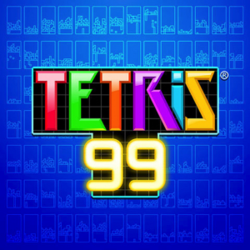

If Tetris 99 were a TV drama, it would be the one where seven distinct archetypes of falling block finally get a chance to live full, messy lives while 98 unseen extras scream in tiny inbox windows at the side of the stage. Launched on February 13, 2019 as a cheeky online-only experiment (and free for Nintendo Switch Online subscribers), Tetris 99 takes the stoic, geometry-first formula of classic Tetris and drops it into a gladiatorial, 99-player arena. This review refuses to talk about 'modes' and 'leaderboards' in clinical terms. Instead, it reads the game like a character piece: the tetrominoes as protagonists, the garbage lines as antagonists, the badges as corrupting artifacts, Nintendo as the patron saint/producer, and the chorus of 98 other players as the Greek chorus that makes the whole thing deliciously stressful. By the end you'll either have sympathy for an I-piece or be ready to buy a physical copy with the Big Block DLC and a subscription voucher. Both are valid emotional outcomes.
Tetris 99 is a soup opera told in rows, where the cast is tiny blocks and the stakes are existential: do you clear lines or watch your screen overflow and die? The mechanics are simple on paper-rotate and place tetrominoes, clear horizontal lines, store one piece for later-but in practice the game's narrative is accelerated by multiplayer chaos. Matches begin like a slow-burn pilot: the blocks fall, the player finds rhythm, and the side panels show the 98 other anonymous contestants, each one a potential ally, nemesis, or future footnote. Observe the I-piece, the show's reluctant hero. In solo Tetris it is the classic deus ex machina-four-line Tetrises, dramatic saves, long Tetris jaws of triumph. In Tetris 99 the I-piece has an arc: it starts as helpful, then becomes coveted, then must be hoarded. A well-timed I-piece can end another player's story in seconds by sending a deluge of garbage. This transforms the I-piece from mere geometry into a weapon of destiny; you watch its arc crescendo as you clutch the hold button like a talisman. Enter the T-piece, T-spin and all. The T-piece plays the role of the charming rogue who gets results the hard way. Its signature move-T-spin-feels like a rogue's backstory revealed in three rotations and some deft placement. Pull a T-spin off against a crowded incoming of gray garbage and you have a full scene: the music quickens, badges flash, and you almost hear the rival player audibly curse. T-spins in Tetris 99 are more than technical flourishes; they're character-defining choices that reward risk with narrative payoff. The garbage lines are the antagonists. They don't have faces, but they have intentions: to corrupt your clean lines with gray, to raise your pile, to end your run. Garbage arrives as a consequence of your opponents' successes. Within the game's targeting system-manual choices or automated options like 'attack those targeting you,' 'attack randoms,' 'attack those close to defeat,' or 'attack badge-holders'-garbage becomes a directed villain. Who you point it at matters: choose with malice and artistry, and you catalyze someone else's collapse. The garbage's entrance cues the game's best dramatic moments: a quiet stack becomes a desperate, cinematic scramble. Badges act like a corrupting ring of power. You earn pieces of badges by knocking players out with garbage; badges amplify your offensive output, turning minor feints into full-scale invasions. In terms of story, badges are the Ivan Drago-esque talismans: they promise power, but they also make you a bigger target. A player who accumulates badges can send dramatically larger volleys of gray lines-up to double the lines in some cases-creating a quick shift in the game's political landscape. You may sympathize with the newly crowned badge-bearing juggernaut, but you will also plot their demise. It's a neat little morality tale about ambition and retribution embedded in a puzzle game. The chorus, made up of 98 tiny boards visible at the side, is both background and plot device. These miniatures are anonymous, but the targeting options let you impose narratives on them: 'random' makes the world chaotic; 'attack those who have you targeted' turns the match into a revenge tragedy; 'attack those close to defeat' gives you the role of opportunistic scavenger; 'attack badge-holders' reads like an egalitarian crusade. Watching these panels is like scanning newspapers for the day's scandals-if a tiny board flashes red because it's near defeat, it becomes the episode's cliffhanger. Arika and Nintendo (the real-world producers) have continued to add acts: in May 2019 the Big Block DLC introduced offline modes-Marathon (traditional single-player endurance), CPU Battle (98 bots), Local Arena (up to eight players locally), and Two Player Share Battle (Joy-Con co-op). These are like spin-off episodes that let the main cast breathe and develop beyond the online soap. The physical release later in 2019 bundled Big Block with a 12-month Nintendo Switch Online voucher for those who wanted a collector's edition of the drama. The Maximus Cup events work like holiday specials, introducing themed outfits, soundtracks, and UI changes that recontextualize the game's tone (Splatoon, Pokémon Sword/Shield, Ring Fit, and many more). These events aren't just cosmetic; they give players in-game rewards and create limited-time narratives, turning each weekend into an episode arc where winners walk away with My Nintendo prizes. It's the DLC equivalent of 'who gets the medal this season?' Tetris 99's reception is a subplot worth noting: critics largely loved the concept. Metacritic sits comfortably in the 'generally favorable' zone, and major outlets praised how the massive player count amplifies tension. Alexey Pajitnov, the creator of Tetris, even gave the game a rare authorial nod of approval. Behind the scenes, Nintendo's announcement and rapid uptake (over 2.8 million accounts by April 2019) reads like a ratings spike-this little experiment resonated. Playing Tetris 99 is like following a serialized novel where each match is a chapter. Sometimes the protagonist (you) dies in chapter two. Other times, after a risky T-spin and a clutch I-piece, you win the season finale. The mechanics are the prose, and the stakes are always elegantly absurd.
Visually, Tetris 99 doesn't pretend to be a cinematic spectacle; its aesthetic is functional, clean, and slyly theatrical. The main board is big and clear so every piece placement reads instantly; the background is a stage where the 98 other players perform as thumbnails. During Maximus Cup events Nintendo sprinkles themed skins-new sprites, UI flair, background music and sound effects-over the interface, and those moments feel like costume episodes that shift tone without changing the script. Because the game is designed for split-second decision-making, clarity trumps flash. The tetrominoes are crisp, the hold queue is obvious, and garbage lines have a satisfyingly mean gray color that telegraphs danger. In handheld mode the tiny thumbnails can feel like a tabloid sidebar, but that's intentional: those small plates of chaos are the game's gossip column, and their compactness forces your eyes to choose where to focus. The Big Block DLC adds local modes and AI opponents rather than visual upgrades, but the themed crossovers lend color to an otherwise ruthlessly utilitarian UI. Technical polish is high; there's minimal input lag, and the rotations and lock-downs feel tight-vital in a game where a fraction of a second decides character fate. The music and effects are functional and punchy, and when Nintendo hands you a themed soundtrack during an event, the game briefly becomes something else: a crossover episode that still serves the same story.
Tetris 99 is a brilliant little experiment that turns an old tile-matching mechanic into a modern, multiplayer melodrama. It's simple enough for newcomers to enjoy and deep enough-through T-spins, badge economy, and targeting options-to sustain long-running arcs for competitive players. If you're the type who loves telling stories about your wins (and blaming your losses on 'lag' or 'the universe'), you'll love assigning motives to every I-piece you hold and every garbage line you send. There are quibbles: the social mystery of anonymous opponents can sometimes feel cold; the initial lack of a tutorial (corrected over time via community guides and articles) made the opening chapters rough for casual viewers; and if you hate being targeted, the experience can be frustrating rather than cathartic. Still, the game's design choices-clarity, urgency, and the delicious tension of 99 minds intersecting-make it much more than a gimmick. It's an ensemble drama where blocks have character arcs, and where success tastes like a perfectly executed Tetris while defeat tastes like a cautionary tale about hubris and badge-hoarding. Score: 8.5/10. Play it for the stress, stay for the stories. If you want offline closure to those arcs, the Big Block DLC's Marathon and Local Arena modes offer neat spin-offs. For a free download bundled with a Switch Online subscription (or the physical box for collectors), Tetris 99 is a tiny masterpiece of game design and emergent narrative-a soap opera where geometry gets all the good lines.
 Tetris Forever on Switch
 Tetris Plus on PlayStation
 Puzzle by Nikoli 4: on PS4
 Professor Layton and the Last Specter on DS
 Puzzle Kingdoms on DS
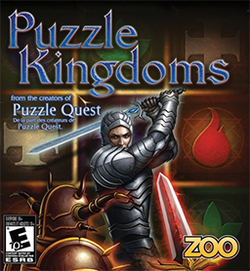 Puzzle de Harvest Moon on DS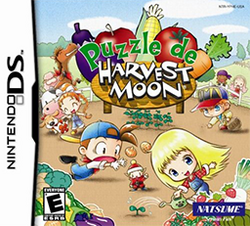
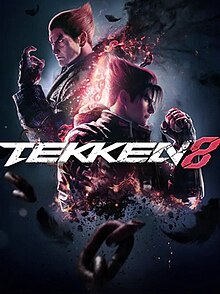 Tekken 8 on Xbox Series X/S
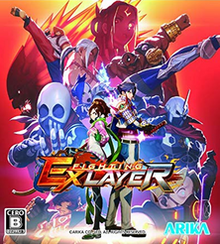
 Fighting EX Layer on PS4
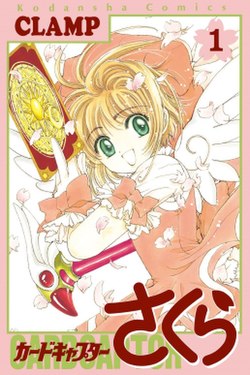
 Tetris with Cardcaptor Sakura: Eternal Heart on PlayStation
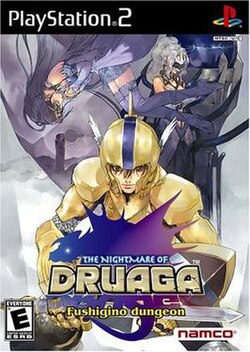
 The Nightmare of Druaga: Fushigino Dungeon on PS2
 Animetic Story Game 1: Cardcaptor Sakura on PlayStation










 Another SquareThought Site