

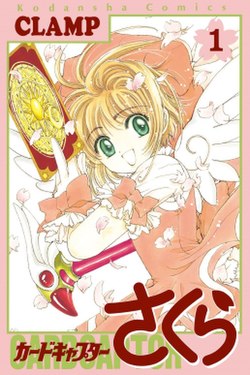

Tetris with Cardcaptor Sakura: Eternal Heart is exactly what it sounds like: a mash-up between the most cerebral of falling-block time-sinks and one of shōjo manga's gentlest, most relationship-obsessed universes. Arika took the clean lines and addictive loop of Tetris and draped Clamp's floral, costume-swapping world over it. If you came hoping for a faithful adaptation of the anime's 70-episode emotional roller-coaster, you'll be surprised; if you came for a tactile, oddly sentimental puzzle game that occasionally asks you to think about love, friendship, and destiny while you rotate an L-block, you're in the right place. The Cardcaptor Sakura source material provides a rich cast and a surprisingly mature theme palette-love in many forms, family, self-discovery-that the game leans on for its flavor. The original series centers on ten-year-old Sakura Kinomoto accidentally releasing Clow Cards and then recapturing them with Cerberus (Kero) guiding her, Tomoyo filming, and Syaoran arriving as a rival-turned-love-interest. Later arcs introduce Eriol, the reincarnation of Clow Reed, and the transformation of Clow Cards into Sakura Cards, with emotional payoffs about agency and stewardship. Eternal Heart doesn't aim to retell the 70 episodes; instead it distills character beats into modes, power-ups, and background vignettes, turning narrative moments into mechanics and, occasionally, into genuinely moving micro-scenes.
The core of Eternal Heart is honest-to-goodness Tetris: pieces fall, you rotate, lines vanish, the music loops and your panic meter climbs. Arika sensibly left the backbone of the original game intact, and then layered Cardcaptor-specific systems on top. The most visible addition is the Clow Card mechanic. As in the anime, each Clow Card has a distinct personality and power; in the game those personalities become modifiers that change gravity, freeze lines, invert controls for a heartbeat, or give you the occasional 'rewrite' that lets you reposition a piece after it locks. Capturing a Clow Card translates to successfully triggering one of those modifiers in a flashy sealed-card animation-Sakura's wand twirls, Kero pops in with an encouraging squeak, and the card gets sealed into your inventory. The playfulness of seeing Wind, Fire, or Shield represented as Tetris-altering effects is a highlight; it manages to evoke the anime without making the puzzle play feel gimmicky. Character-focused modes are where Eternal Heart tries to be a 'visual novella disguised as a puzzle game.' A Story Mode strings together blocks-cleared milestones with short scenes-sometimes a page from the manga's gentle pacing, sometimes a five-screen montage of Tomoyo filming Sakura in a costume change while soft keys play. The game leans heavily on the relationships that made the source material memorable: Tomoyo's unconditional support appears as a replay buff (she 'films' better clears, giving bonus points), Toya's watchful presence shows up as a protective shield that saves one piece from disappearing when you make a mistake, and Yukito/Yue's duality is reproduced as an elegant risk-reward: invoking Yue's judgment temporarily raises the bar for what counts as a 'line' but rewards you with larger score multipliers if you clear it. Versus mode reframes Syaoran's rivalry into competitive play. Facing the AI or a friend, Syaoran's playstyle is aggressive and analytical-he sends tricky garbage lines that mimic his early, competitive nature. Meiling, introduced in the anime as a jealous foil-turned-friend, appears as a wildcard challenger whose attacks are inconsistent but occasionally brutal, matching her anime temperament. Eriol's presence is the mid-to-late-game masterstroke: once you reach the higher ranks, Eriol's interventions force the 'transformation' phase where captured Clow Cards slowly convert into Sakura Cards. Mechanically, this means some of your previously acquired modifiers change behavior-Wind becomes a gentle nudge rather than a blitz, Fire becomes more precise-mirroring the anime's thematic shift where the cards evolve and Sakura grows into their true master. If the game sometimes reads like a greatest-hits medley of arcs rather than a cohesive narrative, that's deliberate. Eternal Heart trusts that the player's emotional investment in Sakura's relationships will fill in what the Tetris loop can't. There are also unlockables-costumes for Sakura (because Clamp will not be denied her outfit montages), alternate card art, and short audio tracks-separate from the gameplay but precious for fans. The balance between addictive puzzle loops and tiny narrative rewards is uneven at times: some matches end without any narrative pay-off and feel like plain Tetris, while other victories are capped with tender animated sequences that genuinely hit the same warm notes the manga does.
Graphically the game is a postcard from the late 90s/early 2000s: character portraits are faithful to Clamp's thin-line, curved aesthetic-Mokona's influence on the art is obvious in the soft faces and big, glossy eyes. Backgrounds borrow heavily from the show: Tomoeda's streets, the school, Toya's watchful frame in the doorway-rendered as static, lovingly drawn backdrops that make matches feel like miniature episodes. The Clow Cards and Sakura Cards get gorgeous close-ups when you 'seal' them; the game leans into the cards' artwork, which the anime and manga celebrated. Transformation and sealing animations are where the team spent most of its pixel budget: Sakura's wand flourishes, Kero's triumphant leap, and the card spiraling into a sealed book are all animated with more care than the simple gameplay loop would seem to demand. On the downside, character animations in the board and versus screens are sparse-expect lots of charming stills and a handful of looped motions rather than full-motion cutscenes. The Tetris playfield itself is functional rather than showy: clear blocks, readable colors, but not a technical flex. If you want 60fps pyrotechnics, this isn't the era to find them. For fans of the series, however, the aesthetic choices-flower motifs, careful costume detail, and that soft Clamp palette-are worth the trade-off. The game feels like a shrine to the source material more than a graphical demo of the PlayStation's power, and for Eternal Heart's audience that's exactly the point.
Tetris with Cardcaptor Sakura: Eternal Heart is not a radical reinvention; it doesn't need to be. It is, instead, an affectionate crossover that mostly gets the tone right by using Cardcaptor Sakura's characters and themes to flavor classic Tetris. The game understands what made the anime special-its focus on relationships, the gentle moral logic of 'if you try your best, it'll work out,' and Sakura's unflappable optimism-and spins those elements into modifiers, unlocks, and tiny interstitial vignettes. The Clow-to-Sakura Card shift is cleverly used as a late-game twist, turning a standard score grind into a symbolic act of ownership and growth, mirroring Sakura's arc from accidental opener to steward of the cards. It's not perfect. Fans looking for a deep narrative retelling will find the story beats chopped into snackable, sometimes shallow scenes. Tetris purists will notice the power-up layer alters the purity of the puzzle loop. Yet, for someone who loves Sakura's costume montage energy and wants a puzzle game that occasionally asks, 'Who is your Number One?' while you're trying to rotate a T-spin, Eternal Heart delivers. It is equal parts cozy fanservice and serviceable Tetris, with heart sewn into every sealed card animation. For a crossover that could have been tacky, Arika instead produced something oddly tender and, more importantly, genuinely playable. Final verdict: play it for the cute character beats, stay for the satisfying line clears, and cherish how a franchise about sealing magic cards can make dropping L-blocks feel like capturing moments. Score: 7.5/10.
 If My Heart Had Wings on Switch
 Clover Heart's: Looking for Happiness on PS2
 Puzzle by Nikoli 4: on PS4
 Professor Layton and the Last Specter on DS
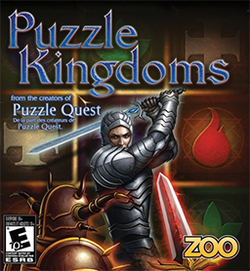
 Puzzle Kingdoms on DS
 Puzzle de Harvest Moon on DS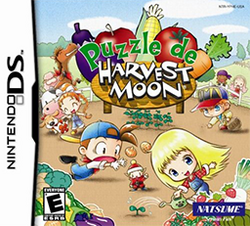
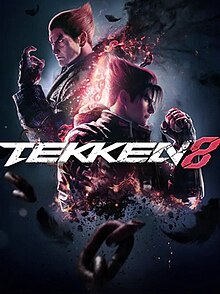 Tekken 8 on Xbox Series X/S
 Tetris 99 on Switch
 Fighting EX Layer on PS4
 The Nightmare of Druaga: Fushigino Dungeon on PS2
 Animetic Story Game 1: Cardcaptor Sakura on PlayStation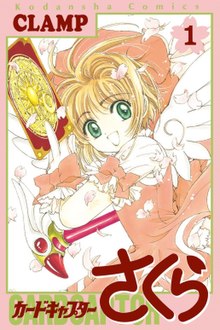












 Another SquareThought Site