

 Nov 2024


Tetris Forever arrives on the Switch like a polite, well-researched guest at a forty-year reunion: it brings photographs, a tidy timeline, people in archived suits, and the exact versions of Tetris you remember arguing about on internet forums at 2 a.m. Developed and published by Digital Eclipse as part of its Gold Master Series, the package is half interactive documentary and half playable museum. The documentary portion runs about 90 minutes and includes interviews with names you can actually pronounce without guessing-Alexey Pajitnov and Henk Rogers among them-plus scans of old adverts and the sort of archival detail that will make you feel both cultured and strangely defensive about your own high-score list. The playable side offers more than fifteen versions of Tetris, plus a new multiplayer experiment called Tetris Time Warp. On Switch the collection feels at home: portable, familiar, and a little bit like carrying a tiny, historically accurate cabinet of falling shapes in your backpack.
Tetris Forever's core proposition is simple: play the history of Tetris and occasionally stop to listen to people explain why that history is messy, geopolitical and, somehow, also about licensing paperwork. The emulated games run the gamut from Pajitnov's Electronika 60 recreation to Spectrum HoloByte and Apple II variants, through to a raft of Bullet-Proof Software titles-some of which are making their first appearances outside Japan. Each game is an entry in a timeline-style digital museum with five distinct eras you can walk through at your own pace. The museum bits contain photographs, interview clips and scans that contextualize each entry, so you can play, learn, and then play while imagining you are slightly smarter for doing so. Playing the emulations is like flipping through a very consistent book of variations on a very consistent idea. If you want slowdown and quirks, you'll find them: Digital Eclipse has been praised for capturing the feel of the originals, including the slow-down that plagued early hardware. The collision detection, piece rotation quirks and pacing differences between versions are preserved more often than they are homogenized, which is great for historians and slightly infuriating for people who simply want to stack lines cleanly. Accessibility options are present but understated-there are button mappings and modern conveniences where they help, though the collection occasionally relishes its retro stubbornness. Tetris Time Warp is the collection's attempt to justify contemporary players and four Joy-Cons in the same room. It supports up to four players and drops in special pieces that forcibly warp gameplay into older Tetris rulesets. When a Time Warp piece lands, the game shifts into a challenge mode inspired by a historic version: maybe you have to clear a specific line pattern, maybe gravity behaves like a machine from 1988, maybe the music starts to sound like someone gently panicking. Complete the challenge, and you get sent back to the present. It's a neat conceit: an otherwise sedate anthology gains a little mayhem, and multiplayer sessions become less about trash talk and more about who can adapt fastest when the rules are suddenly cruel. The interactive documentary and the playable games are stitched together with a museum interface that is as literal as it sounds. Timelines divide the material into eras; each era contains interviews with key figures-Pajitnov, Henk Rogers, Maya Rogers, Tetsuya Mizuguchi, and others-who explain development, licensing, and why licensing can be more riveting than you expected. The documentary leans into the legal and cultural tangle of Tetris's spread across the world, and in doing so it frequently becomes the most interesting thing on screen. Critics have noted that when the documentary steps away from the familiar fall-of-a-block narrative it makes Tetris feel wildly, even unnervingly, strange again, which is exactly the sea change a fortieth-anniversary package should aim for. If the anthology has a weakness, it is the notable absence of several high-profile Tetris variants-most infamously Nintendo's Game Boy version. Critics and fans have pointed out that the collection feels slightly incomplete without the Game Boy release, which is understandable: that version is not just a game but a cultural event that taught entire generations how to waste travel time in perfect geometric silence. Digital Eclipse is up-front about the awkward marble of rights, and while the studio does what it can-adding MS-DOS versions and post-launch content such as Welltris-those licensing gaps leave a visible hole in the historical display. The collection is honest about the messiness, however; it presents the absence almost as part of the story, which is a bit like leaving an empty frame on the wall and labeling it "Where A Block Once Fell." Some will find that clever, others will find it bracingly unsatisfying. Technical polish is solid. Emulation quality is praised for fidelity rather than gloss: games that wobbled on original hardware wobble here too, and that preservationist approach will delight the patient and infuriate the perfectionists. The museum UI is clean and navigable, though cursoring between timelines and games can feel slower than your average eShop purchase screen. If you want a one-stop shop of every playable Tetris mechanic ever invented, this isn't quite that; if you want a lovingly curated, academically honest look at the franchise with the games to prove each point, it's close to definitive. The inclusion of Japan-only Bullet-Proof Software titles and the recreated Electronika 60 version is particularly satisfying for completionists, but don't be surprised if you still find yourself bidding, in private, for the sweet neon nostalgia of a Game Boy link cable.
Graphically, Tetris Forever makes almost no attempt to seduce you with modern sheen, and it does so with admirable restraint. The playable entries present their original pixel palettes, CRT-era quirks and sprite feel with a reverence that could very reasonably be described as archival. The documentary sections are shot and edited cleanly: interview footage, scanned documents and photographs are displayed like artifacts in a digital exhibit-sharp where they need to be, intentionally subdued where the material benefits from a little atmospheric patience. On the Switch's handheld screen the block shapes are crisp, the museum UI is legible, and the contrast between retro game screens and modern documentary footage is sharp enough to remind you that the franchise has lived many lives. Tetris Time Warp offers the most modern visuals in the package, but even there the aesthetic leans into clarity more than flash. If you wanted polygonal tetrominoes gyrating to a dubstep soundtrack in glorious 4K, this is not it. The games that were never flashy to begin with remain faithful; the new content looks contemporary but modest. Overall, the package respects the look of the originals while using today's hardware to present them cleanly, which is to say the visuals do exactly what is required and no more. Which, for a collection titled Tetris Forever, is probably the correct answer.
Tetris Forever is a deadpan, affectionate curation of thirty-some years of falling blocks and the surprising human drama behind them. Its documentary is legitimately insightful-arguably the best single breakdown of the series' convoluted origins to date-and the playable anthology is careful and occasionally revelatory. The emulation is faithful, the museum framing adds context rather than filler, and Tetris Time Warp injects multiplayer unpredictability at just the right volume. The collection stumbles mainly in the places where legal red tape keeps iconic entries out of the line-up; the absence of Nintendo's Game Boy iteration looms large, and even with promising post-launch additions (MS-DOS ports and Welltris among them) the set feels like a nearly complete exhibit rather than a wholly definitive one. If you're a fan of preservation, video game history, or long-form interviews about why blocks sometimes define geopolitics, Tetris Forever is worth your time and a respectable chunk of your wallet. If you want a modernized, all-inclusive party Tetris with every nostalgia engine fired simultaneously, be prepared to fill one or two gaps yourself (preferably with friends and snacks). The game was recognized in the awards conversation-nominated for BAFTA's Game Beyond Entertainment-and it's easy to see why: Tetris Forever treats its subject seriously without ever losing a sense of the absurd. For a title celebrating forty years of an entirely geometric obsession, that's a balanced score. I give it an 8.5 out of 10: a near-definitive museum with a few inconveniently locked doors, and a heartfelt invitation to play history on the portable sofa of your choice.
 Tetris Plus on PlayStation
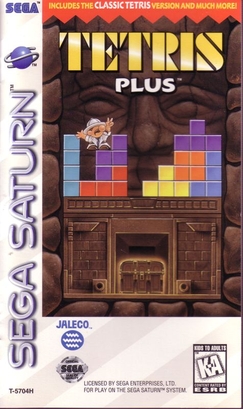 Tetris Forever on Xbox Series X/S
 Puzzle by Nikoli 4: on PS4
 Professor Layton and the Last Specter on DS
 Puzzle Kingdoms on DS
 Puzzle de Harvest Moon on DS
 Mortal Kombat: Legacy Kollection on PS4
 Atari 50: The Anniversary Celebration on Xbox Series X/S
 Teenage Mutant Ninja Turtles: The Cowabunga Collection on Switch
 The Making of Karateka on PS5










 Another SquareThought Site