

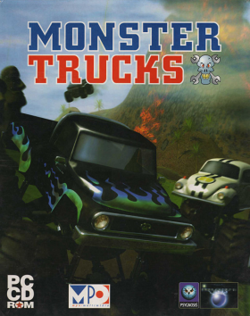

Thunder Truck Rally arrives like a monster truck at a polite tea party: loud, slightly out of place, and determined to smash the table for reasons it will later describe as style points. Developed by Reflections and published by Psygnosis, the game trades subtlety for oversized tires and a selection of modes built around two core promises: race stuff and crush stuff. It wears its influences on its chassis. If you played Destruction Derby and were hoping to roost a similar coat of carnage onto a pickup sporting tires the size of small islands, this was the shop to visit. Reviewers at the time were broadly charitable but not ecstatic; aggregate scoring settles in the respectable-but-forgettable neighborhood of the fives and sevens. For anyone who expects a perfect marriage of arcade chaos and simulation nuance, Thunder Truck Rally makes it clear from the start that it prefers a short, noisy ceremony.
The game splits its personality into modes that are easy to name and even easier to understand. On one side you have endurance and circuit races where the objective is to get from A to B faster than the guy in the truck next to you. On the other side you have car-crushing arenas, where the stated aim is to flatten smaller vehicles into modern art and accumulate style points for your efforts. The broad-stroke design is simple: choose a truck, pick a course or an arena, then proceed to either outrun or out-smash your opponents. Controls are one of the more agreeable parts of the package. Critics who tested the PlayStation release repeatedly noted that the handling is generally very good. Steering feels responsive for an off-road racer of the era, and the trucks carry just enough momentum to feel weighty without becoming immovable. There is a pleasing sense of heft when you turn, the sort that tricks you into thinking you are in control of a hulking machine rather than a toy that will randomly decide to leap into the stratosphere on a whim. That last caveat is not idle. The physics system, while competent in the handling department, has a mischievous streak. Combine speed with a ramp and you will occasionally experience a jump so enthusiastic your truck will approach orbit. These high-arcing excursions are less "fun spectacle" and more "punishing roulette," because a glorified 30-foot tumble can leave you catastrophically damaged and out of the race. It creates a weird tension: the controls encourage daring moves, but the physics punish them with the kind of stubborn vindictiveness usually reserved for relationships in soap operas. The car-crushing mode, which should have been the obvious hook, turned out to be underdone. The idea is fantastic on paper: earn style points for how elegantly and brutally you crush other cars. In practice, however, the mode lacks depth. Style points are awarded, but the variety of crushable outcomes is limited and the sense of progression is thinner than you would like. Critics felt this mode would have been the most immediate draw, and they were mostly disappointed - it offers instant gratification for a while but fails to evolve into anything approaching long-term satisfaction. Endurance races add variety with a guiding arrow that is supposed to help you navigate the track. It is a helpful feature, until it suddenly isn't. Multiple reviews pointed out that the arrow sometimes veers unexpectedly, which feels unfair because the AI does not seem to need navigation help: they take turns perfectly and without hesitation. This inconsistency can turn otherwise enjoyable races into moments of frustration, especially when a stray arrow nudges you off course at the worst possible second. Opponents are competent enough to make races interesting but not brilliant. The AI knows how to hug corners and will often punish reckless jumps or missed turns, but it lacks a cruelty that would make victories feel hard-earned and a charm that would make defeats sting in a good way. The game compensates by offering a variety of modes and options, which was one of the features critics praised back in 1997: there's enough to fiddle with that sessions can stretch beyond a single rental afternoon. Multiplayer exists, because what is a monster truck without someone to blame when it flips over? Local multiplayer was standard for the era and holds up for brief, chaotic play sessions. The game is best enjoyed with friends who are less interested in fairness and more interested in seeing each other's vehicles explode into sad piles of pixels. Against the expectation of modern online ecosystems, this sounds quaint, but in practice it does what it needs to do: create opportunities for heated, noisy rivalry.
Thunder Truck Rally predates the polish of modern graphics engines and embraces a grainier aesthetic that divided opinion. IGN at the time called the visuals "grainy," a single-word review of the renderer's skincare routine. The PlayStation hardware was still finding its stride in 1997, and while Reflections managed solid course layouts and vehicles that read clearly on-screen, the game suffers from heavy pop-up. Objects and scenery will often materialize in your path like props auditioning for a magic show, which can be more than a little disruptive when you're barreling toward them at speed. Course design received praise for being rigorous and thoughtfully laid out. Tracks are constructed with intent; they contain ramps, tight turns, and sections that reward learning and memorization. The environments themselves are functional rather than cinematic. If you are after sweeping vistas and lovingly detailed textures, the game will disappoint. If you want courses that test your skill and offer memorable moments - both glorious and humiliating - then you will find the level design to be one of the title's stronger points. Sound design is similarly utilitarian. Engine noises and impact effects are serviceable but hardly immersive. Critics described the effects as weak, and they were right: the audio rarely amplifies the sensation of being inside a thunderous truck, and explosions feel more like polite coughs than stomps of fury. The soundtrack and ambient noises do their job of keeping the background filled, but they won't be the part of the game you remember fondly. This is not a tragedy so much as a missed opportunity; trucks this dramatic deserve sound that roars like an angry volcano, not the acoustic equivalent of a throat-clear.
Thunder Truck Rally is a study in reasonable compromises. It is not the definitive monster truck experience, and it does not pretend to be. It offers solid controls, thoughtful course design, and a roster of modes that ensure you can spend time with it without immediately regretting the purchase. At the same time, it is held back by uneven physics that encourage death-defying jumps and then punish you for taking them, a car-crushing mode that intrigues more than it satisfies, and a presentation that wears grain and pop-up like veteran battle scars. If you are an off-road fan or someone who wants a textured slice of late 90s racing bizarre, Thunder Truck Rally is worth a look. It is a competent title with personality, but one that ultimately belongs in the "good rental" category more than the "must-own" shelf. The charm is there in the options and the course design, the irritation is there in the pop-up and weak sounds, and the thrill is intermittently present between the jumps where the game hasn't decided to insist you learn humility. Score it around the mid-sixes and you will not be surprised by where it lands: entertaining in short bursts, occasionally infuriating, and strangely earnest about being a big stompy truck simulator in a world that mostly wanted cars with spoilers. Recommended for nostalgia trips, local multiplayer chaos, or anyone who thinks style points should determine everything.
 Monster Jam Steel Titans 2 on Switch
 Bigfoot: Collision Course on DS
 Roary the Racing Car on DS
 Team Sonic Racing on Switch
 Garfield Kart: Furious Racing on Switch
 Ben 10: Galactic Racing on PS3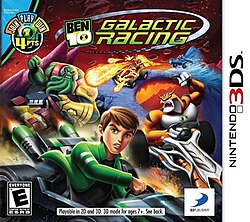












 Another SquareThought Site