



Pirates: The Legend of Black Kat is a 2002 action-adventure romp from Westwood Studios and Electronic Arts that tries to stitch swashbuckling naval combat, island exploration and third-person action into one cohesive costume. The protagonist, Katarina de Leon (aka Kat), is a one-woman revenge engine: father murdered, mother missing, mystical Chartstones to collect, and a very angry ship upgrade budget. From a technical perspective the title sits squarely in the early PS2/Xbox generation: ambitious in scope for its hardware, occasionally clever in systems design, and sometimes beholden to the constraints of polygon budgets, streaming, and camera ergonomics common at the time. This review focuses less on how many times Kat flips off-screen mooks, and more on how the game constructs its mechanics, engine choices and design compromises.
On paper Pirates presents a pleasing systems mix: third-person melee and ranged combat, island questing and item collection, and ship-to-ship battles that let you funnel loot into tangible upgrades. Mechanically the game is a hub-less progression across the "Five Seas," where progression gating is handled through Chartstones-essentially keys that unlock next regions. That creates a structure which feels open within discrete zones, but linear across the campaign. Combat is serviceable and intentionally arcade-adjacent: button-responsive strikes, context attacks, and a dodge/roll mechanic that rewards timing more than button mashing. The enemy roster-Hawke's Crimson Guard and assorted island savages-relies on simple behavioural states: patrol, aggro, flinch and die. For 2002 this was a reasonable AI profile; enemies telegraph attacks but lack sophisticated group tactics, so difficulty spikes are mostly a result of enemy count and placement rather than emergent coordination. This design choice reduces frustration for players expecting action-adventure rhythm rather than hardcore parry frames. Where the game becomes more interesting technically is in its resource loop. Treasure hunting and artifact collection are not pure padding; they feed the ship-upgrade economy. Ship upgrades affect traversal (speed, handling) and combat resilience, which in turn change how naval encounters play out. The naval combat system is simplified but coherent: wind and realistic ballistic trajectories are pared down for fun and reliability on the analog sticks, while a damage/upgrade model gives players a sense of mechanical progression beyond mere XP and level-gates. Level design blends open beachheads with tighter cavern ruins. The designers balance platforming and combat encounters, but streaming constraints show up in a few places: texture pop-in and occasional geometry streaming tears that hint at the console memory ceilings. Collision detection is generally reliable for navigation, but melee hit registration sometimes feels generous-hits can land slightly before the on-screen blades visually connect. That imbalance favors gameplay flow over strict simulation accuracy. Camera and controls deserve focused attention because they are central to a third-person action game. The camera is mostly third-person chase with manual override, and it does an acceptable job keeping Kat centered during platforming and fights. However, there are moments where tight corridors or densely packed enemy rooms force the camera into awkward angles, requiring the player to micro-adjust. Controls map logically to the DualShock/Xbox pad layouts of the era, and latency is low; button-to-action timing feels immediate, which matters when timing dodges and counterattacks. From a systems architecture vantage the game appears to prioritize deterministic gameplay over emergent physics. Siege on that design: collision and ragdoll are minimal, scripted animations drive most outcomes, and the camera/gameplay loop is tuned so the player's inputs always feel consequential. It's a pragmatic choice for a cross-generation release-consistency over flashy unpredictability. AI spawn patterns, treasure placement and quest economy create a steady cadence: fight, explore, loot, upgrade. While repetitive at times, the loop keeps the player progressing and makes good use of the upgrade systems to vary encounters. The quest design leans toward fetch-and-return and simple NPC tasks; mechanically they exist to gate access to chartstones and to present environmental puzzles rather than to deliver branching narrative complexity.
Visually the game is a clear product of early 2000s console capabilities. Artists led by Jerry O'Flaherty crafted island biomes that read well at a glance: sun-bleached sands, dense jungle interiors and moody cavern systems. Draw distance on the PS2 version is conservative-terrain is frustum-cropped where it matters most and background islands often get stylized silhouettes to mask polygon and texture budgets. The Xbox, with a slightly healthier GPU and memory bandwidth, delivers marginally cleaner textures and fewer pop-in artifacts; this is consistent with the slightly higher Metacritic placement for the Xbox release. Character models are expressive for their poly-count, and animations are weighty with readable poses. Frank Klepacki's score supports the scenes with energy, and audio mixing leans cinematic: musical stingers for boss fights, environmental foley for waves and wind, and attention to spatialization despite the era's limited DSPs. Lighting is mostly static baked lighting with localized dynamic effects; the result is stylistic consistency rather than photorealism. Performance-wise the game maintains a playable framerate typical of the generation. There are dips during large set-pieces and naval skirmishes-scenes with many particle effects and physics sims-but these are brief and rarely game-breaking. Texture streaming and LOD transitions are obvious if you stare for them, but they are implemented in a way that preserves the player's immersion in motion. Special effects like cannon fire, smoke and water spray are effective and inexpensive in computation terms, which is a smart technical trade-off given the broad scope of naval and on-foot content. UI and HUD design keep information density low: health, ship integrity, and an icon-driven inventory system that doesn't overwhelm the screen. The map and Chartstone indicators are functional and dovetail with the game's exploration goals. There are moments where the waypointing could be clearer, but overall the visual hierarchy-what you need to see vs. what you don't-is sound.
Pirates: The Legend of Black Kat is a technically competent title that wears its ambitions on its sleeve. Westwood took a hybrid approach-melding action combat, treasure-driven progression and simplified naval warfare-and largely succeeded within the constraints of early 2000s consoles. The game's strengths are in its coherent systems loop, responsive controls, and solid art direction. Its weaknesses are those of many era-typical cross-platform titles: conservative draw distances, occasional camera frustration, and AI that prefers scripted predictability over surprising behaviour. If you're evaluating this one from a technical lens, it's a commendable execution of scope management. The developers made explicit trade-offs-prioritizing deterministic combat responsiveness, an accessible upgrade path, and consistent performance-rather than chasing bells-and-whistles that would have introduced instability. The result is a satisfying, if not revolutionary, pirate adventure. For players who want a polished single-player action-adventure with ship upgrades, island exploration, and a fair share of swashbuckling, Black Kat still floats. For technical purists hoping for cutting-edge AI or physics-driven chaos, it will feel intentionally conservative. The Metacritic scores (PS2 72/100, Xbox 74/100) capture that middle ground: competent, enjoyable, and technically well-judged for its time. Score: 7.2/10.
 Nurikabe on PS4
 Call of Duty: Black Ops 7 on PS4
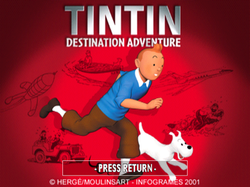
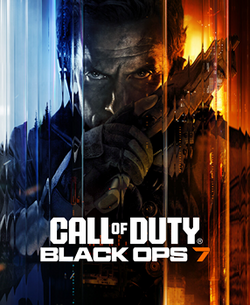 Tintin: Destination Adventure on PlayStation
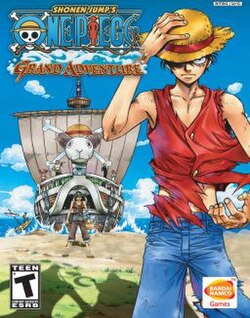
 One Piece Grand Adventure on PS2
 Taiko no Tatsujin: Dokodon! Mystery Adventure on Switch
 Onimusha: Dawn of Dreams on PS2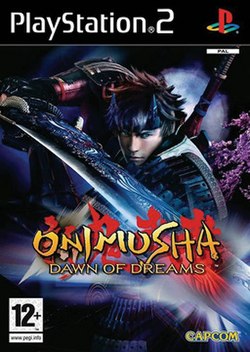
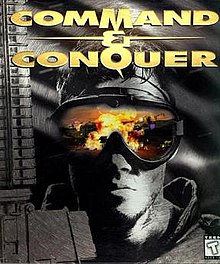 Command & Conquer: Red Alert on PlayStation
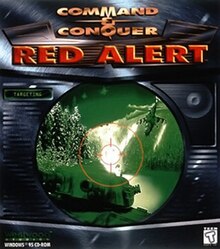 Command & Conquer Red Alert: Retaliation on PlayStation
 Blade Runner: Enhanced Edition on PS4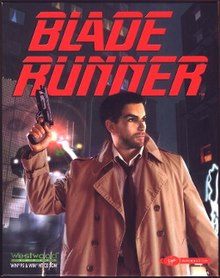












 Another SquareThought Site