

 Nov 2025
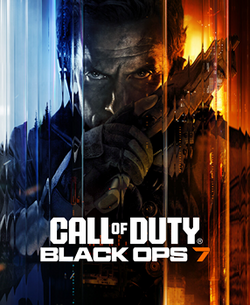

Call of Duty: Black Ops 7 arrives like a family reunion where half the relatives are armed, the other half are corporate overlords, and somebody definitely brought a faster-than-usual conspiracy theory. Set in 2035 and built on the IW engine, Black Ops 7 hands the narrative baton to David "Section" Mason (portrayed in marketing by Milo Ventimiglia) and asks him to sprint, metaphorically and actually, through the ghosts of Black Ops II while juggling a team that seems equal parts elite unit and sitcom ensemble. This review will ignore the usual checklist for a second and stare, with something between affection and suspicion, at the characters and their potential arcs - because in a franchise that often treats storytelling like an intense set piece, Black Ops 7 seems to be trying to make the people inside the explosions matter.
The campaign's scaffolding is straightforward: a co-op (or solo) JSOC unit called Specter One, 11 missions, and an ominously ticking threat - the apparent return of Raul Menendez and a plan to "burn the world" in three days. That ticking clock sets up the game's emotional tempo. David Mason is written as the steady center; after the events that rippled through Black Ops II, Mason's arc is poised to be about legacy and stewardship. He is the commander who has to reconcile the weight of Menendez's ideology (and public myth) with the messy reality on the ground. If the campaign is smart, Mason's growth will come from small, human choices in tense moments: ordering a team to stand down, trusting the wrong corporate ally, or choosing between mission success and a teammate's life. Milo Ventimiglia's casting in promotional material telegraphs a deliberate attempt to anchor Mason in charisma and weary competence, which the campaign needs if you care beyond the scorestreaks. Mike Harper's return (Michael Rooker) is a delightful lever for nostalgia and friction. As a supporting figure dating back to Black Ops II, Harper offers both continuity and a chance to interrogate how veterans adapt to new rules of engagement. Expect an arc that toggles between paternal reliability and a darker, more compromised pragmatism - the kind of character who knows how to survive but maybe forgot why he's surviving. Eric Samuels and Leilani "50/50" Tupuola add contrasting energies: Samuels as the pragmatic specialist and 50/50 as the wild card whose nickname promises a backstory (and probably a stunt) that justifies it. These two are where the campaign can sneak in more intimate drama - arguments over collateral damage, quiet reconciliations in a safe house, or 50/50's personal stakes being revealed at the cliff of Act Two. Colonel Troy Marshall sits where military duty and institutional opacity meet. As the overseer of Tier 1 operations, his arc will likely probe the bureaucratic costs of doing "what needs to be done." There is story gold in a commanding officer who believes in the mission but grows uncomfortable with the means, or conversely, who proves willing to blur lines that Mason won't. Emma Kagan, the CEO of The Guild (Kiernan Shipka), is the corporate antagonist on the surface, but the marketing already hints at nuance: The Guild was a criminal organization before it became a tech corp. That history allows Kagan's arc to slide between charismatic visionary and amoral CEO, and Black Ops 7 seems positioned to play both cards - she can be a benefactor, a puppet-master, and a mirror for Mason's choices all at once. The "Endgame" activity - unlocked after completing all missions - is a structural statement. Putting up to 32 players in a time-pressed set of objectives in the city of Avalon suggests a late-game tonal shift: a claustrophobic, public-universe finale where decisions have communal consequences. Because the campaign allows shared progression with multiplayer and Zombies, player investment carries more narrative weight; choices you make in co-op could feel like contributions to a persistent identity rather than isolated vignettes. Mechanically, Black Ops 7 leans into movement tweaks and ability systems that affect pacing and, by extension, character moments. Wall jumps and the optional-perk Tactical Sprint give encounters a choreography that can amplify personality: Mason's steadiness translates to careful positioning, 50/50's improvisation maps to acrobatic play, and Harper's grit favors aggressive entry. The Overclock system for multiplayer equipment and scorestreaks is a neat analogue to character growth - upgrading gear feels like learning new tricks rather than just brandishing more firepower. Zombies' inclusion of a "Wonder Vehicle" and the return of top-down Dead Ops Arcade offers tonal relief, but it also provides narrative contrast: the heroic agency of the living team on a mission vs. the existential slapstick of surviving the undead. If any character arc could misfire, it's the temptation to make Menendez a rote villain resurrection. The reveal that his "return" is apparent and possibly manipulated - plus The Guild's involvement - gives writers room to complicate the antagonist. The best outcome is a reveal that peels back myth and shows men made monstrous by systems: Menendez as symbol, not necessarily puppet, forcing Mason and co. to confront what they are defending.
Black Ops 7 runs on the IW engine, and while the Wikipedia reveal is coy on hard performance numbers, the marketing campaign - cinematic trailers, live-action teasers, and key art featuring Milo Ventimiglia's likeness - telegraphs a focus on character fidelity. On PS4, expect models that lean into expressive faces and slick lighting for cutscenes, even if texture density and frame rates are more conservative than next-gen counterparts. The cinematic videos suggest the developers want your eyes on the actors' performances: Mason's furrowed jaw, Kagan's cool smile, Harper's weathered scowl. These visual cues are crucial; character arcs land when the engine lets performance breathe. Maps and set pieces (16 standard multiplayer maps, plus 20v20 Skirmish options and the large-scale Endgame zone) appear designed to support storytelling as much as competition. The PS4's hardware limits might trim environmental fidelity, but smart art direction - contrasting the clinical sheen of The Guild's facilities with the grittier JSOC locales - will help emphasize narrative beats. Zombies' large-scale map and Wonder Vehicle, paired with top-down Dead Ops Arcade, provide whimsical and macabre visual variety, giving the cast different kinds of stagecraft to act against.
Black Ops 7 is a rare thing for a CoD title made in close succession to its predecessor: a game that seems to be asking for more attention to its people than to its explosions. That doesn't mean it ditches the explosions; it dresses them in motivations and hopefully pays dividends by making players care about the consequences. David Mason looks set to be the emotional core: a leader balancing legacy and responsibility, and surrounded by a cast primed for small, human revelations amid high-concept threats. The Guild and Emma Kagan offer corporate menace with shades, Harper returns with veteran gruffness, and Zombies provides the weird, dimension-hopping counterpoint. On PS4, the game will be mechanically familiar but refined: wall jumps and optional tactical sprint reshape encounters, shared progression binds modes together, and the Endgame fosters a communal finale that might finally make CoD's campaign feel like a living thing. The narrative gamble is that the writing will match the ambition - that Menendez's "return" becomes a lens on legacy, that Kagan isn't just wallpaper for a tech bro villain, and that the team's interpersonal fractures get real payoffs. Score: 8/10 - Black Ops 7 earns points for intention, cast-driven promise, and smart systems that link gameplay and story. If the campaign follows through on its character beats and resists the urge to simplify its antagonist into a press-kit headline, this will be one of the more narratively satisfying Black Ops entries in recent memory. Whether you're in it for the co-op heroics, the multiplayer tinkering, or the chance to watch David Mason grow a little wiser between gunfights, there's enough here to justify the trip - and maybe even the occasional emotional catharsis between the flashbangs.
 Call of Duty: Black Ops III on PS4
 Masyu on PS4
 Warhammer 40,000: Boltgun 2 on Xbox Series X/S
 PixelJunk Shooter 2 on PS3
 Primal Carnage: Extinction on PS4
 Tower of Guns on PS3
 Call of Duty: Black Ops Cold War on PS5
 Call of Duty: Black Ops Cold War on PS4
 Call of Duty: Black Ops Cold War on Xbox Series X/S










 Another SquareThought Site