

 Aug 2025


Primal Carnage: Extinction is the kind of game that opens with a dinosaur roar and then takes you on a jittery, unintentionally comedic coaster ride. On paper it is an immediately salivating concept: humans versus dinosaurs, a multiplayer match that swaps between first-person human firepower and third-person scaly mayhem. In practice it is a title that wears its ambition like battle scars - visible, dramatic, occasionally impressive, and sometimes still oozing. This is the sequel/complete-rebuild-turned-separate-release that came out of the long shadow of the original 2012 Primal Carnage and the scrappy community-mod origins of Circle 5 Studios. It's a game that wants you to feel like you are in a B-movie blockbuster full of teeth, claws and chopper escapes, but also reminds you that the production had budget constraints, a shaky development handover, and an engine that's starting to look its age. If you come here for narrative gold, the game's not going to hand you a trilogy and a Netflix adaptation. What Extinction does give you - and gives rather well - are characters in the form of playable classes and creatures whose personal arcs play out inside each match. Think less Lord of the Rings and more 'The Amazing Life Cycle of a Match': spawn, scramble, peak, get shredded, respawn, repeat. The dinosaurs named on the box - Carnotaurus, Dilophosaurus, Novaraptor (fictional), Pteranodon, Tyrannosaurus - are less deeply written protagonists and more archetypal actors. But once you treat them as characters with short, sharp story arcs that unfold over minutes, the game's personality becomes surprisingly rich.
Primal Carnage: Extinction isn't trying to be a single-player cinematic epic, so its 'story arcs' are gameplay arcs - little soap operas that begin the moment you pick a side. Humans: you go in with an array of weapons, a first-person perspective, and the comforting illusion that bullets will fix everything. Dinosaurs: third-person camera, roars that trigger abilities, and a ticking cooldown that means timing is your best friend and your worst enemy. That cooldown mechanic is one of the few narrative threads the game hands you: it creates arcs of empowerment and vulnerability. A dino roars, activates an ability, turns the tide, and then becomes a hunted manatee until the cooldown ends. Each roar writes a paragraph of a dinosaur's personal legend in that match. Choose team human and your arc is the short, harsh classical tragedy of the soldier: you rush, you hold ground, you pray to the helicopter, you die in increasingly embarrassing ways. In 'Get to the Chopper' human players are on a clear three-act structure - Inciting Incident (dinosaurs appear), Act Two (the sprint to the evac point), Climax (the helicopter pads fill, bullets fly) - and every character on the human side is forced into improvisational heroism or comedic self-sacrifice. The human classes are not exhaustively detailed in the source material, but the distinction between human first-person play and dinosaur third-person play is important: humans feel precise and punishing, and some reviews pointed out that the human side can be downright unforgiving. That makes a human's narrative arc more about tension and quick learning: you can go from fresh spawn to tactical lynchpin in two rounds if you stop panicking. On the other side, dinosaurs are archetypes and movie stars. The Tyrannosaurus is the slow-burn king who, like any good comeback kid, enters late and changes everything. Pteranodon writes a swashbuckling fugitive arc - fly in, terrorize, fetch kills from above, then vanish. The Novaraptor occupies the 'sneaky antihero' slot: smaller, more mysterious, and often the one with the best underdog arc when used right. Carnotaurus and Dilophosaurus bring their own genre beats: brawny bruiser, spitting trickster, and so on. The result is that matches alternate between cinematic slogs where T. rex stomps a path of destruction and nimble vignettes where raptors flank like they've read the script. Modes help shape these arcs. Team Deathmatch is the pure, short-form sitcom where everything happens in a tight rhythm. Get to the Chopper is a heist/escape thriller with tension that ramps toward the heli. Survival flips the script by turning humans into protagonists of a desperate saga, fighting off an increasing tide of dinos - it's excellent for making human players feel heroic or gloriously doomed in equal measure. Free Roam? That's the documentary segment where characters can stop screaming and smell the prehistoric roses. Unfortunately, the structural drama is sometimes undermined by technical flaws. The PC launch (and early reviews) reported rampant glitches and a sense that the rebuild extracted from the original was rushed. On PS4, reviewers also flagged glitches and an engine (Unreal Engine 3) that felt dated. These problems are like an editor with scissors who randomly snips scenes out of your favorite movie - the arc is there, but beats can be skipped. AI was criticized in some reviews, which matters most in modes with NPC dinos or when human players are absent: a poorly behaved AI pulls you out of the spell of your five-minute tragic heroism. Balancing is another dramaturgical issue. Some outlets noted the human gameplay can be punishing and that the overall balancing between teams sometimes teeters. That's a fatal flaw for an asymmetrical multiplayer game where the entire premise hinges on fair tension. Still, when matches click - and they do, often thanks to lively dinosaur animation and excellent sound design - the game delivers moments of authentic terror and dumb grinning joy. Community feedback suggested the game could have used more time in development to smooth out these arcs and tighten the pacing, but there's a raw, enjoyable script buried under the rough edges. Finally, there's a meta-character arc: that of the game itself. Extinction began life as a complete rebuild of the first Primal Carnage and was supposed to be a free update. Then Circle 5 Studios, a team born from the original modding community, took over and turned the rebuild into a separate release co-developed with Pub Games and later ported to PS4 by Panic Button. That arc - from mod scene charity project to standalone sequel - gives the title an outsider charm. It's a scrappy underdog story, which makes you root for it even when you're cursing at a bug-induced ragdoll.
Visually, Primal Carnage: Extinction is a study in contrast. Dinosaur animations and sound design received near-universal praise in reviews - the creatures move with satisfying weight, and the roars and environmental audio give the game an atmosphere you can't buy with polygons alone. When a T. rex finally comes into frame, the animation sells the moment; the stomps feel like punctuation marks in the match's mini-novel. On the flip side, environments and human character models were criticized for lacking 'pizazz' and feeling cartoonish in places. Using Unreal Engine 3 wasn't automatically a crime in 2015, but some critics felt the engine choice left the game looking and feeling a generation behind the glossy triple-A dino spectacles. Clipping issues and occasional visual glitches do a disservice to otherwise compelling animation work, like a backstage curtain falling down during the big scene. The art direction favors functionality over eye candy: maps are serviceable and readable, which matters in multiplayer, but they rarely offer vistas that stick in the mind after you flick the console off. Free Roam lets you appreciate the finer details - dinosaur muscle, scale, and sound - but player models and AI pathing sometimes remind you that polish was not the top billing priority. Still, if you're after the visceral joy of dinosaurs rendered with believable motion and noise, Extinction largely delivers that core fantasy even if the supporting set pieces wobble.
Primal Carnage: Extinction is a game with a personality forged out of contradictions. It has a blockbuster premise and a jukebox of satisfying dinosaur performances, but it also carries the scars of a messy development and a visible lack of polish in places. The match-level 'character arcs' - the rise and fall of a Pteranodon raid, the desperate sprint to the chopper, the raptor flanking montage - are where the game truly shines. Those five-to-ten-minute narratives inside matches are fun in a way that reminds you why the original idea was worth pursuing. Critically, the game's rough edges matter because its whole existence depends on balance, stability and the thrill of fair competition. When glitches and balancing issues surface, they interrupt the arcs and can make a session feel more frustrating than cinematic. Reviews from the era reflected that: Metacritic scores leaned toward the unfavorable side, with specific calls about bugs, AI oddities and an engine that felt outdated. Yet a cluster of reviewers - and many players who adore dinosaurs - found enough charm in the animations, sound design, and sheer silliness of the premise to forgive the game a lot. If you are a dinosaur fan with a short attention span for polish and a long attention span for stomps, chases and primal screams, Extinction is worth a look, especially if you can catch it on sale. If you want a tightly tuned, modern-feeling shooter with competitive balance that doesn't occasionally implode, this one will test your patience. Either way, the characters - human and dinosaur alike - will give you memorable ten-minute sagas that, while sometimes glitchy, are often genuinely fun. And who knows: the announced remaster (Primal Carnage: Evolution) suggests the saga might evolve into a cleaner, better-paced epic. For now, Extinction is a lovable, lurching beast: flawed, occasionally infuriating, but capable of delivering a brilliantly dumb, teeth-and-claws good time when it wants to roar.
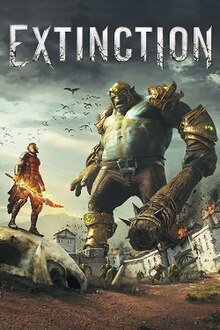 Primal Rage on PlayStation
 Carnage Heart on PlayStation
 Tom Clancy's Rainbow Six: Vegas 2 on PS3
 Modern Combat 5: Blackout on Switch
 PixelJunk Shooter 2 on PS3










 Another SquareThought Site