

 Feb 2019
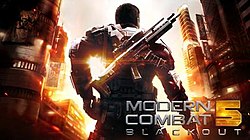

Modern Combat 5: Blackout arrived in 2014 as a mobile first-person shooter and eventually sauntered onto the Nintendo Switch in February 2019. On paper it's a familiar military shooter - guns, grenades, turrets, and enough jargon to make a real sergeant sigh - but the game's more interesting drama happens not with bespoke heroes and Shakespearean monologues, but in the cramped emotional lives of classes, allies, and the campaign's structure itself. This review is an in-depth, slightly snarky therapy session for those characters: the playable classes who want to mean something, the anonymous 'allies' who join you in firefights, and the campaign that tries to be a solo movie but keeps switching to group therapy. If you like character arcs in your shooters - yes, even soldiers deserve a five-minute character study - then buckle up. If you wanted a cinematic single-player saga with fully rendered emotional beats, keep your expectations realistic: Blackout mostly gives you the skeletal remains of narrative ambition dressed up in multiplayer lipstick.
Modern Combat 5 plays like a checklist of modern shooter staples: sprint, aim, reload, knife, throw grenades, and leap over obstacles like a caffeinated parkour instructor. Where the game thinks it's being brave is in turning those staples into a roster of playable 'characters' - the soldier classes. Rather than handing you one protagonist with a turmoiled backstory, Blackout distributes identity across classes: Assault, Heavy, Sniper, Recon, Support, Bounty Hunter, Sapper, X-1 Morph, Kommander, Marauder, and Tracker. Think of them as archetypal sitcom characters: the Stoic Sniper, the Loud Heavy, the Quiet Recon with secrets. Each class gets perks and weapons, and as you keep playing a class you earn a weapon score that unlocks new guns and attachments. This is the closest thing the game has to a character arc: progression-as-personality. You can read that progression two ways. On the optimistic side, class progression is a neat narrative shorthand: time and success in a role transform your soldier from rookie to seasoned specialist. The Heavy learns to be less reckless, the Recon sharpens patience. Practically speaking, it rewards investment: you feel yourself becoming better at the role, and the new unlocks reinforce that evolution. On the pessimistic side, the arc is entirely mechanical. There are no moments of introspection, no mission where the Sniper contemplates the ethics of a long shot. The 'growth' happens in menus, not in cutscenes or dialogue, so it resembles character development the way a trophy cabinet resembles a life story. The campaign tries to sprinkle in more traditional storytelling by introducing allies - human-shaped NPCs that follow you into fights and sometimes help in skirmishes. Allies are an intriguing attempt at companionship in an otherwise solitary campaign; their presence lets the game stage small group dynamics and suggests relationships beyond 'you vs. enemy.' Unfortunately, the campaign's missions are short - five to ten minutes each - which stunts any meaningful arc for those allies. They show up, they shoot, they arguably care, and then the mission ends. There's no slow-burn friendship, no betrayal, no drunken confessions in a ruined warehouse. Allies are more like reliable coworkers you bump into during overtime: useful, occasionally witty, largely anonymous. This fragmentation is a structural problem for storytelling. Modern Combat 5 essentially chopped its acts into short levels, likely a design choice carried over from mobile roots, and that brevity prevents narrative beats from landing. A singular mission that could have been a compelling chapter instead becomes an appetizer. The game's attempt at variety - controlling boat turrets, helicopters, drones, and the like - creates different gameplay flavors, but it also fragments the sense of continuity. You are sometimes a foot soldier, sometimes a drone operator, sometimes a turret wizard. Those shifts are fun, but they keep the campaign from consolidating into a coherent emotional journey. The campaign's constant-online DRM is another odd character in this drama. By requiring an internet connection even for single-player, Blackout tilts the experience toward a social, always-connected model. TouchArcade noticed this trait and observed the campaign blurs into multiplayer - the game wants you to feel like you're part of a persistent community, or at least part of a live match. That design choice affects narrative tone: the campaign acts less like a private diary and more like a public forum. The result is odd when the writing itself aims for a cinematic, private-war vibe. Multiplayer is where the game's social storytelling actually works. Squads and the Private Chat feature allow real human-to-human arcs: friendships, rivalries, the classic cycle of 'that one guy who steals all the kills' and the redemption arc when he trolls less. Modes include Free For All, Team Battle, VIP, Capture the Flag, Rush, Zone Control, Cargo, and a battle royale that showed up in later updates. Nine maps provide distinct backdrops - canals, construction sites, offices, hangars - and these locales act like theater stages for emergent drama. A match can turn into a tense small-scale tragedy or an ecstatic comedy depending on players' choices. In short: the real characters in Blackout are usually other people. Mechanically, the class system gives multiplayer life. Roles feel distinct enough to encourage teamwork: Support is not just a punchline, Snipers can influence map control, and the Marauder/Kommander classes add tactical variety. Weapons and attachments carry over from campaign to multiplayer, which is a clever way to tie progression to social play - your class arc doesn't end at the campaign credits because your loadout lives on in online fights. However, the Switch port's reception shows not everyone enjoyed the ride: critics and players cited performance issues and a sluggish pacing that undercut the intended tactical rush. These technical hiccups occasionally make fights feel muddy, which is tragic because the game's best storylines - a clutch capture, a last-second rescue - demand clarity.
Visuals are one of Blackout's sincerest forms of flattery. Critics praised the game's graphics and sound on mobile, and that polish mostly survives the trip to Switch: environments look convincing, explosions thump satisfyingly, and weapon models have the kind of detail that makes you tidy your Switch case for the next firefight. Vincent Labelle's soundtrack and the sound design add atmosphere; the audio elevates encounters in ways the script doesn't. When everything is working, the presentation sells the illusion that you're inside a high-budget military set piece. Where graphics and performance diverge is in the Switch-specific execution. Reviews aggregated on Metacritic show the Switch version scoring notably lower than iOS; players reported frame drops, slower pacing, and occasional stuttering that saps tension. A firefight's emotional impact depends on timing and responsiveness. When frames dip and hit registration lags, the game's scripted moments and spontaneous multiplayer drama both feel blunted. It is especially frustrating because the level art and audio clearly aspire to be cinematic; the engine tries to be grand, but sometimes the hardware says, 'Not today, buddy.' On the bright side, when the Switch version runs well - and it does on decent connections - the aesthetics still deliver moments of genuine audiovisual satisfaction.
Modern Combat 5: Blackout is an odd little drama. It wants to be a blockbuster single-player campaign, but its mobile DNA - short missions and persistent online requirements - keeps nudging it back toward multiplayer. Characters in Blackout don't follow long, satisfying arcs; instead, identity is expressed through classes and unlock trees, and interpersonal beats are mostly left to multiplayer squads and ephemeral allies who never quite get their close-up. If you judge the game by the depth of its scripted characters, you'll leave hungry. If you judge it by how well it scaffolds social stories and class-based fantasies, you'll find something lively beneath the rough edges. On the Nintendo Switch, the package is hampered by performance inconsistencies that drop the score down from the respectable mobile version to something more middling. The visuals and sound still impress, and the multiplayer systems are competent and occasionally brilliant for emergent storytelling, but technical problems and a fragmented campaign structure stop Blackout from being a true narrative success. My recommendation: if you want a character-driven single-player shooter with proper arcs, look elsewhere. If you enjoy playing roles, grinding a class to its next unlock, and letting real people write the rest of the story with you (and you have a stable internet connection), Blackout can still stage some memorable matches. Consider it a multiplayer soap opera with good production values but a lead actor who often gets only five minutes per episode.
 Combat Elite: WWII Paratroopers on PS2
 Tomb Raider: Underworld on PS3
 Monster Hunter Stories 2: Wings of Ruin on Switch
 PixelJunk Shooter 2 on PS3
 Primal Carnage: Extinction on PS4
 Tower of Guns on PS3
 Commandos: Strike Force on PS2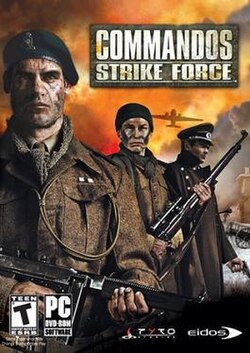










 Another SquareThought Site